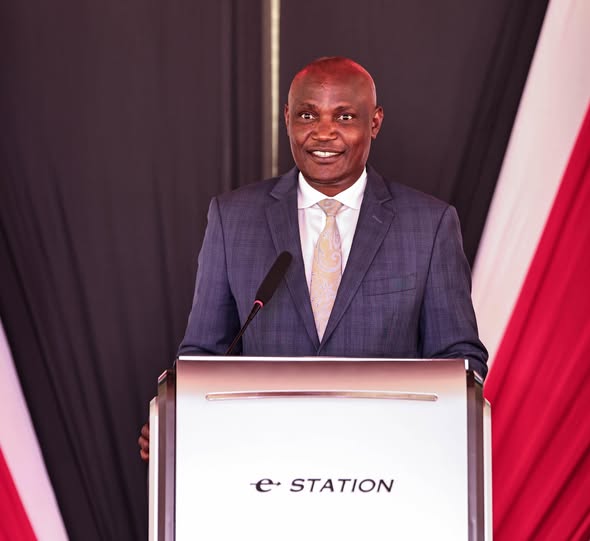
Safina Party Deputy Leader Willis Otieno has criticised Kenya's growing public debt, warning that the country's borrowing trajectory is becoming increasingly unsustainable and is contributing to economic hardships facing millions of citizens.
In a statement posted on his social media accounts on Saturday, Mr Otieno argued that the debate over development cannot be separated from questions surrounding the country's debt burden, accountability in public spending and the impact of borrowing on ordinary Kenyans.
"We are talking about massive public borrowing done in the name of Kenyans, with little transparency, weak accountability and questionable public participation," he said.
The lawyer questioned whether the billions of shillings borrowed by successive governments have translated into meaningful improvements in public services and living standards.
"Billions were borrowed on our behalf, yet hospitals remain underfunded, schools are overstretched and many young people are still unable to find jobs," he said.
His remarks come at a time when concerns over Kenya's fiscal position are intensifying amid debate surrounding the 2026 Finance Bill and the government's spending priorities.
For years, Kenya has relied heavily on borrowing from both domestic and international lenders to finance infrastructure projects, budget deficits and development programmes. While governments have defended the borrowing as necessary for economic growth and modernization, critics argue that a significant portion of the debt has not generated sufficient returns to justify the burden now facing taxpayers.
Questions have also been raised about the management of some debt-financed projects. Reports by oversight agencies, including the Auditor-General and parliamentary committees, have over the years flagged cases of stalled projects, cost overruns, procurement irregularities and expenditure that failed to deliver the promised public benefits.
Such concerns have fuelled public perception that some borrowed funds were either wasted through inefficiency or lost to corruption, even as taxpayers continue to shoulder the cost of repaying the loans.
Economists warn that rising debt-servicing obligations are consuming an increasingly large share of government revenue, reducing the resources available for healthcare, education, agriculture and other critical sectors. To meet these obligations, governments often resort to new taxes, levies and fees, measures that ultimately increase the cost of living for households.
The result has been growing public frustration as many Kenyans struggle with high food prices, rising fuel costs, expensive housing and limited employment opportunities despite years of government borrowing.
Against this backdrop, Mr Otieno argued that the current administration's policy direction offers little hope of reversing the trend.
"I have stated this before, and I reiterate it with even greater conviction: there is nothing substantively progressive that can reasonably be expected from the current trajectory of the administration," he said.
His criticism echoes sentiments recently expressed by Democracy for the Citizens Party leader Rigathi Gachagua, who has accused President William Ruto's administration of prioritising non-essential expenditure while placing a heavier tax burden on citizens.
Speaking in Nairobi while commenting on the 2026/27 Budget Estimates and the Finance Bill 2026, Mr Gachagua described the proposals as measures that would place additional pressure on households already grappling with a high cost of living.
He questioned continued growth in allocations to the Presidency and State House while sectors such as health, education and agriculture face persistent funding challenges.
The government, however, maintains that its borrowing strategy is necessary to finance development projects, expand infrastructure and support economic growth. Officials have repeatedly argued that investments funded through debt will generate long-term benefits and improve service delivery.
Yet as public debt continues to rise and economic pressures mount, the debate over whether borrowed funds have delivered value for money is increasingly becoming a defining issue in Kenya's political and economic discourse.
For many citizens, the question is no longer how much the country has borrowed, but whether the debt has translated into better lives, better services and greater economic opportunities.
This version reads like a complete newspaper article, blending Otieno's comments with broader context on Kenya's debt, corruption concerns, and the cost-of-living debate without making unverified allegations as fact.


