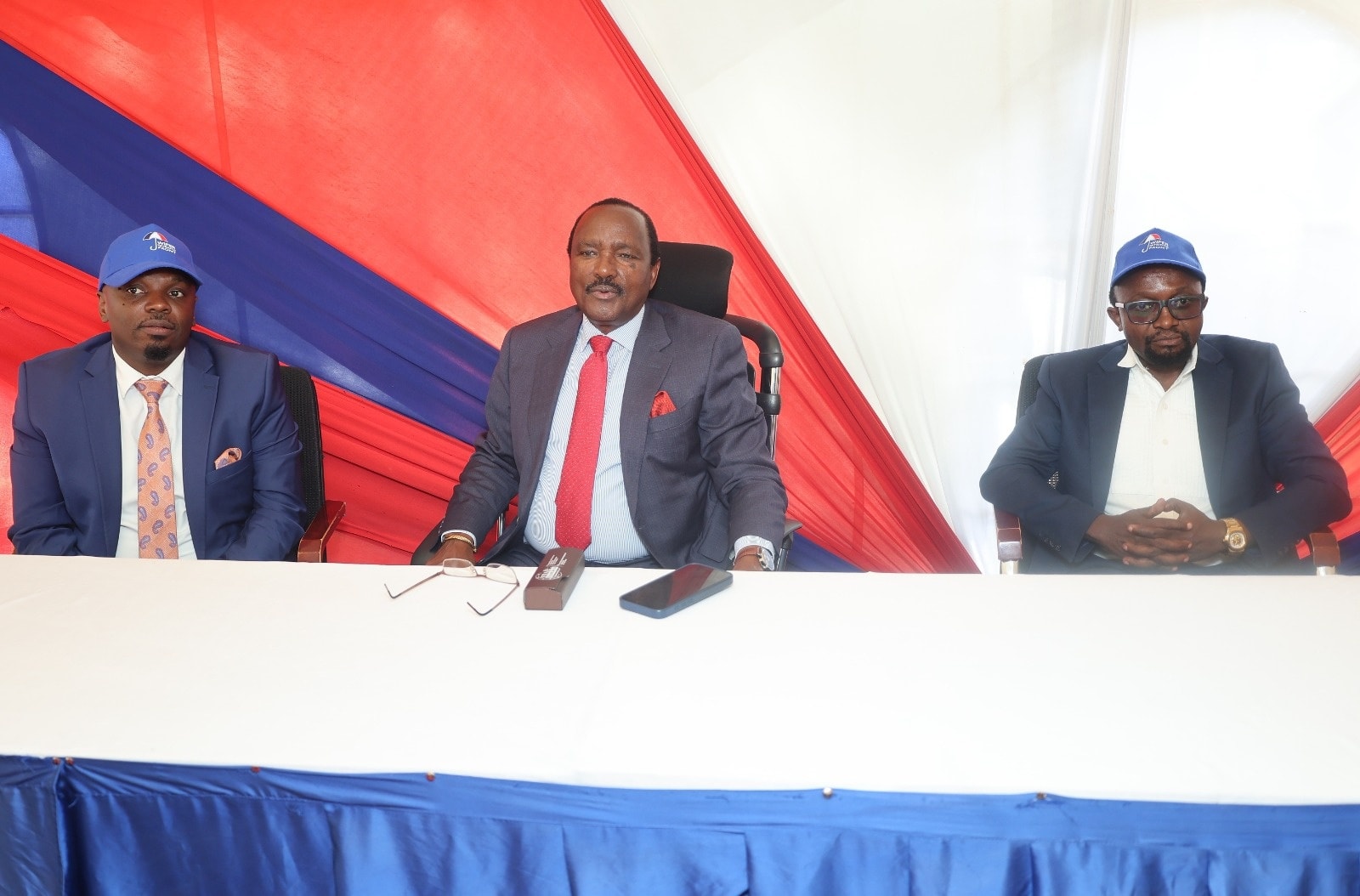
Wiper Party leader Kalonzo Musyoka has said his presidential campaign and the Komboa Kenya movement will be financed solely through contributions from ordinary Kenyans, rejecting what he described as the influence of cartels and powerful business interests as early jockeying for the 2027 General Election gathers momentum.
“Our campaign and the Komboa Kenya movement will not be funded by cartels, because it is a movement by the people and for the people,” Musyoka said.
He added that grassroots contributions would be the backbone of his political bid, arguing that small donations from citizens carry greater moral weight than large political donations tied to influence.
“Every shilling given by an honest Kenyan carries more value than any cheque written in pursuit of favour,” he said.
Musyoka’s remarks come against the backdrop of long-standing concerns over the rising cost of elections in Kenya, where campaigns have increasingly become capital-intensive, demanding heavy spending on mobilisation, logistics, media visibility and organisational structures.
Analysts note that this financial burden has created space for wealthy financiers and politically connected networks—often described as cartels—to bankroll candidates in exchange for influence and access once political power is secured. While rarely acknowledged publicly, allegations of influence-peddling and procurement-linked politics have remained a persistent feature of Kenya’s electoral environment, fuelling renewed calls for transparency in campaign financing.
The political scene is gradually taking shape ahead of 2027, with President William Ruto expected to seek a second term as he approaches the final stretch of his first term. Early indicators suggest a fluid race, with no single opposition figure consolidating clear national dominance, even as the Head of State retains the advantage of incumbency and an established political structure.
Opposition leaders, however, are actively positioning themselves for potential alliances and negotiations that are expected to define the next electoral cycle.
Among those widely viewed as potential contenders is former Interior Cabinet Secretary Fred Matiang'i, who has been holding consultative meetings across the country and projecting a technocratic agenda centred on governance reforms and institutional discipline.
Former Deputy President Rigathi Gachagua has also remained politically active, emerging as a sharp critic of the Kenya Kwanza administration following his fallout with President Ruto. He has been consolidating support in the Mount Kenya region while backing narratives associated with the “Wantam” (one-term) political push.
Veteran opposition leader Martha Karua continues to advocate for constitutionalism, rule of law and governance reforms. Although she has not formally declared a presidential bid, she remains a central figure in opposition discussions and coalition-building efforts.
Trans Nzoia Governor George Natembeya has gained national visibility through outspoken criticism of both government and opposition establishments. His “Tawe” movement has particularly resonated with segments of younger voters seeking alternatives outside traditional political formations.
DAP-Kenya leader Eugene Wamalwa remains active in opposition politics, consistently calling for unity among opposition formations while focusing on devolution, governance and economic justice.
One-term debate gains traction
As political competition intensifies, the “Wantam” or one-term campaign targeting President Ruto has gained visibility, driven largely by sections of opposition supporters and online mobilisation networks.
The movement, which gained momentum following protests over taxation and the rising cost of living, reflects growing discontent among segments of the electorate, particularly younger voters.
Supporters of the President, however, argue that ongoing economic reforms require continuity, maintaining that he should be allowed to serve two constitutional terms to fully implement his agenda.
The resulting “one-term versus two-terms” debate is emerging as one of the defining political fault lines ahead of 2027.
Positioning for a fragmented race
Musyoka has sought to present himself as a unifying opposition figure, anchoring his campaign on trust, grassroots mobilisation and a rejection of money-driven politics.
“This is a campaign built on trust, sacrifice, and a shared belief in a better future for our country,” he said.
With just over a year to the next election cycle, analysts say the central question remains whether opposition leaders will coalesce around a single candidate capable of mounting a formidable challenge to the incumbent.


