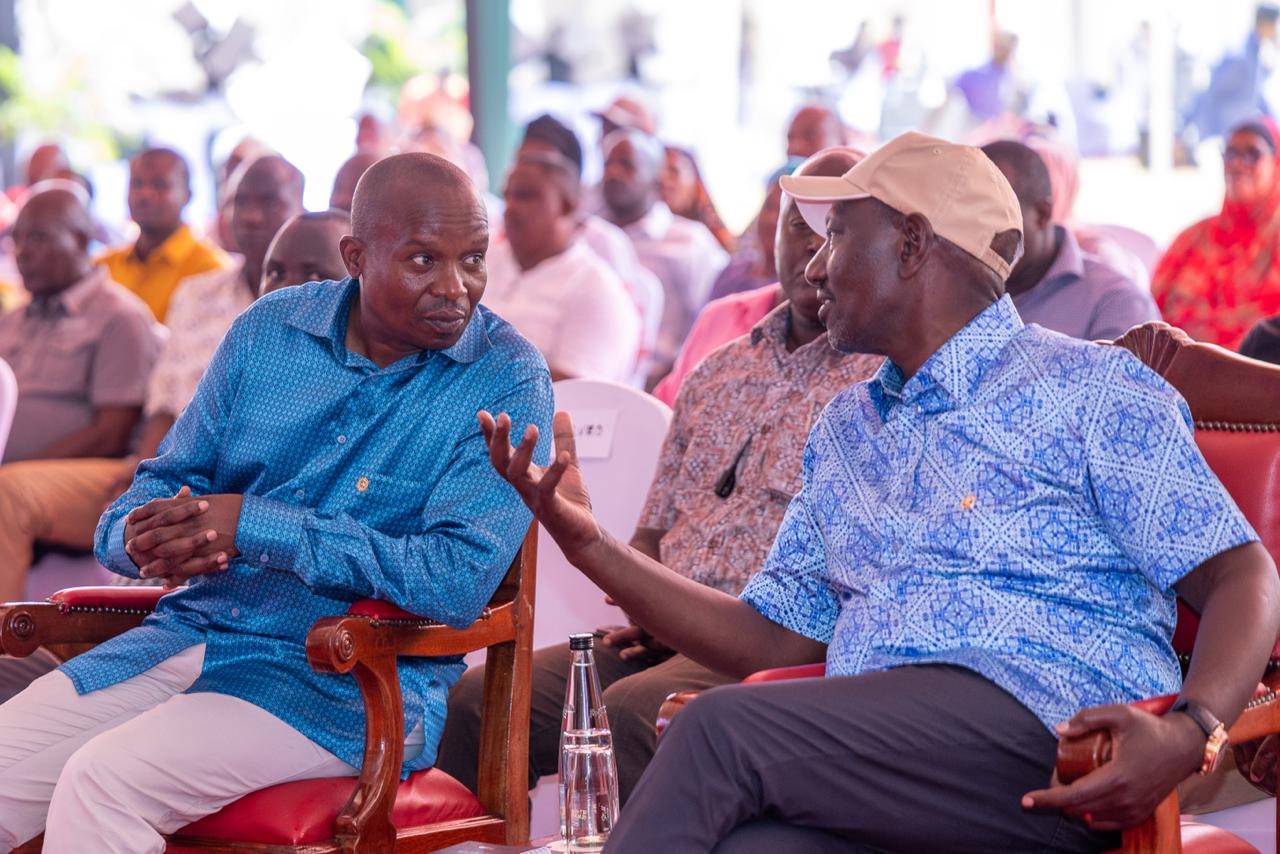
The High Court has ruled that public participation was not required in the nomination and approval of Kithure Kindiki as Deputy President, affirming the constitutional process that led to his appointment following the impeachment of former Deputy President Rigathi Gachagua.
In a judgment that settles one of the key legal questions surrounding the transition in the Deputy President's office, the court held that Article 149 of the Constitution provides a specific procedure for filling a vacancy in the office and does not require public participation before the National Assembly votes on a nominee presented by the President.
The judges found that the Constitution grants the President the authority to nominate a replacement deputy president and requires the National Assembly to approve or reject the nominee through a vote. According to the court, this process is distinct from public appointments that are subject to public participation and extensive parliamentary vetting.
The ruling effectively validates the process through which President William Ruto nominated Prof Kindiki, then serving as Interior Cabinet Secretary, to replace Gachagua.
The vacancy arose after Gachagua became the first Deputy President in Kenya's history to be impeached.
In October 2024, the National Assembly voted to impeach Gachagua on multiple charges, including allegations of gross violation of the Constitution, abuse of office, ethnic discrimination, undermining collective responsibility within government, and conduct deemed incompatible with the office he held.
More than two-thirds of Members of Parliament supported the impeachment motion, paving the way for the matter to proceed to the Senate for trial, as required by the Constitution.
After hearing arguments from both the prosecution and the defence, the Senate upheld several of the charges against Gachagua. Senators found that some of the accusations had been substantiated, effectively removing him from office.
The impeachment marked a dramatic fallout between Gachagua and President Ruto, ending a political partnership that had helped secure victory in the 2022 General Election. In the months leading to the impeachment, Gachagua had increasingly criticized sections of the government and complained of political isolation within the Kenya Kwanza administration.
Following the Senate's decision, President Ruto moved swiftly to fill the vacancy by nominating Kindiki, a former Senate Majority Leader and trusted ally who had served as Interior Cabinet Secretary since 2022.
The National Assembly subsequently approved Kindiki's nomination by a majority vote. However, several petitions were filed challenging both Gachagua's impeachment and the process used to appoint his successor.
Among the issues raised by petitioners was the argument that Kenyans should have been allowed to participate in the approval process before Parliament voted on Kindiki's nomination.
The High Court rejected that argument, stating that the Constitution clearly outlines the steps required when a vacancy occurs in the Office of the Deputy President.
The judges noted that Article 149 does not provide for public participation and that Parliament's role is limited to considering and voting on the President's nominee. The court further held that introducing additional requirements not contemplated by the Constitution would amount to rewriting the law.
The decision mirrors arguments previously advanced by National Assembly Speaker Moses Wetang'ula, who maintained during parliamentary proceedings that the approval of a deputy president nominee was a constitutional process governed exclusively by Article 149 and not by legislation requiring public participation in appointments.
Legal experts say the judgment provides important guidance on the interpretation of constitutional succession provisions and clarifies the distinction between ordinary public appointments and the replacement of a deputy president.
The ruling is also expected to strengthen Kindiki's position as Deputy President by removing one of the legal challenges that had cast doubt on the process leading to his appointment.
For the Kenya Kwanza administration, the judgment closes another chapter in the political and legal battles that followed Gachagua's historic impeachment, while reaffirming the constitutional mechanism for ensuring continuity in one of the country's highest offices.


