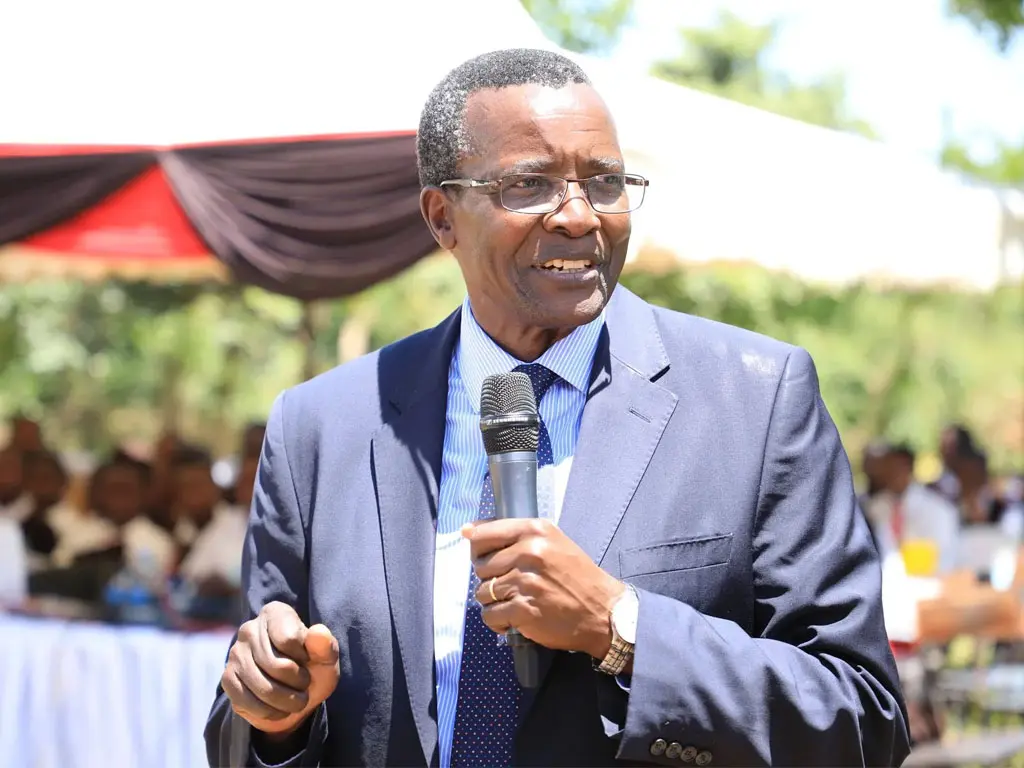
Former Chief Justice David Maraga has said the High Court should have gone further and completely annulled the impeachment of former Deputy President Rigathi Gachagua after finding that he was denied a fair hearing during the Senate proceedings.
Maraga argued that once a court finds a violation of constitutional rights in an impeachment process—especially the right to a fair hearing—the only proper remedy is to nullify the entire process.
“The court found that Honourable Gachagua was not given a fair hearing. The inevitable conclusion was to annul that impeachment,” he said.
He warned that failure to enforce constitutional safeguards firmly risks weakening the rule of law.
“If we do not take firm action, the Constitution will be a suggestion and not a law,” Maraga said.
Gachagua strongly rejected the High Court decision, calling it contradictory.
He said the court acknowledged violations of his right to a fair hearing but still upheld his removal from office.
“Once that determination was made, the entire process collapsed. There was no impeachment,” he said.
He also dismissed the KSh50 million damages award, saying it was not about money but a constitutional principle.
“We are not interested. That amount is an insult to the Constitution,” he said.
Gachagua was impeached in 2024 after a political process that began in the National Assembly, where MPs voted to adopt an impeachment motion accusing him of constitutional violations, misconduct, and abuse of office.
The motion was then transmitted to the Senate, which sat as an impeachment court to try the charges. Senators acted as quasi-judges, hearing evidence from the National Assembly and the defence team.
During the Senate trial, Gachagua was represented by his legal team led by Senior Counsel Paul Muite. The proceedings, however, became contentious after disputes emerged over procedure, including requests for adjournment and claims that the former Deputy President was not adequately given time and opportunity to fully present his defence.
The Senate ultimately voted to remove him from office, ending his tenure as Deputy President and triggering a constitutional petition challenging both the process and outcome.
That petition led to the High Court case, where judges found that while the impeachment met the constitutional threshold for removal, aspects of the Senate process violated Gachagua’s right to a fair hearing under Articles 47 and 50 of the Constitution.
Nominated MP Sabina Chege defended the High Court ruling, arguing that it did not invalidate Parliament’s decision to impeach Gachagua but only addressed procedural fairness.
She said the court upheld the impeachment itself and only faulted how parts of the Senate process were conducted.
“The court did not fault Parliament for impeachment. It only raised issues of procedure and fair hearing,” she said.
The ruling has deepened debate among legal experts on what remedy applies when a court finds a breach of fair hearing rights in impeachment proceedings.
Some argue that such a violation should automatically void the entire process. Others say compensation is sufficient without reinstatement.
The case now moves to the Court of Appeal, where Gachagua is expected to challenge both the impeachment outcome and the damages award.
The Senate is also preparing a cross-appeal.
The outcome is expected to set a major constitutional precedent on impeachment procedures, fair hearing rights, and the limits of parliamentary power in Kenya.


