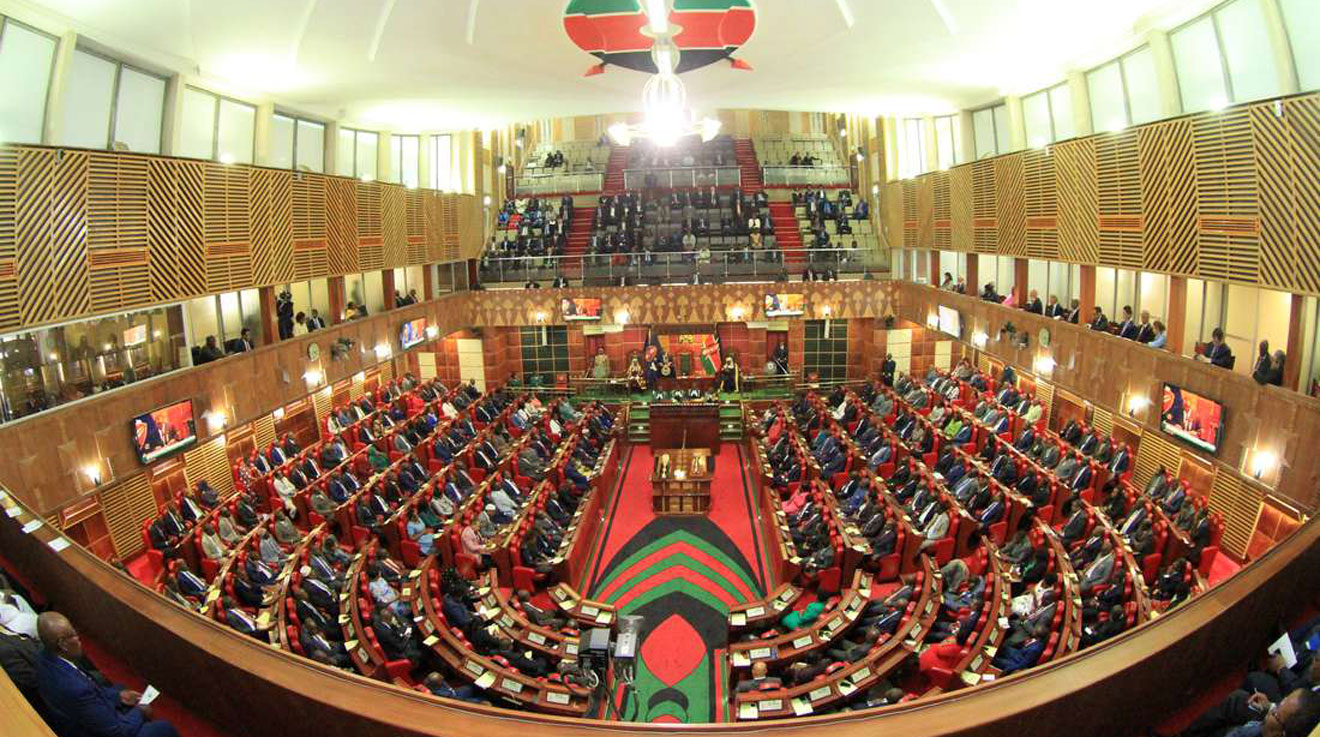
Members of the National Assembly have broadly welcomed the 2026/27 Budget Statement, describing it as a balanced fiscal framework that attempts to spread development across critical sectors while maintaining an emphasis on equitable resource allocation.
However, while lawmakers expressed optimism about increased funding for key programmes, critics have raised concerns about the sustainability of the widening deficit, the heavy reliance on tax measures, and the government’s capacity to implement the ambitious expenditure plan effectively.
Budget and Appropriations Committee Chairperson Samuel Atandi said the budget reflects a deliberate policy shift aimed at fair distribution of national resources, arguing that every region stands to benefit from the development framework.
“Whether you are in Lamu, Tana River or Busia, this budget has something for you,” he said, pointing to infrastructure, education, healthcare, water, and agriculture allocations.
Marakwet West MP Timothy Kipchumba highlighted allocations including Kshs 3.9 billion for village elder stipends and Kshs 16 billion for last-mile electricity connectivity, saying the funds would strengthen grassroots governance and accelerate rural electrification.
He noted that each constituency is expected to receive about Kshs 55 million for connectivity projects, describing it as one of the most impactful devolved development interventions in recent years.
Seme MP and Health Committee Chairperson James Nyikal said the budget had significantly supported the health sector, particularly primary healthcare, KEMSA reforms, and Universal Health Coverage staffing needs.
He also welcomed tax reliefs on critical medical equipment such as dialysis machines, saying they would improve access to specialised care, while praising infrastructure allocations for roads and ferry services across Mombasa and Lake Victoria.
Finance and National Planning Committee Chairperson Kimani Kuria said Parliament will now move into detailed scrutiny before voting through the Committee of Supply, adding that the process remains open for further adjustments.
He also noted that fiscal reforms under the Finance Bill, including broadening the tax base, are key to addressing the Kshs 1.1 trillion budget deficit.
Critics raise red flags on debt and taxation
Despite the positive reception from legislators, economists and civil society groups have warned that the budget could place additional pressure on already stretched households.
A section of economic analysts argue that while the budget is “well-distributed on paper,” its financing model remains heavily dependent on increased revenue collection and borrowing, raising concerns over Kenya’s growing public debt burden.
Critics have particularly pointed to the Kshs 1.1 trillion deficit as a major vulnerability, warning that aggressive tax expansion measures could slow down business activity and increase the cost of living.
Opposition-aligned leaders and governance watchdogs have also questioned whether the government has the administrative capacity to effectively implement multiple large-scale projects simultaneously, citing past instances of delayed infrastructure delivery and underfunded programmes.
Civil society organisations further argue that while allocations to sectors such as education and health are welcome, the real test lies in absorption capacity and transparency in procurement processes, especially in agencies handling large infrastructure and health supply contracts.
There are also concerns that, despite increased constituency-level allocations, oversight mechanisms remain weak, potentially exposing devolved funds to inefficiencies or misuse.
As parliamentary debate continues, the 2026/27 Budget is shaping up as a politically supported but economically contested framework—praised for its inclusivity and sectoral balance, yet scrutinised for its debt exposure, taxation strategy, and implementation risks.
The coming Committee of Supply vote is expected to determine whether MPs fully endorse the allocations or push for revisions on specific expenditure lines.


