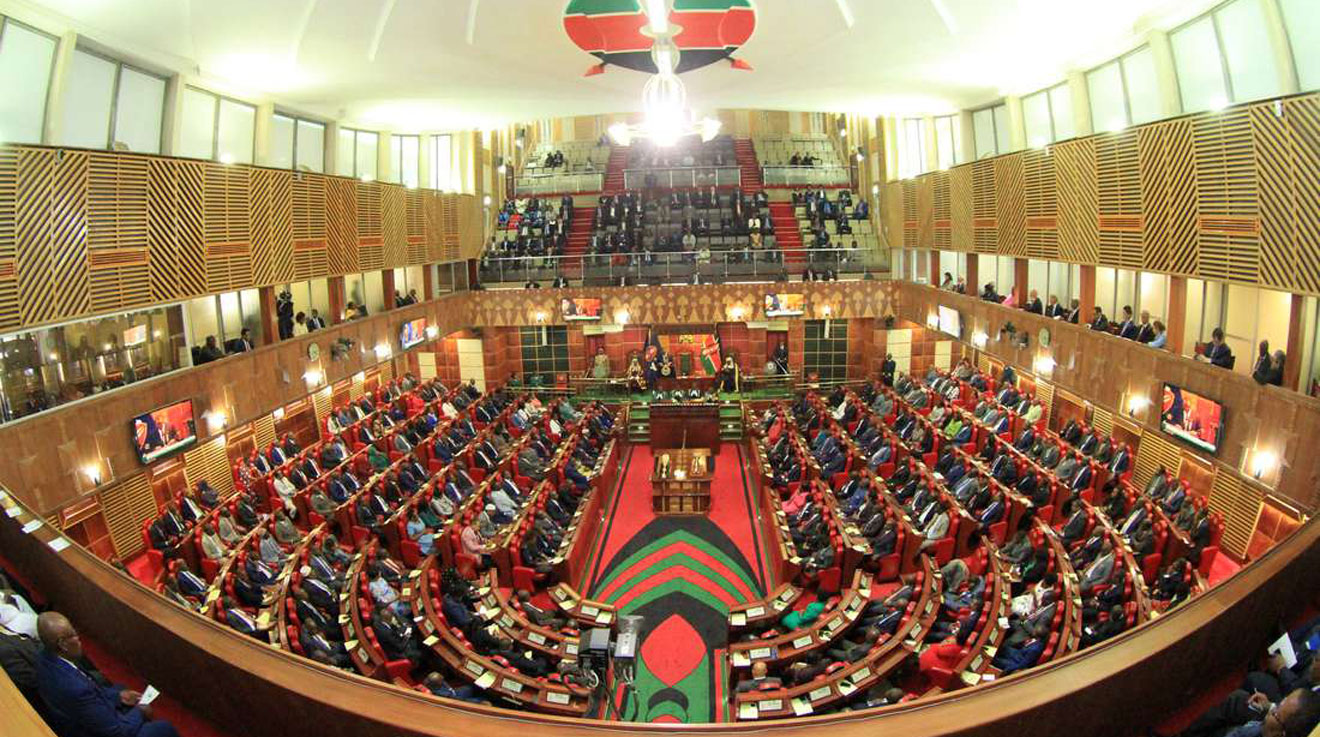
Kenya’s economy has remained resilient despite intensifying global geopolitical tensions and persistent supply chain disruptions, National Treasury and Economic Planning Cabinet Secretary John Mbadi has told Parliament, as he sought to reassure lawmakers and the public of a stable macroeconomic outlook.
Addressing a joint sitting of the National Assembly during the presentation of the 2026/27 Budget Policy Highlights, Hon. Mbadi said government fiscal and monetary policies had helped cushion the economy from external shocks that continue to destabilise global markets.
He said the budget framework was anchored on economic stability measures designed to sustain growth while navigating an increasingly uncertain global environment marked by volatile energy prices and geopolitical conflict.
The Treasury CS pointed to ongoing geopolitical tensions, including the Russia–Ukraine war and conflicts in the Middle East, as key drivers of rising global oil prices and inflationary pressures affecting both advanced and developing economies.
“These global factors have continued to exert pressure on energy and food prices, increasing inflation risks and market volatility,” he said.
Despite this, he noted that Kenya’s economy had demonstrated strong resilience in recent years, expanding at an average of 5 per cent between 2022 and 2025—outperforming the global average of 3.4 per cent and the sub-Saharan Africa average of 4.1 per cent over the same period.
Growth holds, but outlook revised
Mbadi reported that the economy grew by 4.6 per cent in 2025 compared to 4.7 per cent in 2024, with all sectors recording positive performance.
However, he acknowledged downward revisions in growth projections for 2026, citing emerging external risks, particularly heightened conflict in the Middle East.
Growth for 2026 has been revised to 5 percent from an earlier projection of 5.3 percent, though the Treasury still expects recovery momentum to push growth to 5.2 percent in 2027 as global conditions stabilise.
Inflation and financial stability
The CS noted that inflation had risen to 6.7 percent in May 2026, up from 3.8 percent in May 2025, largely driven by higher fuel costs linked to global oil price fluctuations.
He, however, pointed to stabilising financial indicators, including improved private sector credit growth supported by lower lending rates, a stable Kenya shilling, and continued strength at the Nairobi Securities Exchange.
“The macroeconomic fundamentals remain broadly stable,” he said, adding that investor confidence and market activity had remained resilient despite external shocks.
External buffers cushion economy
Hon. Mbadi further highlighted strong remittance inflows, robust export earnings, and healthy foreign exchange reserves as key buffers shielding the economy from global volatility.
He said these factors had helped stabilise the external sector and sustain economic activity even amid global uncertainty.
As Kenya navigates a turbulent global economic landscape, the Treasury maintains that its policy direction remains focused on safeguarding stability, sustaining growth, and strengthening resilience against future shocks.


