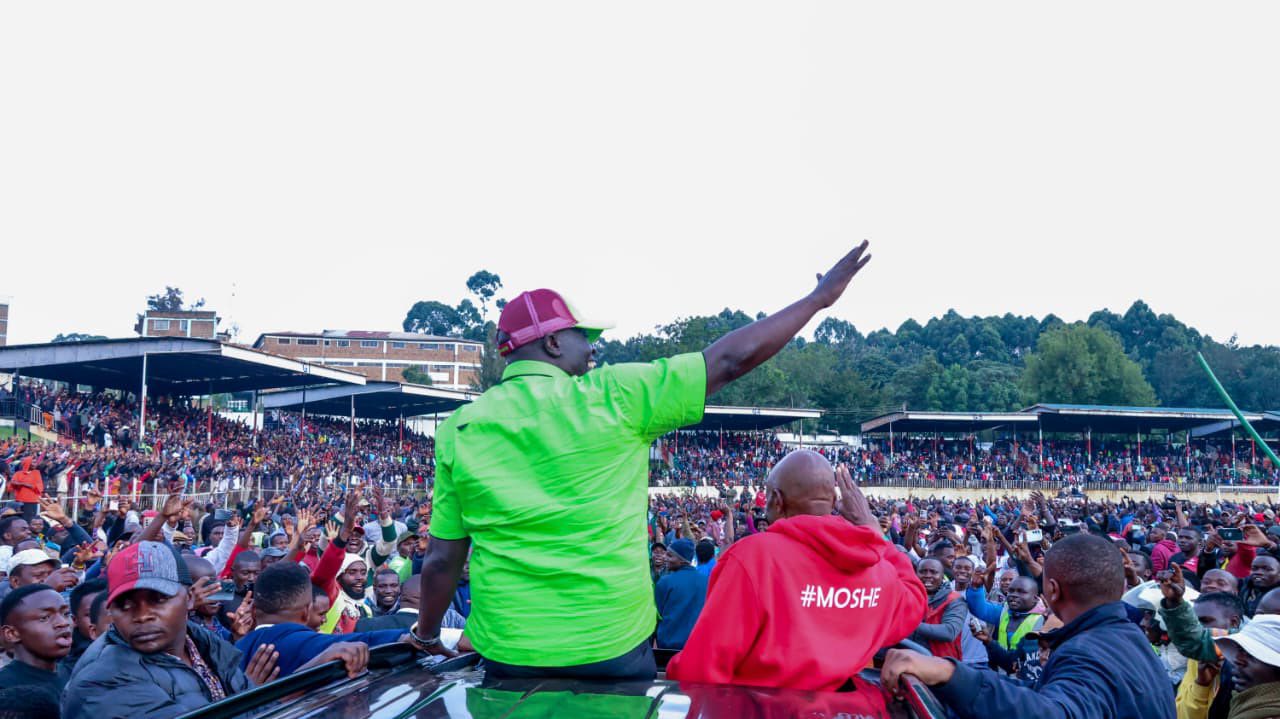
Former Deputy President Rigathi Gachagua has pushed back against renewed accusations of ethnic bias in government appointments, as political tensions linked to his fallout with President William Ruto continue to reverberate across the country nearly two years after his impeachment.
In a strongly worded response circulated online, Mr Gachagua dismissed the allegations as politically driven, insisting that they were part of a sustained effort to discredit him after his dramatic exit from office. His allies also accused sections of the political establishment of reviving old claims to justify his removal and weaken his influence in Mount Kenya politics.
“Those spreading these allegations are simply recycling propaganda meant to justify what was a politically engineered removal from office,” one of his close allies said.
The latest claims accuse the former Deputy President of fostering ethnic dominance in government appointments, particularly within the security sector. Critics allege that during his tenure, key administrative and police command positions were disproportionately allocated, leading to what they describe as imbalance in public service representation.
They further claim that such patterns allegedly created operational challenges within security coordination structures at county level, assertions that remain unverified.
However, Gachagua has maintained that appointments in government are guided by constitutional and institutional frameworks, not individual political influence.
“There is no single individual who appoints police commanders or public officers. These are structured processes governed by law,” he said in a past defence of his record in office.
The renewed accusations come against the backdrop of his political fallout with President Ruto, a relationship that once formed the core of the Kenya Kwanza alliance but later collapsed amid rising internal tensions.
Gachagua was impeached in October 2024 following a process in Parliament that cited multiple grounds, including allegations of ethnic division, insubordination, undermining collective responsibility in government, and alleged violation of constitutional provisions on national unity and leadership conduct. Lawmakers also raised concerns over what they termed public statements that were deemed divisive and inconsistent with his oath of office.
In the heated political process that preceded his removal, Gachagua repeatedly maintained that he was being targeted for political reasons.
“I am being punished for speaking the truth and defending the people who elected us,” he said during one of his final public appearances as Deputy President.
His impeachment marked a turning point in the Kenya Kwanza administration, widening divisions within the ruling coalition and triggering a realignment of political forces in Mount Kenya.
President Ruto, in defending the decision at the time, said his administration was committed to unity and constitutional governance.
“No leader is above the Constitution. We must all respect the law and ensure that our actions strengthen national cohesion,” he said in the aftermath of the impeachment vote.
Since then, Gachagua has remained politically active, often positioning himself as a critic of the government and a key player in emerging opposition formations. His allies argue that he continues to wield significant influence in Mount Kenya politics despite his exit from office.
“The attempt to isolate Rigathi politically has failed. He still commands a strong base that cannot be ignored,” one ally said.
Political analysts say the latest exchange over tribalism allegations reflects deeper unresolved tensions between the former Deputy President and the current administration, with ethnic representation and power distribution remaining sensitive issues in national politics.
“As long as the political realignment continues, Gachagua will remain both a target and a player in Kenya’s shifting political landscape,” one analyst observed.
Neither State House nor the Office of the Deputy President has issued an official response to the latest remarks.


