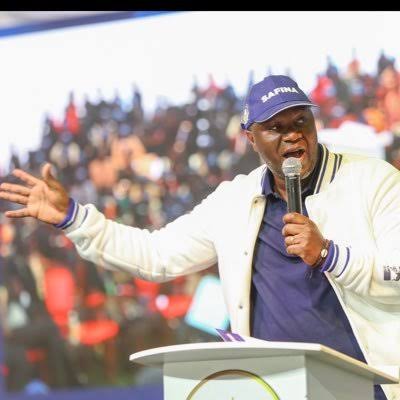
Safina Party Deputy Party Leader Willis Otieno has raised concerns over parliamentary accountability following the passage of the Finance Bill 2026, questioning why a majority of Members of Parliament failed to participate in one of the most significant legislative votes of the year.
In a statement shared on his social media platforms on Friday, June 19, 2026, Otieno noted that only 162 out of the 349 elected and nominated lawmakers took part in the final vote on the Finance Bill, which contains key provisions affecting taxation, public revenue collection, and the broader economy.
The National Assembly passed the Finance Bill 2026 on Thursday after securing 122 votes in support against 40 votes opposed. However, the absence of 187 MPs from the vote has sparked public debate about representation and responsibility in Parliament.
Otieno argued that Parliament exists to make critical decisions on behalf of citizens, particularly on issues that directly affect livelihoods, taxation, public debt, and the cost of living.
“The National Assembly has 349 members. Yet when one of the most consequential economic bills of the year came up for a vote, only 122 MPs voted in favour and 40 voted against. The obvious question is: where was everyone else?” he posed.
The lawyer maintained that democracy extends beyond winning elections, insisting that elected leaders must be prepared to publicly take positions on controversial national matters and be held accountable for their decisions.
According to Otieno, voters have a right to know where their representatives stand on legislation that affects household incomes, businesses, and government spending priorities.
“Democracy is not merely about winning elections; it is about showing up and taking responsibility for difficult decisions,” he stated.
Otieno further argued that while parliamentary procedures distinguish between voting against a bill and being absent during a vote, the political consequences can often be similar. He noted that lawmakers who fail to participate avoid creating a public record of their position while allowing legislation to proceed without their direct input.
His remarks come amid continued public scrutiny of the Finance Bill 2026, which has generated intense debate between government supporters and critics over its potential economic impact.
During an interview with Phil Director, political analysts noted that the low participation rate in the final vote is likely to fuel further discussions about parliamentary accountability as Kenyans seek greater transparency from their elected leaders.
The Finance Bill now moves to the next stage of the legislative process as the government prepares to implement its fiscal and revenue measures for the 2026/27 financial year.


