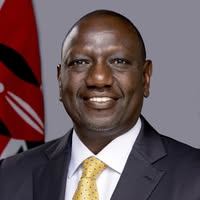
Human rights activist Boniface Mwangi has reignited the debate over police accountability after accusing President William Ruto's administration of responsibility for the deaths of dozens of protesters allegedly killed during demonstrations this year.
In a strongly worded statement on Sunday, Mr Mwangi claimed that 49 people have been shot dead by police while exercising their constitutional right to protest, arguing that attempts to blame activists and opposition leaders for the violence were misplaced.
"Peaceful protests and the right to life are rights guaranteed by the Constitution. No one should be murdered for exercising their constitutional rights," said Mr Mwangi.
The activist went further, directly linking the deaths to the government, stating that activists do not order police officers to shoot demonstrators.
His remarks come against a backdrop of growing concern over the conduct of security agencies during anti-government demonstrations that have swept across the country over the past two years, fuelled by public anger over the cost of living, governance concerns, corruption allegations and demands for justice in cases of police brutality.
The allegations are likely to intensify scrutiny on the Kenya Kwanza administration, which has repeatedly defended the actions of security agencies while insisting that law enforcement officers operate within the confines of the law.
IPOA investigations
The Independent Policing Oversight Authority (IPOA) has in recent months opened several investigations into deaths and injuries linked to police operations during protests and political gatherings.
The authority has deployed rapid-response teams to investigate fatal shootings, deaths in police custody and allegations of excessive force during demonstrations. In previous reports, IPOA has indicated that many protest-related fatalities under investigation were linked to police crowd-control operations and has raised concerns over the proportionality of force used by officers.
IPOA has maintained that every death involving police action must be independently investigated to establish whether officers acted lawfully and whether the force used was necessary and proportionate.
The authority's findings have frequently placed it at odds with government officials, some of whom have argued that investigations should be completed before conclusions are drawn regarding police culpability.
Nairobi Senator Edwin Sifuna has also emerged as one of the most vocal critics of police conduct during demonstrations.
In recent months, Mr Sifuna has repeatedly condemned what he describes as state-sponsored violence against peaceful protesters and defended calls for accountability over deaths linked to demonstrations. He has argued that constitutional freedoms, including the right to assemble and picket, must be protected regardless of political affiliation.
Following previous incidents involving fatalities at political gatherings and demonstrations, the senator accused security agencies of using excessive force and demanded swift investigations into the actions of officers involved.
Civil society concerns
Civil society organisations, including human rights groups such as Amnesty International Kenya, the Kenya National Commission on Human Rights and several social justice centres, have consistently raised concerns over what they describe as a pattern of excessive force, enforced disappearances and extrajudicial killings.
The groups have accused security agencies of responding to dissent with violence and have called for independent investigations into all deaths linked to protests. They have also urged the government to guarantee the safety of demonstrators and uphold constitutional freedoms. Reports by local and international rights organisations have repeatedly highlighted concerns about police brutality and alleged attempts to conceal the circumstances surrounding some protest-related deaths.
The death of blogger Albert Ojwang while in police custody earlier this year further intensified demands for accountability, with activists accusing authorities of failing to address longstanding concerns about police impunity.
Government position
Government officials have consistently rejected accusations that the State sanctions unlawful killings.
President Ruto has previously stated that security agencies must operate within the law and has pledged action against rogue officers found culpable of misconduct. Government leaders have also argued that some demonstrations have been infiltrated by criminal elements, making crowd management more difficult for police officers.
The National Police Service has repeatedly defended its operations, saying officers are deployed to maintain law and order and protect lives and property during demonstrations.
However, critics insist that maintaining order cannot justify the use of lethal force against unarmed civilians exercising constitutionally protected rights.
As the country prepares for another wave of demonstrations, pressure continues to mount on investigative agencies to conclude pending cases and provide answers to families who have lost loved ones.
For activists such as Boniface Mwangi, the issue goes beyond politics.
"It is about justice, accountability and the sanctity of human life," he says.
Whether ongoing investigations will lead to prosecutions remains one of the most pressing questions facing Kenya's justice system and its democratic institutions.


