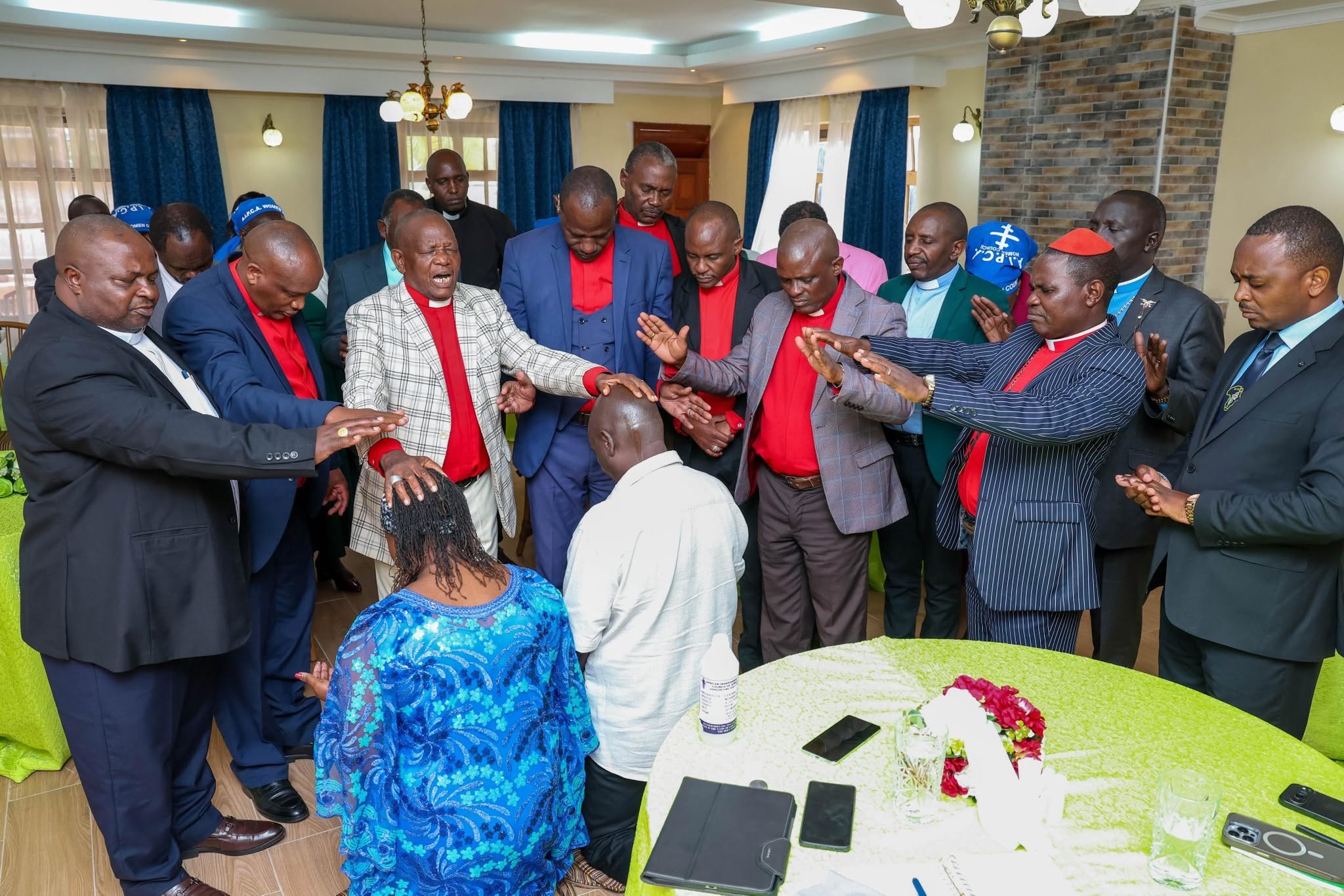
Former Deputy President Rigathi Gachagua has intensified consultations ahead of what he describes as the formation of Kenya's "6th Administration", hosting a delegation of bishops and clergy from the African Independent Pentecostal Church of Africa (AIPCA) at his Wamunyoro residence in a move likely to fuel speculation about his political plans.
The meeting comes as Mr Gachagua continues to position himself as a key player in the emerging opposition movement seeking to challenge President William Ruto's administration in the next General Election.
In a statement issued after the meeting, the former Deputy President said the church leaders had offered prayers, fellowship and a special message from AIPCA faithful across the country.
"I have had a very blessed Monday as we begin the week with great energy and resolve," Mr Gachagua said.
According to the former Deputy President, discussions extended beyond spiritual matters to include national politics, governance and the future direction of the country.
"The voice of the church and the people is fundamentally the voice of God," he said.
Mr Gachagua added that he had accorded the clergy ample time to share their views on what he termed "the liberation cause of Kenya" and the formation of the country's next administration.
The remarks are the clearest indication yet that the former Deputy President is deepening consultations as opposition leaders seek to build a united political front ahead of the next election.
Since his dramatic fallout with President Ruto and subsequent removal from office, Mr Gachagua has embarked on an extensive campaign of political engagements involving religious leaders, professionals, youth groups, business people and elected leaders.
Political analysts view the meetings as part of a broader effort to consolidate support, particularly in the Mt Kenya region, while expanding his influence nationally.
His repeated references to the "liberation" of Kenya have become a recurring theme in his political messaging and are increasingly being interpreted as a rallying call for opposition forces seeking to challenge the current administration.
Church enters political conversation
The meeting also highlights the growing role religious leaders are playing in Kenya's evolving political landscape.
Historically, churches have been influential voices on governance, constitutional reforms, corruption and electoral justice, often positioning themselves as mediators during periods of political tension.
Mr Gachagua said the views shared by the clergy would help shape ongoing consultations with his supporters and other political stakeholders.
"They had very insightful views that have greatly shaped the ongoing consultations with my supporters," he said.
The former Deputy President added that the engagements would assist him in making informed decisions as he consults leaders within what he described as the "United Alternative Government" and other actors across the country.
Building an alternative coalition
Although details of the proposed political formation remain unclear, Mr Gachagua's latest remarks are likely to intensify speculation about ongoing efforts to forge a broad opposition alliance.
In recent months, several opposition figures, including Wiper leader Kalonzo Musyoka, People's Liberation Party leader Martha Karua, DAP-K leader Eugene Wamalwa and former Chief Justice David Maraga, have increasingly appeared on common platforms advocating governance reforms, accountability and constitutionalism.
Observers say Mr Gachagua's growing engagement with religious leaders suggests he is keen to anchor his political movement on moral authority and grassroots mobilisation as he seeks to expand support beyond his traditional political base.
High stakes ahead
The consultations come at a time of heightened political activity amid public debate over the economy, taxation, governance and the future direction of the country.
With political realignments already taking shape years before the next election, leaders across the divide are working to consolidate support and craft narratives capable of resonating with voters.
For Mr Gachagua, the challenge will be translating growing public dissatisfaction with the government into a coherent national movement capable of competing against the well-established political machinery of the ruling coalition.
For now, however, the former Deputy President insists his consultations are far from over.
"Consultations continue," he said.


