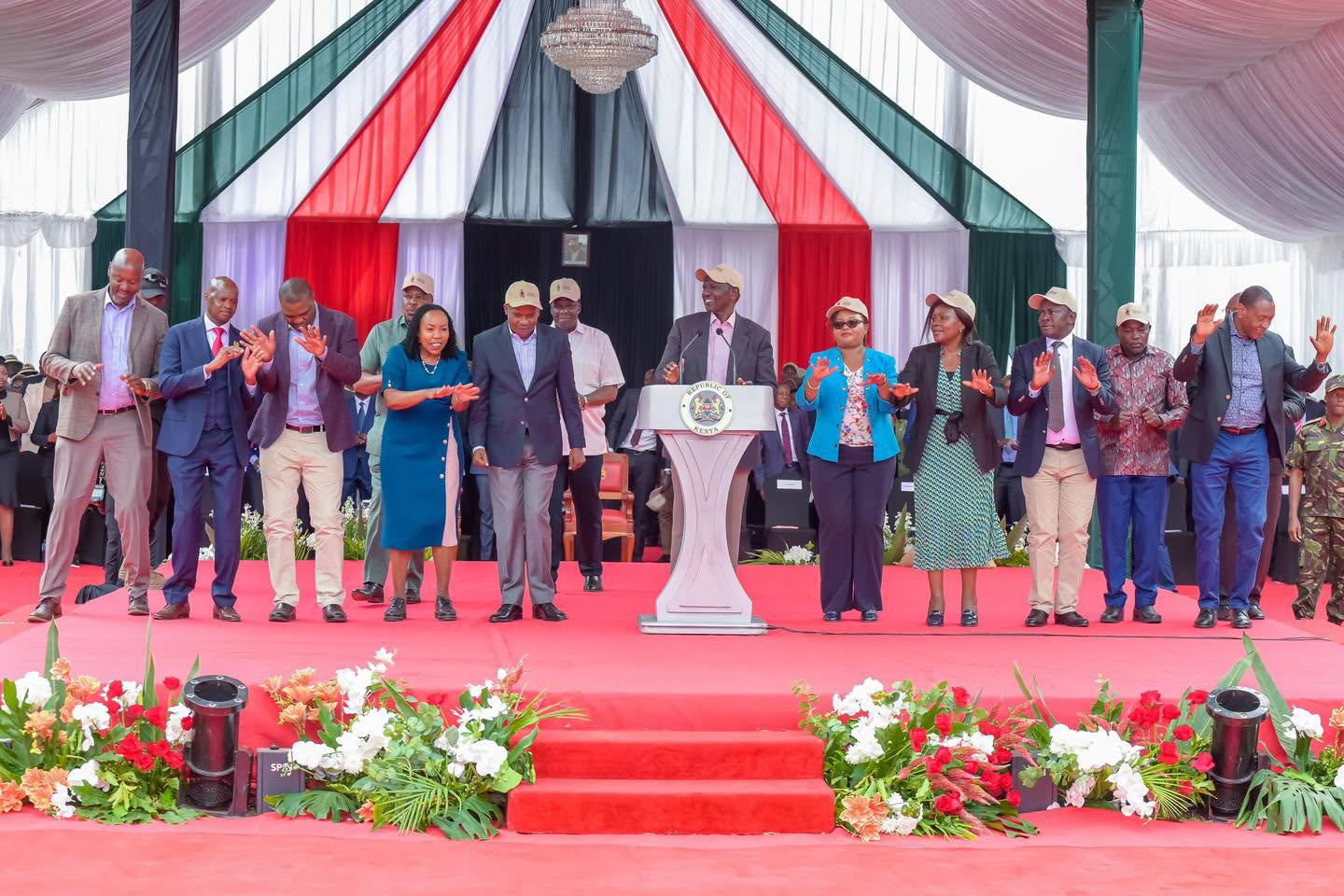
President William Ruto on Monday unveiled a multi-billion shilling coffee revival package in Kirinyaga County, promising debt waivers, faster payments and expanded export markets in what analysts see as a major political and economic gamble by the Kenya Kwanza administration ahead of the 2027 General Election.
Standing before thousands of coffee farmers drawn from 34 counties, the President announced a raft of interventions worth at least KSh4 billion, including KSh2 billion to clear historical debts owed by coffee cooperatives, KSh1 billion for renovation of cooperative societies and another KSh1 billion for coffee seedlings.
The announcement came after Kirinyaga Governor Anne Waiguru directly appealed to the Head of State to rescue farmers from decades of financial distress caused by indebted cooperatives, collapsing institutions and delayed earnings.
For many farmers, however, the promises touched on wounds that have remained open for years.
Across Kenya's coffee-growing regions, farmers have long complained of being trapped in a cycle of poverty despite producing one of the world's most sought-after coffee brands. Many wait months to receive payments after delivering their cherries, forcing them to borrow from shylocks and microfinance institutions to meet basic household needs.
Others have abandoned coffee altogether, uprooting bushes in favour of avocados, dairy farming and real estate developments as returns from the crop continued to decline.
"The biggest problem is not producing coffee. It is getting paid on time," said one farmer attending the event. "You deliver your coffee today and wait months before seeing any money."
The President appeared keenly aware of the political risks posed by farmer frustrations, announcing that his government would ensure payments are made within five days of delivery.
If implemented, the move would mark one of the most significant reforms in the sector's history.
A key voting bloc
Coffee-growing counties such as Kirinyaga, Nyeri, Murang'a, Kiambu, Embu, Meru and parts of Bungoma and Trans Nzoia constitute an influential voting bloc that has historically shaped national political outcomes.
The region was among President Ruto's strongest support bases in the 2022 election, but rising living costs, taxation concerns and economic hardships have since generated discontent among sections of the electorate.
Political observers view the coffee revival programme as part of a broader strategy by the Kenya Kwanza administration to demonstrate tangible economic gains in rural Kenya before the next election cycle.
The President's pledge to subsidise agrochemicals and fertilisers is expected to resonate with farmers who have seen production costs rise sharply in recent years.
Many growers say that after paying for fertiliser, pesticides, labour and transport, little profit remains from coffee sales.
At the heart of the crisis are cooperative societies, many of which are burdened by decades-old debts accumulated through mismanagement, corruption and poor governance.
The debts have often resulted in deductions from farmers' earnings, leaving growers with little to show for an entire season's work.
Governor Waiguru's call for a debt waiver reflected concerns shared by leaders across coffee-growing counties who argue that farmers are paying the price for historical mistakes they did not make.
The President responded with a KSh2 billion debt relief commitment, a move likely to be welcomed by cooperative members but one that critics say must be accompanied by stronger accountability measures.
"There is no point clearing debts today if the systems that created those debts remain unchanged," said one agricultural analyst.
Beyond local reforms, President Ruto promised to open new export opportunities in South Africa, Belgium, South Korea, India and Italy while investing in a fully processed Kenyan coffee brand.
For years, Kenya has exported much of its coffee as a raw commodity, allowing foreign companies to reap the largest profits from roasting, packaging and branding.
Government officials argue that local value addition could significantly increase earnings for farmers and create jobs across the coffee value chain.
During the event, the President also flagged off more than 120,000 high-quality coffee seedlings for distribution to farmers as part of efforts to increase national production.
Promises Versus Reality
While the announcements generated excitement among attendees, farmers remain cautious.
Successive governments have launched ambitious coffee reform programmes, yet many growers continue to struggle with delayed payments, poor cooperative management and fluctuating international prices.
The true test for President Ruto's coffee revival agenda will not be the billions announced from the podium in Kirinyaga, but whether the money reaches farmers, payments arrive on time and incomes improve at the household level.
For thousands of coffee farmers who have endured years of broken promises, the latest intervention offers hope. But after decades of neglect, many say they will judge the government not by its speeches, but by the amount of money that finally reaches their pockets.


