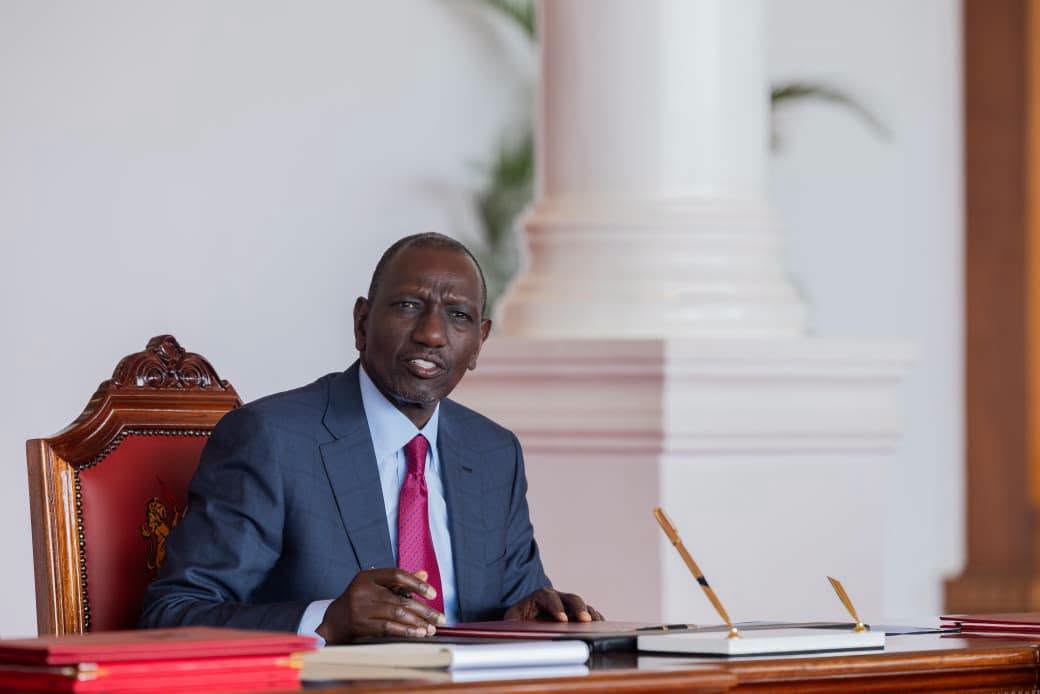
President William Samoei Ruto has assented to the Finance Bill, 2026 and the Appropriation Bill, 2026, officially bringing into force the Finance Act, 2026, even as controversy continues over the parliamentary process and renewed criticism from opposition leaders.
The signing, done at State House, Nairobi, clears the way for implementation of the national budget, which the government says will prioritise education, health, agriculture and economic stabilisation.
The passage of the Bill in the National Assembly has, however, sparked political debate after reports indicated that only about 40 Members of Parliament took part in the final vote, with a significant number absent and others voting against the proposals. Among those reported to have missed the sitting was Kiharu MP Ndindi Nyoro, alongside other legislators who have previously expressed reservations about the fiscal framework.
Opposition politicians and governance advocates have questioned whether the process reflected Parliament’s constitutional role of oversight, with critics arguing that the Parliament of Kenya has increasingly failed to act as an effective check on the Executive.
Opposition leaders dismissed the Finance Act, accusing the government of advancing a revenue strategy that, while framed as compliance enhancement, could still increase pressure on households through stricter enforcement measures.
President Ruto, however, defended the law, saying it does not introduce new taxes but instead targets tax avoidance, loopholes and leakages. He further maintained that there are no new taxes on freehold land, mitumba, rental income, bottled water, mobile money transactions, airtime, data, or packaging materials for essential goods.
The enactment comes against the backdrop of sustained public protests over taxation policy and the cost of living. Among the most referenced demonstrations are the June 25 protests in Kenya, during which human rights organisations reported fatalities and widespread injuries amid confrontations between police and demonstrators. The protests marked a turning point in public engagement with fiscal policy, forcing a withdrawal of earlier tax proposals and intensifying scrutiny of Parliament’s role in budget approval.
In defending the Finance Act and the broader budget, the government has pointed to increased allocations in key sectors. Education has received the largest share at KSh784 billion, followed by health at KSh175 billion and agriculture at KSh63 billion. The government has also set aside KSh21.5 billion for fuel stabilisation to cushion consumers against global price fluctuations.
Despite the government’s assurances, critics argue that Parliament’s role in safeguarding public interest has weakened, citing low participation in key votes and perceived alignment with Executive priorities. The debate is expected to continue as implementation of the Finance Act begins, with stakeholders closely watching its impact on household incomes, business costs and public service delivery.


