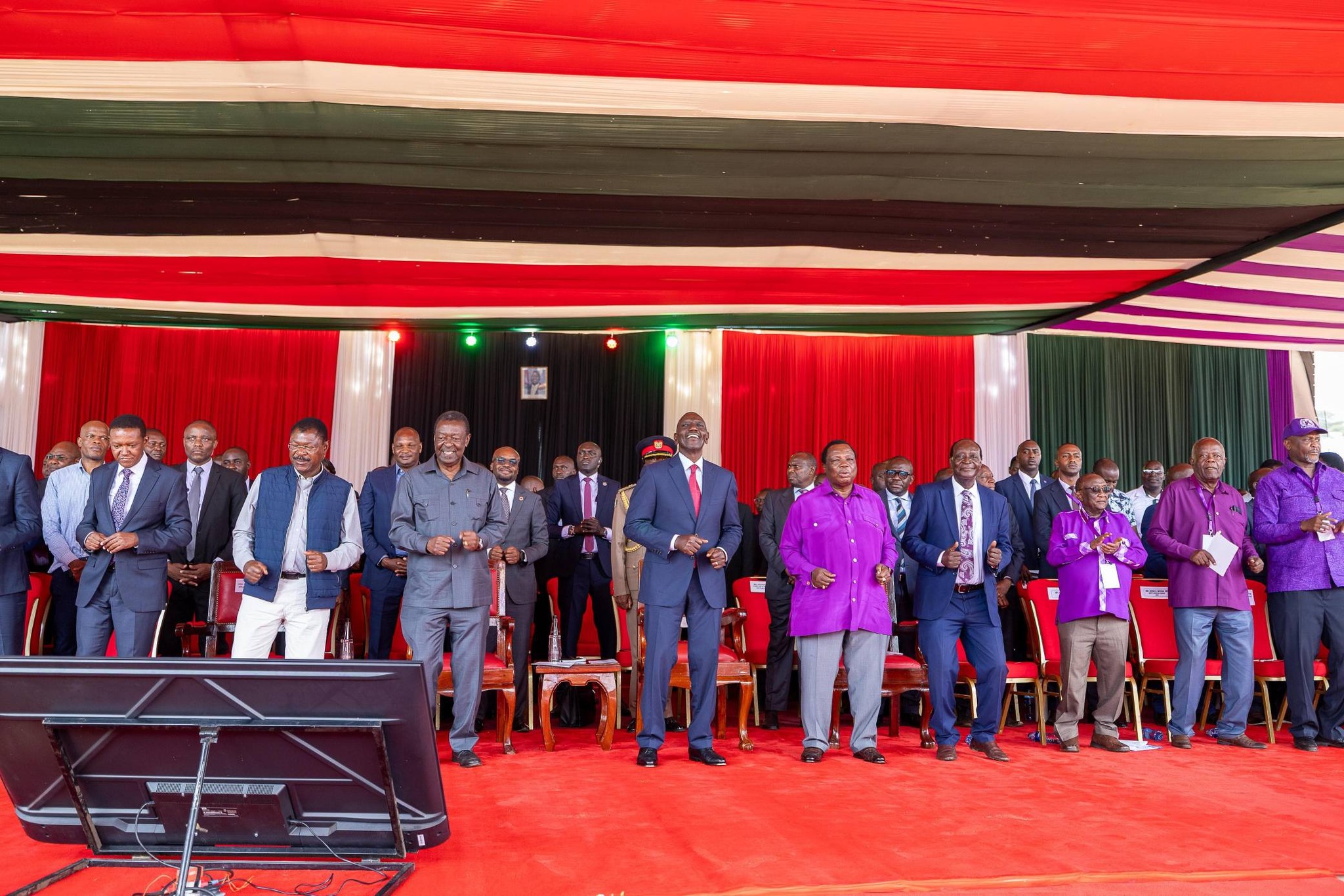
National Assembly Speaker Moses Wetang'ula has mounted a spirited defence of President William Ruto's administration, insisting that Western Kenya has been adequately represented in government and has benefited significantly from key appointments and development projects under the Kenya Kwanza administration.
The Speaker's remarks come amid growing political debate over the region's place in government, with some leaders claiming Western Kenya has not received its fair share of national resources and influence despite overwhelmingly backing President Ruto in the 2022 General Election.
Wetang'ula dismissed the claims, arguing that Western Kenya occupies some of the most influential positions in government.
"Nobody can say Western Kenya has been excluded from government. We have the Speaker of the National Assembly, the Prime Cabinet Secretary, Cabinet Secretaries, Principal Secretaries and chairpersons of key parliamentary committees. The region is well represented," he said.
The Ford Kenya party leader has repeatedly urged the region to support President Ruto, arguing that political proximity to the centre of power is the surest path to development. On several occasions, he has maintained that "government is not for spectators" and that communities that actively participate in government decision-making are better positioned to negotiate for development projects.
Wetang'ula has also pointed to ongoing road projects, electricity connectivity programmes and investments in agriculture, particularly in the sugar sector, as evidence that the Kenya Kwanza administration has not neglected Western Kenya.
However, his position sharply contrasts with that of Trans Nzoia Governor George Natembeya, who has emerged as one of the region's fiercest critics of the national government. Natembeya has consistently argued that despite delivering millions of votes to President Ruto, the region remains economically disadvantaged and politically short-changed.
The governor has accused some leaders from Western Kenya of celebrating appointments while ordinary residents continue to grapple with poverty, unemployment and poor infrastructure.
"You cannot tell people they are in government because a few individuals have been appointed to senior positions. Representation must translate into opportunities and better lives for ordinary wananchi," Natembeya has previously said.
He has also championed his "Tawe Movement," calling on the people of Western Kenya to reject what he describes as politics of tokenism and demand accountability and tangible development outcomes.
Nairobi Senator Edwin Sifuna has equally questioned claims that regions are adequately represented merely because they have leaders occupying high offices in government. Sifuna has argued that political appointments should not be confused with equitable distribution of resources and opportunities.
"Being in government is not about having a few leaders sitting in offices in Nairobi. The real question is whether the people on the ground are benefiting through jobs, development and improved livelihoods," Sifuna has previously said.
The debate has exposed emerging political fault lines in Western Kenya as leaders position themselves ahead of the 2027 General Election. While Wetang'ula and Prime Cabinet Secretary Musalia Mudavadi have continued to defend President Ruto's administration and urged the region to remain within the Kenya Kwanza fold, leaders such as Natembeya and Sifuna have maintained that representation must be measured by the impact of government policies on ordinary citizens.
With political realignments gathering pace across the country, the question of whether Western Kenya has received adequate representation and development under President Ruto's administration is increasingly becoming one of the region's defining political conversations.


