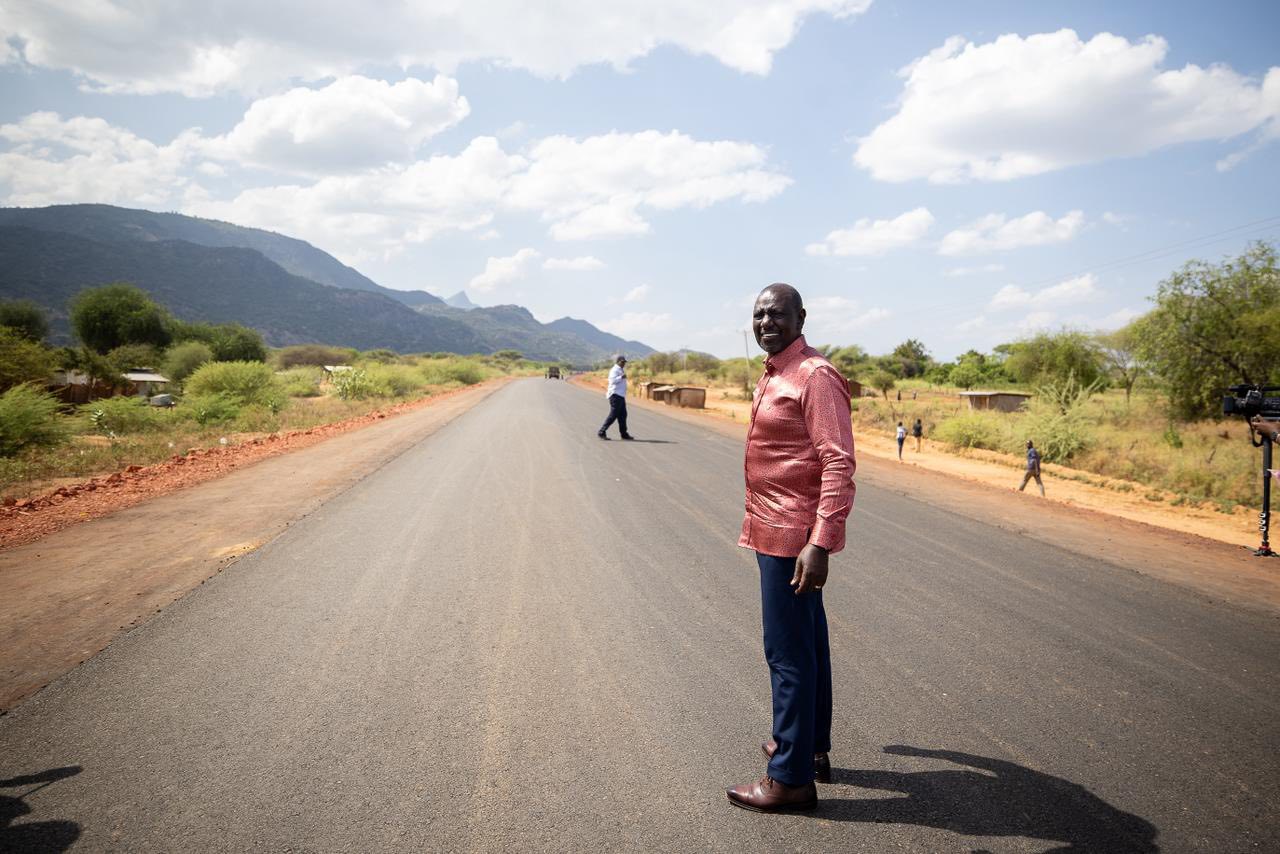
President William Ruto has officially opened the 820-metre Ngong Road–Naivasha Road Flyover in Nairobi, a Sh3.8 billion infrastructure project aimed at easing congestion along one of the city’s busiest transport corridors.
The Head of State said the flyover marks a major step in the government’s efforts to decongest Nairobi and improve mobility, noting that it is expected to significantly reduce traffic delays in the area.
“The opening of the 820-metre Ngong Road-Naivasha Road Flyover, a KSh3.8 billion investment, is a demonstration of our commitment to decongesting roads and improving mobility in Nairobi County, our capital city,” President Ruto said.
He added that the project will remove a major traffic bottleneck and improve the movement of people and goods across the capital.
“The flyover removes one of Nairobi's most persistent traffic bottlenecks, improving safety and restoring the smooth movement of people and goods along one of the city's busiest transport corridors,” he said.
Mr Ruto said the infrastructure is expected to reduce congestion by up to 60 per cent, lowering travel time and transport costs for commuters and businesses.
“It will ease congestion by up to 60 per cent, reducing travel time, lowering transport costs and making the Ngong Road corridor work better for everyone,” he added.
The President also outlined other ongoing and planned transport projects in Nairobi, including the Sh3 billion Upper Hill–Kenyatta Avenue viaduct, the Sh3.9 billion Talanta Sports City access roads, and the upgrading of State House Road at a cost of Sh1.6 billion. He further cited preparations for the dualling of Kiambu Road under a Sh30 billion investment and a Sh45 billion Intelligent Transport System covering more than 210 signalised junctions across the city.
“We are also undertaking one of the most ambitious urban road improvement programmes in Nairobi's history,” he said, adding that 729 kilometres of roads are currently under routine maintenance.
However, the projects have sparked mixed reactions, with critics questioning the government’s spending priorities amid rising cost of living concerns and pressure on essential services.
Some analysts and opposition-leaning leaders argue that while the infrastructure push is visible, it risks overshadowing investments in affordable housing, healthcare, and job creation, which they say are more urgent for ordinary Kenyans.
Others have also raised concerns over the scale of borrowing tied to major infrastructure developments, warning that long-term debt obligations could strain future budgets if not matched with strong economic returns.
Government supporters, however, have defended the projects, arguing that improved transport infrastructure is essential for economic growth, easing business costs, and attracting investment into the capital.
They maintain that congestion in Nairobi has long constrained productivity and that the ongoing upgrades are necessary to position the city as a modern regional hub.
The administration insists that the combined road programmes are part of a broader plan to transform Nairobi into a “globally competitive capital city and gateway to Eastern Africa.”


