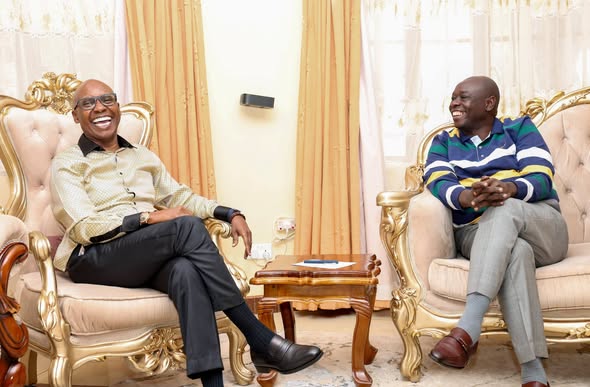
Businessman and Safina Party leader Jimi Wanjigi has cautioned opposition leaders that defeating President William Ruto in the 2027 general election will not be a straightforward task, warning that political assumptions could cost them dearly at the ballot.
Speaking during a media interview, Wanjigi argued that one of the biggest mistakes the opposition could make is believing that any candidate fronted against the incumbent would automatically secure victory. He insisted that the race would require strategic planning, strong messaging, and a credible alternative capable of winning public trust.
According to him, the political environment in the country demands more than coalition arithmetic or popularity contests, emphasizing that voters will ultimately decide based on leadership track records, economic performance, and policy direction.
Wanjigi further suggested that opposition unity alone would not guarantee success unless it is matched with a carefully selected flagbearer and a clear agenda that resonates with ordinary citizens.
His remarks come at a time when political realignments and early succession debates are beginning to take shape ahead of the 2027 elections, with both government-aligned and opposition figures positioning themselves for what is expected to be a highly competitive race.
Background
Kenya’s political landscape has historically been shaped by strong coalitions and ethnic-based alliances, especially during general elections. Since the reintroduction of multi-party politics in the 1990s, opposition groups have often struggled to remain united long enough to mount a successful challenge against incumbent governments.
President William Ruto came to power following the 2022 general election after defeating then-opposition leader Raila Odinga in a closely contested race. The election was largely framed around economic recovery, cost of living concerns, and governance reforms.
Since taking office, Ruto’s administration has pursued an economic reform agenda that includes fiscal tightening, increased taxation measures, and efforts to manage public debt. While the government argues these policies are necessary for long-term stability and development, they have also sparked widespread public debate.
Critics and sections of the opposition have linked rising public frustration to the high cost of living, increased taxation burdens, and economic pressure on households and businesses. These concerns have contributed to growing political debate about the government’s economic direction and public service delivery.
At the same time, supporters of the administration point to ongoing infrastructure projects, foreign investment efforts, and institutional reforms as indicators of progress under Ruto’s leadership.


