President William Ruto's latest announcement of multi-billion-shilling development projects in Makueni County has reignited debate over the growing perception that public projects are increasingly being presented as political rewards rather than constitutional obligations owed equally to all Kenyans.
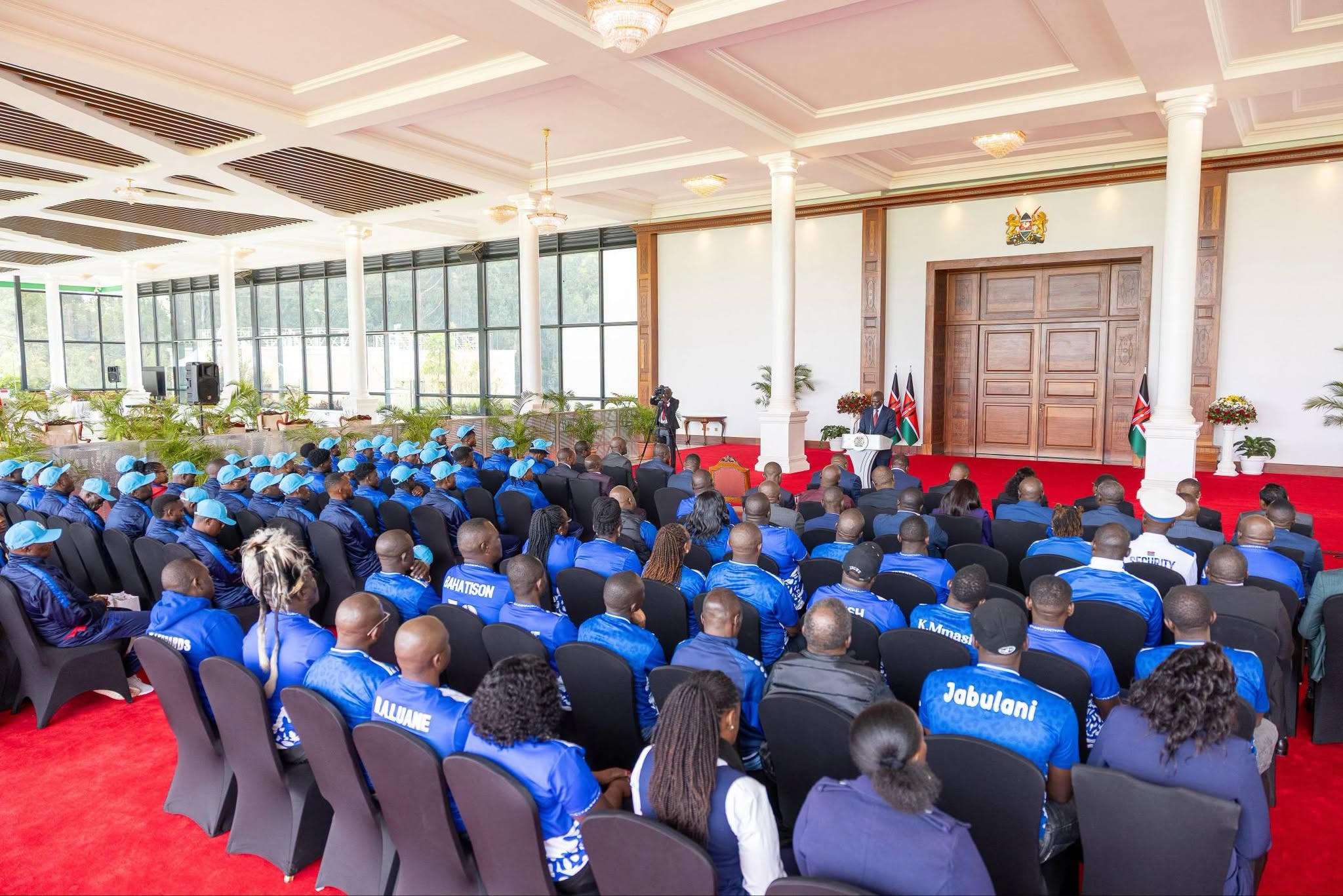
Hosting a delegation of grassroots leaders from Makueni led by Kibwezi West MP Mwengi Mutuse at State House on Saturday, President Ruto unveiled more than Sh30 billion worth of investments. The package includes Sh15 billion for affordable housing, 11 modern markets and student hostels, Sh2.7 billion for roads, Sh10.6 billion for the completion of Thwake Dam, and Sh2 billion disbursed through the Social Health Authority (SHA) to hospitals in the county.
"We are bringing together leaders and citizens from across the political divide to unite the country and accelerate our country's transformation," the President said.
He added: "In Makueni County, we are investing KSh15 billion in affordable housing, 11 modern markets and hostels for university and college students."
President Ruto also announced that the government would spend Sh2.7 billion on roads, including the Emali–Matiliku and Ukia–Kyuasini–Kyaambeke roads, while construction of the Machinery–Kyumani and Wote–Kako roads would begin soon.
"To address water challenges and unlock the agricultural potential of the entire Ukambani region, we have secured KSh10.6 billion to complete Thwake Dam," he said.
On healthcare, the President said SHA had already paid Sh2 billion to hospitals in Makueni to improve access to medical services.
While residents welcomed the projects, the announcements have revived criticism that government-funded development is increasingly following political realignments instead of long-term national planning.
The debate has intensified in recent months as several regions have received major development commitments shortly after political leaders met the President or declared support for his administration.
In Meru County, President Ruto stepped up development tours after the county's political leadership shifted following the impeachment of former Governor Kawira Mwangaza. During the visits, he announced plans to fast-track roads, markets, irrigation programmes and agricultural investments while urging local leaders to work closely with the national government.
A similar pattern emerged after President Ruto and former Prime Minister Raila Odinga entered into a broad-based political arrangement. Soon afterwards, the government rolled out fresh development commitments in Kisumu, Homa Bay, Migori and Siaya, including affordable housing projects, roads, fish landing sites, electricity connectivity and market infrastructure.
State House has also increasingly become the venue for announcing development projects following meetings with leaders from regions previously considered opposition strongholds.
Earlier this year, President Ruto hosted officials of AFC Leopards at State House, where he pledged government support for the construction of a modern stadium for the club. While football fans welcomed the commitment, critics questioned why a national sports project appeared to be tied to a political event instead of being processed through the Ministry of Sports and the Sports Fund.
The debate resurfaced during the recent Ol Kalou parliamentary by-election after the government announced fresh development commitments in Nyandarua as the constituency was immersed in an intense political contest.
Opposition leaders argue that while the projects themselves are necessary, the manner in which they are announced creates the impression that development is a reward for political cooperation.
Former Deputy President Rigathi Gachagua has repeatedly accused the Kenya Kwanza administration of turning taxpayer-funded projects into political gifts.
"Development is not a favour from the President. Roads, hospitals and water projects belong to Kenyans because they pay taxes," Gachagua has said during previous public rallies.
He has also criticised the growing practice of political leaders making pilgrimages to State House in pursuit of development projects.
"The Constitution is very clear. Development should not be negotiated at State House. Projects are identified by ministries, funded through the Budget and approved by Parliament. No Kenyan should be forced to change political allegiance in order to get development," he said.
According to Gachagua, every part of the country deserves equitable development regardless of political affiliation.
"Every Kenyan deserves development whether they voted for the government or the opposition," he said.
ODM Secretary-General Edwin Sifuna has also questioned what he describes as the personalisation of public expenditure.
"The President is not an accounting officer. Public money is appropriated by Parliament. State House is not where budgets are made," Sifuna has previously said, arguing that national projects should flow from approved government plans rather than political negotiations.
He has maintained that while the Head of State has the constitutional responsibility to oversee implementation of government programmes, public projects should not appear to be rewards for political loyalty.
Under the Constitution, national development projects are financed through taxes collected by the government, appropriated by Parliament through the annual budget, and implemented by ministries, departments and agencies. The President provides overall policy direction and oversees implementation but does not personally allocate public funds outside the budgetary process.
Political analyst James Onyango says the concern is not the projects themselves but the perception created by the timing and manner of their announcement.
"The challenge is not the projects. The concern is when announcements consistently coincide with political defections, cooperation agreements or meetings at State House. That creates the impression that development follows political loyalty instead of national planning," he said.
Political analyst Mathew Maina argues that every administration uses development to build political capital, but perception remains critical.
"The difference is whether citizens perceive those projects as national investments funded by taxpayers or as political rewards from the President," he said.
The government has consistently rejected accusations of favouritism, insisting that projects are being implemented across all 47 counties based on national priorities and available resources.
President Ruto maintains that his administration is committed to working with leaders from every region.
"We are bringing together leaders and citizens from across the political divide to unite the country and accelerate our country's transformation," he said.
As political realignments gather pace ahead of the 2027 General Election, every State House meeting followed by announcements of roads, dams, markets, hospitals or housing projects is attracting closer scrutiny.
For many observers, the debate is no longer whether the projects are necessary—they clearly are—but whether development financed by taxpayers is increasingly being framed as a political dividend for cooperation with the government rather than a constitutional entitlement guaranteed to every Kenyan.


