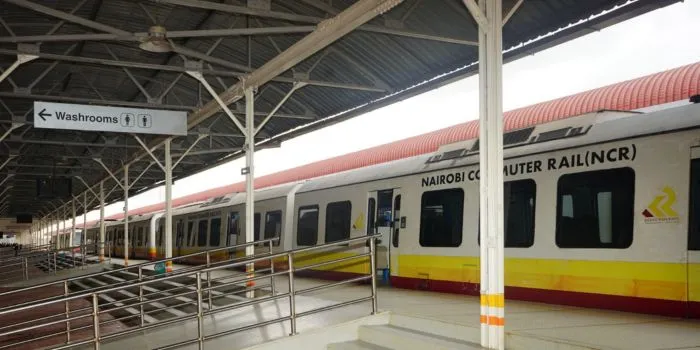
Nairobi has moved closer to developing an underground railway system after the County Executive Committee (CEC), chaired by Governor Johnson Sakaja, approved the implementation framework for the first phase of the Nairobi Metropolitan Mass Rapid Transit System (NMRTS).
The project will involve the construction of an underground railway line through Nairobi’s Central Business District (CBD), with an extension towards Eastlands, one of the city’s busiest commuter corridors.
According to the Nairobi County Government, the railway is expected to help ease traffic congestion, reduce commuter travel times and improve connectivity between residential areas in Eastlands and the city centre.
Governor Johnson Sakaja said the project represents a major step in modernising Nairobi’s public transport system and addressing the city’s long-standing transport challenges.
The underground railway will include integrated transit terminals that will connect rail services with buses, pedestrian pathways and other transport systems, allowing commuters to move more efficiently across the city.
The county government said the project is also expected to create thousands of employment opportunities during both construction and operation stages while contributing to efforts to reduce carbon emissions.
The proposal was presented by Dr Silvester Kasuku, Governance Advisor in the Executive Office of the President, highlighting cooperation between the national government and Nairobi City County in implementing the major infrastructure project.
Planning for the second phase of the project is already underway and will extend the railway network to areas including Westlands, Ngong Road and Lang’ata. The expansion is expected to serve commuters from Ongata Rongai, Ngong and Nairobi’s western corridor.
Before construction begins, the county government will undertake public participation exercises, engage transport sector stakeholders and complete coordination with relevant government agencies.
Once completed, the underground railway will be integrated with Nairobi’s Bus Rapid Transit (BRT) system to create a connected, high-capacity public transport network aimed at improving mobility within the capital.


