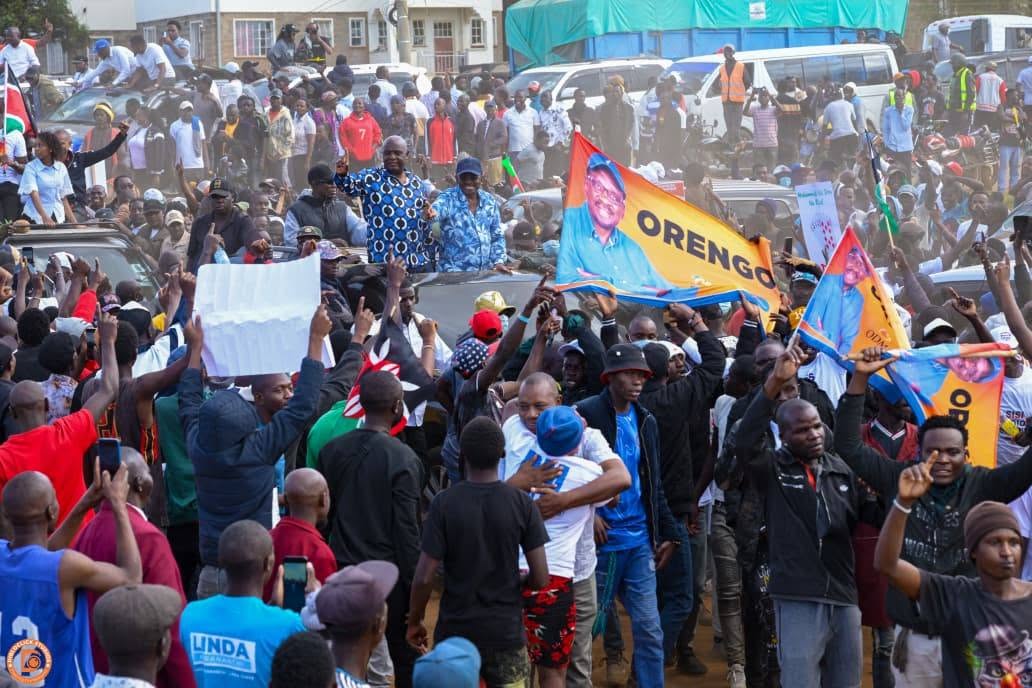
Nairobi Senator and Linda Mwananchi leader Edwin Sifuna has accused Safaricom PLC of shutting down the movement's public fundraising paybill, alleging the telecommunications company acted under political pressure.
In a statement posted on Thursday, Sifuna claimed the paybill had been deactivated following instructions from unnamed individuals in government.
"Safaricom PLC wamefunga paybill ya mwananchi after 'orders from above'," Sifuna posted on his social media pages.
The allegation comes just days after Sifuna launched a public fundraising drive, urging Kenyans to contribute as little as Sh10 through a dedicated paybill to finance the activities of the Linda Mwananchi movement.
The initiative was presented as an alternative to relying on wealthy political financiers and was launched following remarks by COTU Secretary-General Francis Atwoli, who had offered to help raise Sh1 billion for Sifuna's anticipated presidential campaign.
Speaking during a radio interview earlier this week, Sifuna rejected Atwoli's offer, insisting his political movement would instead be funded by ordinary Kenyans.
"I do not need your money. Let Kenyans continue giving me money."
He added: "I would rather be indebted to millions of Kenyans because they gave me Sh10 each than to one person who gave me Sh1 billion."
Sifuna unveiled the paybill as part of what he described as a transparent, citizen-funded political model. Within hours of its launch, he announced that supporters had contributed more than Sh500,000, saying the response demonstrated growing public support for the Linda Mwananchi movement.
The paybill had also become central to Sifuna's response to critics who questioned how the movement was financing its nationwide activities. He has repeatedly maintained that the organisation is funded through small public donations and not by wealthy political patrons or former President Uhuru Kenyatta, whose alleged involvement he has consistently denied.
The fundraising campaign itself was triggered by Atwoli's remarks during a church fundraiser in Kakamega, where the veteran trade unionist argued that anyone seeking the presidency required substantial financial backing and influential networks.
"Na wewe ukitaka kuwa president katika Kenya hii, mimi ndiye naweza kukusaidia kuraise hata one billion kwa dakika moja ili uwe president," Atwoli said.
Atwoli also reignited political debate by declaring that he holds the "password" to Kenya's leadership, suggesting that major political success depends on established power brokers.
Sifuna dismissed the claims, asking:
"Mzee Atwoli alisema yeye ndiye ako na password ya uongozi ya Kenya. Kwanini hakupea Wetang'ula, Mudavadi na Raila Odinga? Sai tungekuwa Ikulu."
Thursday's allegation against Safaricom marks a new chapter in the dispute. While Sifuna suggested the paybill was disabled on the instructions of unnamed authorities, he did not provide evidence to substantiate the claim or identify the officials allegedly involved.
Safaricom had not publicly responded to the accusation by the time of publication.
The company has previously maintained that the activation, suspension and management of M-Pesa paybills are governed by contractual obligations, regulatory requirements and compliance procedures, including anti-money laundering and know-your-customer rules. There was no immediate indication that the reported closure was linked to any regulatory breach.
The latest development is likely to intensify debate over the role of private companies in politically sensitive matters, particularly as the Linda Mwananchi movement positions itself as a grassroots campaign financed through public contributions rather than wealthy donors.


