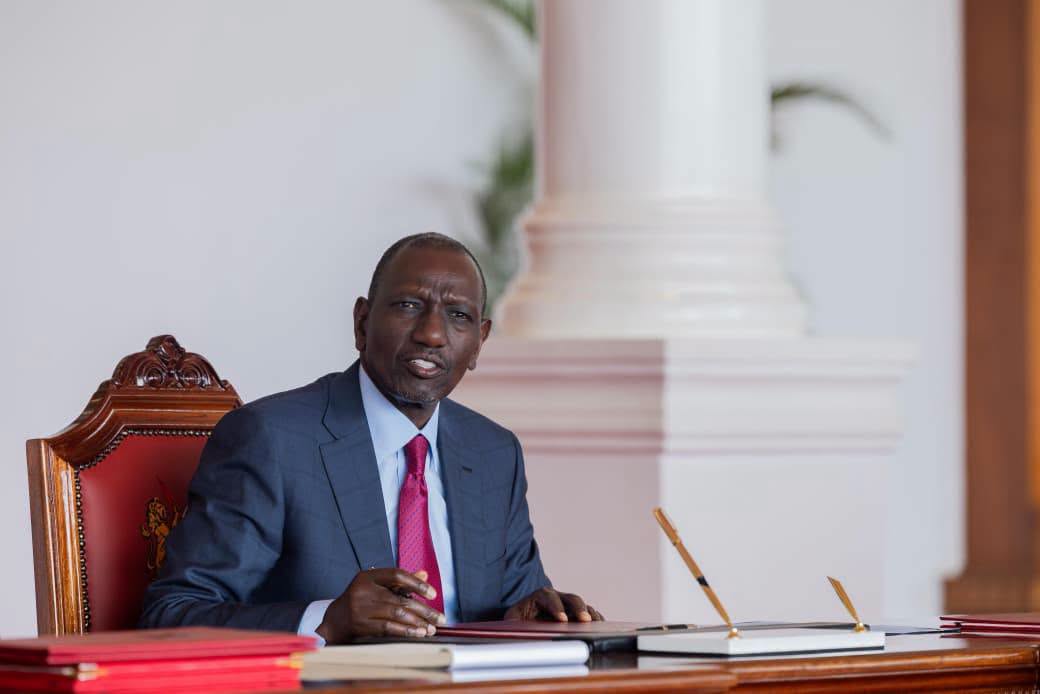
President William Ruto has renewed his push to overhaul Kenya’s higher education financing system, saying proposed legal changes will enable the government to support all university and tertiary students.
Speaking during a public engagement, President Ruto said the proposed Higher Education Loans Amendment Bill would provide a legal framework to expand financing for learners pursuing higher education.
“Iko sheria, mbunge, sahii ya Higher Education Loans Amendment Bill ambayo itatuwezesha kusomesha watoto wetu wote wa university and tertiary institutions,” President Ruto said.
The President said the proposed law would address long-standing challenges in financing higher education and ensure that students are not locked out of universities and colleges because of financial difficulties.
The push comes after his administration introduced major changes to how university education is funded, replacing the previous system with a student-centred funding model that assesses learners based on their financial need.
From university funding crisis to new model
When President Ruto took office in 2022, he inherited a higher education sector facing mounting financial pressure.
Public universities had accumulated billions of shillings in debts, struggled to meet operational costs and relied heavily on government funding to sustain teaching and learning.
The previous funding model, based on institutional capitation, had been criticised for failing to adequately match resources with the growing number of students enrolling in universities.
Under the old system, universities received government support based largely on student numbers, with institutions arguing that the money was insufficient to meet the real cost of training.
The government said the model benefited institutions more than students and did not properly consider the financial circumstances of individual learners.
It was against this background that the Kenya Kwanza administration introduced the Higher Education Financing (HEF) model in 2023.
The student-centred funding model
The new model shifted the focus from funding universities directly to supporting individual students.
Students applying for higher education support are assessed and placed into different categories based on their level of need.
Funding is provided through a combination of government scholarships, loans and household contributions.
The government argued that the model would ensure that the poorest students receive the greatest support while making the system more sustainable.
President Ruto defended the changes, saying the old system had failed to identify students who needed assistance most.
He said the new approach would ensure that no student with the ability to pursue higher education is denied an opportunity because of poverty.
Challenges and criticism
However, the reforms have faced resistance from students, parents and opposition leaders who have questioned the affordability and implementation of the new system.
Some students complained that the funding allocated under the new model was insufficient to meet tuition and living expenses.
Others raised concerns over the classification process, with some saying they were placed in categories that did not reflect their actual financial circumstances.
Opponents of the reforms argued that higher education should remain accessible and warned that increased reliance on loans could burden young graduates with debt.
The government, however, maintained that the model was designed to protect access while ensuring that universities remain financially sustainable.
The next phase: legislative changes
It is within this debate that President Ruto is now backing amendments to the Higher Education Loans framework.
The proposed Higher Education Loans Amendment Bill is expected to strengthen the legal foundation for student financing and expand the government’s ability to support learners in universities and tertiary institutions.
The President has argued that the reforms will make it possible for the government to finance all students who qualify for higher education support.
“It will enable us to educate all our children in universities and tertiary institutions,” he said.
The proposed changes come as the government seeks to bring together different aspects of higher education financing, including scholarships, loans and bursaries.
A promise with political weight
The education financing debate has become a major political issue for President Ruto, who campaigned in 2022 on a platform of expanding opportunities for young Kenyans.
The President has repeatedly linked education access to his broader economic agenda, arguing that skills development is central to creating jobs and growing the economy.


