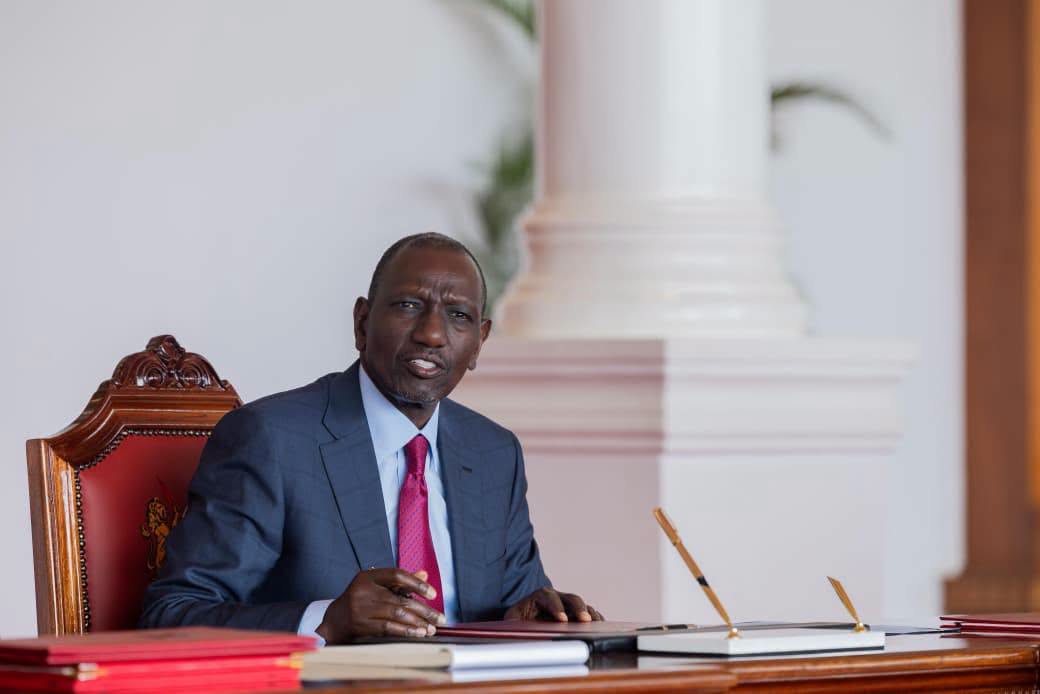
President William Ruto has placed youth employment at the centre of his government’s agenda in a fresh attempt to reconnect with a generation that has emerged as one of his administration’s strongest critics.
The President on Friday launched the Next Generation of Kenya Youth Employment Programme at State House, Nairobi, in partnership with the United Nations Development Programme (UNDP) and the Kenya Private Sector Alliance (KEPSA), targeting more than 30,000 young Kenyans in the first phase and scaling up to 100,000 beneficiaries within three years.
The initiative will provide private sector internships, entrepreneurship training, financial literacy, life skills and workplace readiness programmes as the government seeks to address the persistent challenge of youth unemployment.
But beyond economic policy, the programme carries a significant political dimension for a president whose relationship with young Kenyans, particularly Generation Z, has deteriorated sharply over the past year.
President Ruto, who rode to power in 2022 on a message of economic empowerment and promises to create opportunities for ordinary citizens, has faced growing criticism from young voters who accuse his administration of increasing the cost of living, introducing unpopular taxes and failing to deliver enough jobs.
The fallout reached its peak during the youth-led anti-Finance Bill protests, where thousands of young Kenyans took to the streets to oppose proposed tax measures. The protests, largely organised online by Gen Z activists, became a defining political moment for the Ruto administration.
The demonstrations forced the government to withdraw the Finance Bill and triggered a wider national conversation about youth frustration, governance and accountability.
Since then, the President has made several attempts to re-engage young Kenyans, including holding meetings with youth groups, promising reforms and shifting focus towards employment creation and economic opportunities.
Launching the new programme, President Ruto said young people remained central to Kenya’s future.
“We remain committed to placing our young people at the heart of our development agenda, recognising that their talent and determination are the foundation upon which we are building a stronger, more prosperous nation,” he said.
He described the government’s KSh2 billion investment in the programme as a statement of confidence in the potential of Kenya’s youth.
“This is more than a financial investment; it is a declaration of confidence in the limitless potential of Kenya’s young people and in the future of our nation,” President Ruto said.
The initiative is expected to rely heavily on private sector participation, with employers being encouraged to provide internship opportunities and mentorship to young professionals.
“We commend private sector partners for joining us in this shared national endeavour, and encourage more employers to open their workplaces, share their expertise and mentor the next generation of Kenyan professionals,” the President said.
However, political observers note that winning back the confidence of young voters will require more than employment programmes, arguing that Gen Z concerns go beyond jobs to include governance, transparency, public debt, taxation and accountability.
The youth demographic remains politically crucial, with millions of young Kenyans expected to influence the outcome of the 2027 General Election.
For President Ruto, the employment initiative is both an economic intervention and a political recovery strategy aimed at repairing a relationship damaged by months of public anger and mistrust.
His administration has maintained that creating jobs, expanding entrepreneurship and attracting private sector investment are the most sustainable solutions to youth unemployment.
Critics, however, are likely to measure the success of the programme by the number of permanent opportunities created and whether it delivers meaningful economic improvement for young people facing unemployment and rising living costs.


