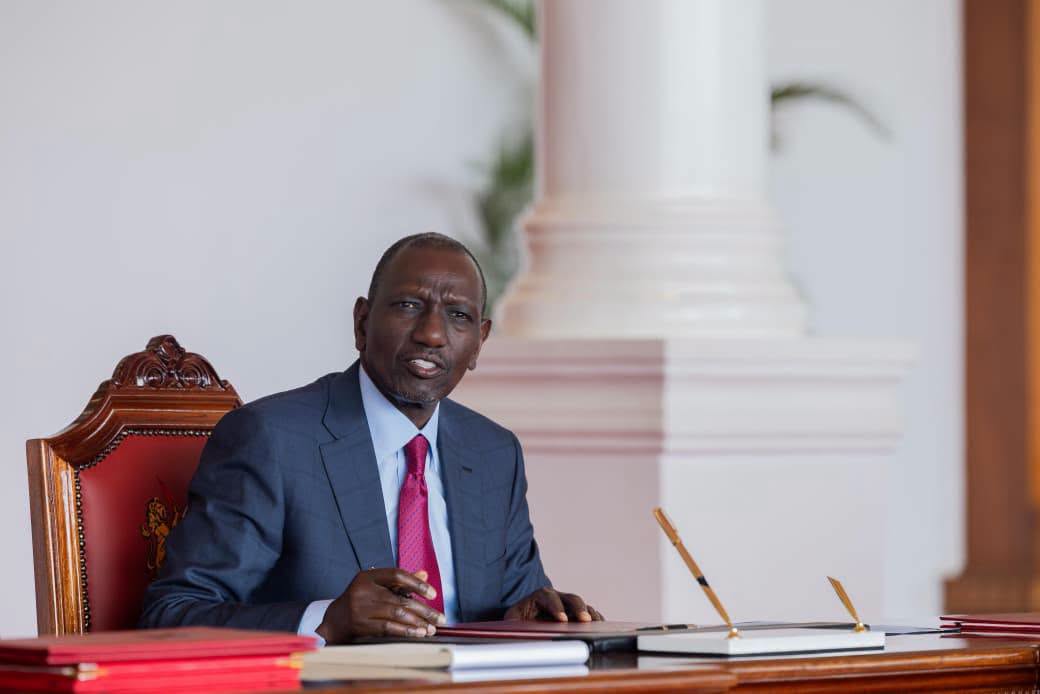
President William Ruto has invited Kenyans to help craft the country's next long-term development blueprint, saying the proposed plan should be owned by citizens and not the government as Vision 2030 approaches its final phase.
In an address from State House, Nairobi, on Thursday, Dr Ruto announced that nationwide public consultations will begin on August 12, bringing together citizens, professionals, businesses, religious leaders, workers, academia and civil society to chart Kenya's development path beyond Vision 2030.
Describing the exercise as the country's most consequential national conversation since the promulgation of the 2010 Constitution, the President said Kenyans must decide the kind of nation they want to leave to future generations.
"This is not a Government project. It is not a political agenda; it is a national undertaking that belongs to every Kenyan. The question before us is simple but profound: What kind of Kenya do we want to leave to future generations?" he said.
The Head of State said Kenya should draw lessons from countries such as South Korea, China and Singapore, which have transformed their economies through long-term planning and investment in human capital.
"We, too, must have the courage to ask why we have not fulfilled our full potential and, more importantly, what we must do differently," he said.
Dr Ruto argued that the Constitution requires governments to expand opportunity, create wealth and improve citizens' lives through quality healthcare, education, affordable housing and food security.
The consultations, he said, will culminate in a new long-term national development framework to succeed Vision 2030.
The announcement comes as the government implements the Bottom-Up Economic Transformation Agenda (BETA), its flagship economic programme that prioritises agriculture, affordable housing, healthcare, manufacturing and the digital economy.
However, the proposal has already drawn criticism from opposition leaders and governance experts, who question whether Kenya needs another development blueprint when several policy frameworks remain only partially implemented.
Former Deputy President Rigathi Gachagua, who has launched his own nationwide consultations ahead of the 2027 General Election, has maintained that the country's biggest challenge is not the absence of plans but the failure to implement existing ones.
"The problem facing Kenya is not a shortage of ideas. It is leadership and implementation," Gachagua has repeatedly argued during his public engagements.
Critics also questioned the timing of the initiative, coming barely a year before the 2027 General Election, saying it risks being viewed as an early campaign platform despite the President's insistence that it is a non-political exercise.
Some opposition leaders argue that the government should first account for the implementation of Vision 2030 and fulfil promises under the Kenya Kwanza manifesto before embarking on another national planning process.
Political analyst James Otieno said the success of the exercise will depend on public confidence in the process.
"Long-term planning is necessary, but Kenyans will judge this initiative by whether their views influence policy and whether the government demonstrates commitment to implementing what is agreed," he said.
Economist James Ogutu welcomed the move to begin planning beyond Vision 2030 but cautioned that the country must avoid producing another policy document without adequate financing and implementation mechanisms.
"The challenge has never been planning. Kenya has many well-written policy documents. The real test is execution and consistency across administrations," he said.
Vision 2030, launched in 2008, sought to transform Kenya into a newly industrialising, middle-income country through sustained economic growth and improved quality of life.
With four years remaining before the blueprint expires, the proposed consultations are expected to shape the country's next development agenda and influence policy priorities beyond 2030.
Whether the exercise succeeds in building national consensus may depend on how inclusive the process becomes and whether the recommendations translate into measurable action rather than another policy document.


