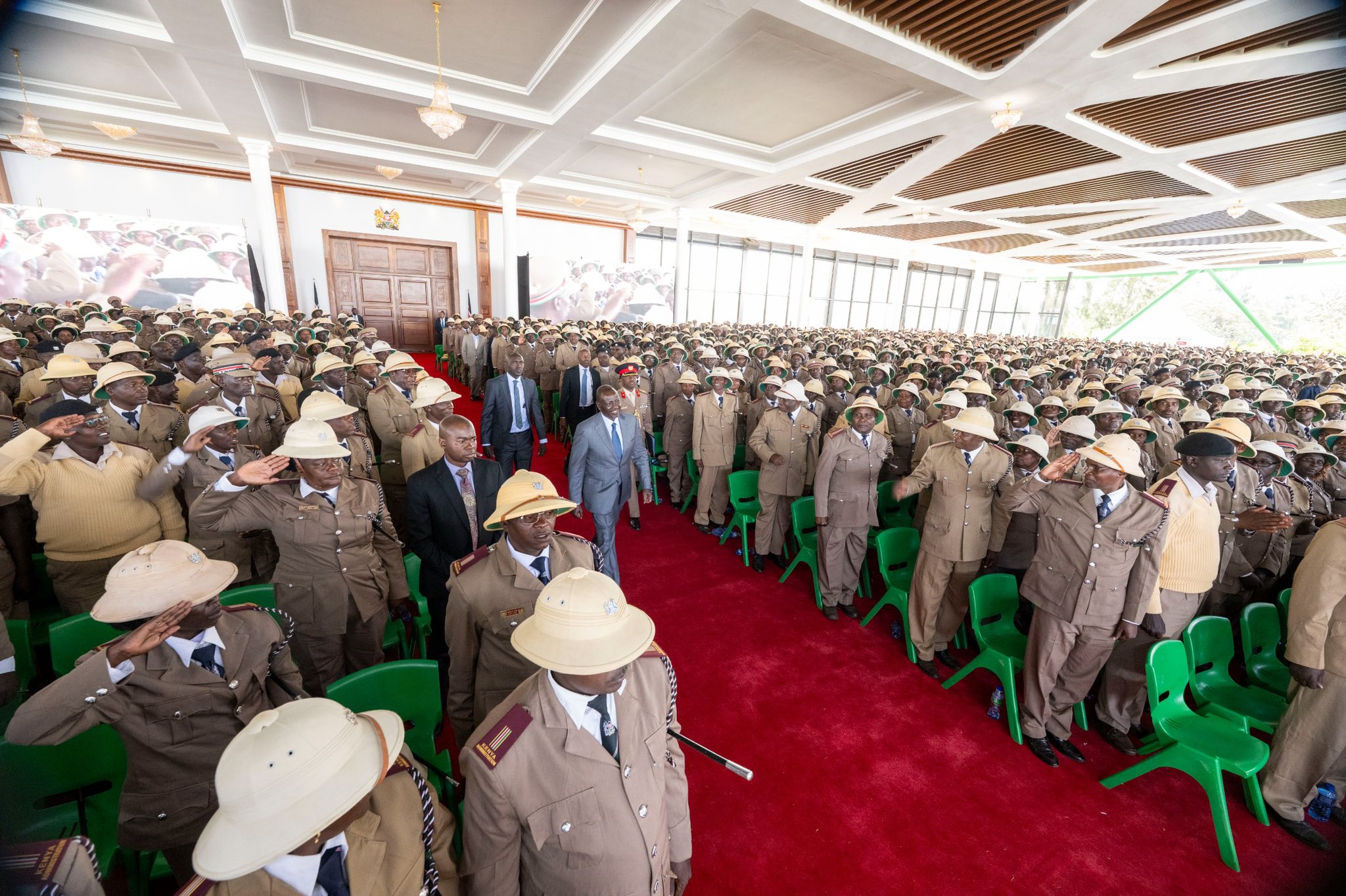
President William Ruto has enlisted more than 106,000 village elders to spearhead a nationwide campaign for his proposed National Development Charter, a move that analysts say could also strengthen his grassroots political machinery ahead of the 2027 General Election.
Speaking at State House, Nairobi, after hosting more than 10,000 village elders drawn from across the country, the President said the elders would play a central role in taking the conversation on the proposed charter to every corner of the country to ensure it reflects the aspirations of ordinary Kenyans.
The meeting marked the most significant engagement between the Head of State and the village elders since the Kenya Kwanza administration took office, coming as political activity gathers pace ahead of the next election.
"We call on leaders at the grassroots to champion the national conversation I have proposed on the National Development Charter and to ensure the outcome is people-driven, citizen-centred and future-focused," President Ruto said.
"This conversation cannot remain in conference halls or Government offices. It must reach every county, every ward, every village and every household."
The President said the proposed charter is intended to anchor Kenya's long-term development agenda around the economic and social rights guaranteed under Article 43 of the Constitution.
"Our goal is to give practical meaning to the promise of Article 43 of our Constitution: healthcare for every family, adequate housing and sanitation, freedom from hunger, clean and safe water, social security, and education for every child," he said.
Beyond the policy message, the meeting delivered tangible benefits to the village elders.
President Ruto announced that the government had formally integrated 106,000 village elders into the National Government Administration system, describing them as critical links between citizens and the State.
Beginning this month, each village elder will receive a monthly stipend of Sh3,000. The government also plans to pay their Social Health Authority premiums from January 2027, provide them with smartphones to support their work and deploy more Administration Police officers to improve security at the grassroots.
"We have onboarded 106,000 village elders across the 47 counties into the National Government Administration system, bringing the Government closer to the people," the President said.
Political observers, however, see the initiative as carrying significance beyond public administration.
With the 2027 General Election less than two years away, the mobilisation of village elders is expected to deepen the Kenya Kwanza administration's presence at the grassroots, where the officials command influence in community mobilisation, dispute resolution and dissemination of government information.
The timing of the announcement has already drawn political attention, particularly the decision to roll out financial incentives and social protection benefits months before the country enters a heightened campaign period.
Opposition leaders have previously accused the government of using development programmes and administrative structures to consolidate political support, claims the Kenya Kwanza administration has consistently rejected.
Government officials maintain that the programme is part of broader reforms aimed at strengthening service delivery and recognising the contribution village elders have made for decades without formal remuneration.
Village elders have historically served as the first point of contact between citizens and government administrators, helping resolve local disputes, identify vulnerable households, coordinate disaster response and support implementation of government programmes.
The latest initiative significantly expands their role by placing them at the centre of the proposed National Development Charter conversations, a process that is expected to run over the coming months.


