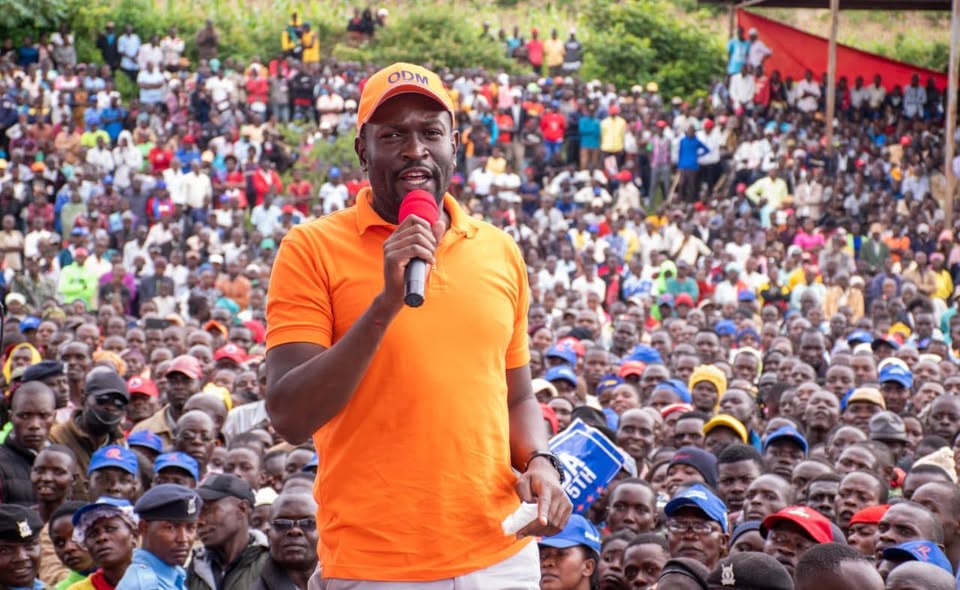
Nairobi Senator Edwin Sifuna has renewed calls for electoral reforms to allow police officers deployed away from their registered polling stations to vote, arguing that thousands of officers are denied a fundamental constitutional right every election cycle.
Sifuna said it was unfair that security officers who play a critical role in protecting the electoral process are often unable to participate in the very exercise they help secure.
He argued that the Constitution guarantees every Kenyan the right to take part in elections and that deployment of officers to distant stations should not automatically translate into exclusion from voting.
"Article 38(2) of the 2010 Constitution grants every citizen the right to free and fair participation in elections. However, during election time, thousands of police officers find themselves posted away from their registered polling centres, thereby disenfranchising them and denying them the right to determine the destiny of the country, like other citizens," Mr Sifuna said.
The senator said advancements in technology and lessons from other voting arrangements, including participation by Kenyans in the diaspora, provide an opportunity to rethink how members of the security services participate in elections.
"In the digital era, where diaspora Kenyans have access to the ballot, police officers serving in faraway stations should be able to join other citizens in exercising this critical constitutional right," he said.
The remarks come as preparations for the 2027 General Election gather pace, with electoral reforms expected to dominate conversations among political parties, civil society groups and election stakeholders.
Sifuna said during elections, thousands of police officers are deployed across the country to maintain law and order, secure polling stations and support the work of election officials.
However, these deployments often take officers far away from their registered polling stations, creating a dilemma where those tasked with protecting democracy are unable to directly participate in it.
"Unlike ordinary voters who return to their polling centres to cast ballots, security officers are usually required to remain at their assigned posts throughout the voting period," Sifuna said.
Sifuna's proposal seeks to address this gap by ensuring that deployment does not amount to loss of voting rights.
The debate raises questions on whether Kenya's electoral system should introduce special voting arrangements for security personnel, similar to those provided for certain categories of voters.
The issue adds to a growing list of electoral questions expected to shape preparations for the 2027 polls, including voter registration, technology, election financing and access to the ballot.
The Independent Electoral and Boundaries Commission has previously undertaken measures to expand voter participation, including facilitating voting for Kenyans living abroad and special categories of voters.
However, extending similar arrangements to police officers and other security personnel has remained a contentious issue, largely due to concerns over maintaining the secrecy and integrity of the ballot.
Electoral experts have argued that any special voting mechanism would require strict safeguards to prevent manipulation and ensure every vote carries the same weight.
Sifuna's remarks come at a time when political parties are positioning themselves ahead of the 2027 General Election, with questions around electoral fairness expected to remain central to national debate.
The senator, who also serves as Secretary-General of the Orange Democratic Movement, has previously been vocal on electoral reforms and issues around strengthening democratic institutions.
His latest call places focus on a group that is often visible during elections but rarely discussed as voters — police officers themselves.
"Security personnel have historically been viewed primarily as custodians of elections rather than participants in the democratic process," Sifuna said.
Sifuna argues that this approach denies them equal citizenship and that reforms are needed to ensure that protecting elections does not come at the cost of exercising the right to vote.


