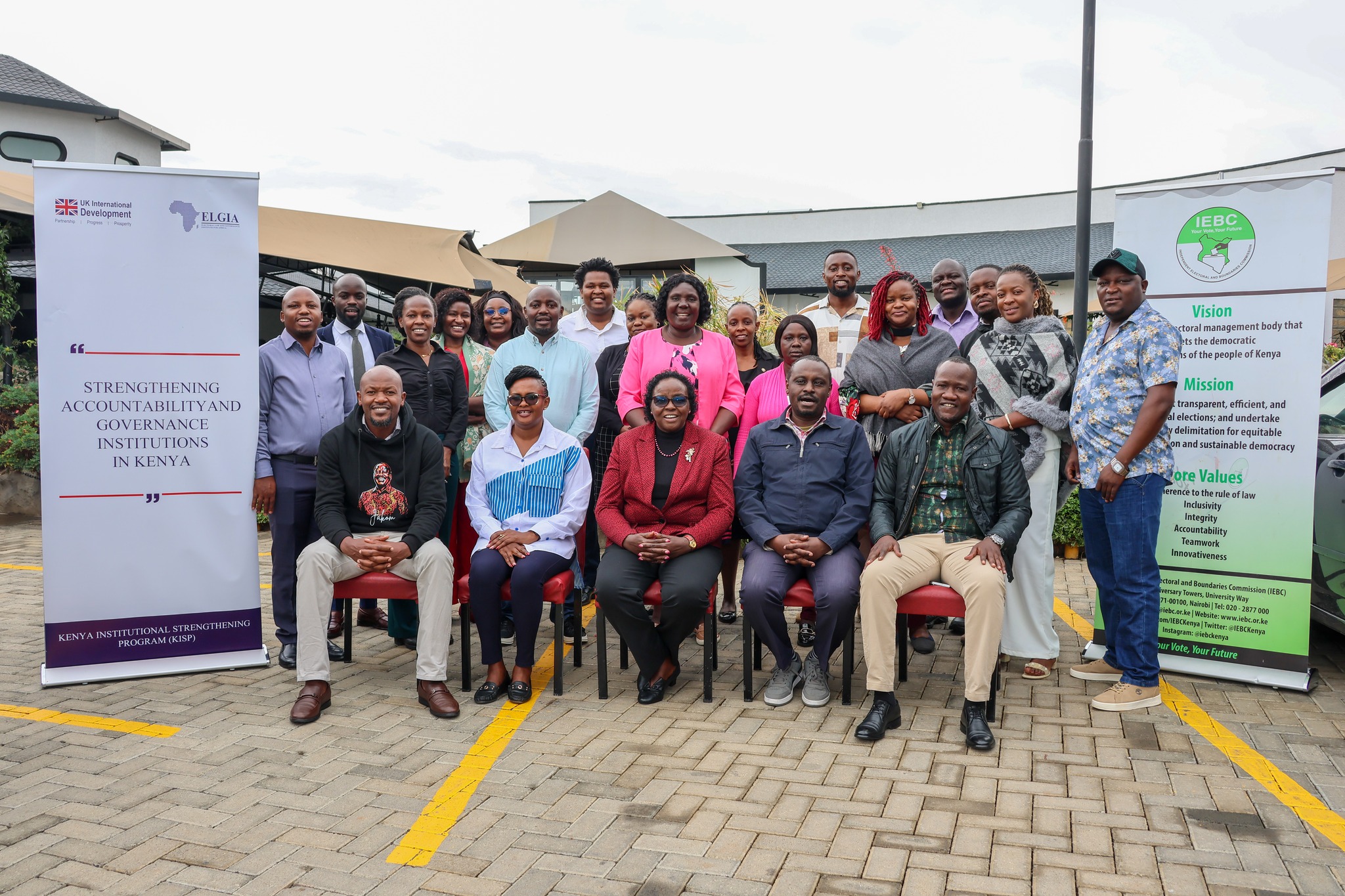
The Independent Electoral and Boundaries Commission (IEBC) has stepped up efforts to increase voter registration and participation among Kenyans living abroad as it prepares for the 2027 General Election.
IEBC chairman Erastus Ethekon, accompanied by Commissioner Alutalala Mukhwana, led a delegation to the Kenyan High Commission in Kigali, Rwanda, where they held talks on improving electoral services for Kenyans in the diaspora.
The delegation was received by Kenya’s High Commissioner to Rwanda, Janet Mwawasi Oben, and her team. The chairperson of the Kenya Diaspora Association in Kigali also attended the meeting.
The discussions focused on strengthening collaboration between the electoral commission, Kenyan missions abroad and diaspora organisations to address challenges that have historically affected Kenyans seeking to participate in elections from outside the country.
According to the IEBC, the meeting explored ways of enhancing diaspora voter registration and participation, improving access to electoral services and addressing operational and identification challenges facing Kenyans living abroad.
The commission said structured partnerships with Kenyan diplomatic missions and diaspora organisations would be important in ensuring that eligible citizens living outside the country can participate in elections through an electoral process that is accessible and credible.
The Kigali engagement comes as the commission intensifies preparations for the 2027 General Election and reviews the systems required to register and serve voters outside Kenya.
Diaspora voting has remained one of the more challenging areas of Kenya’s electoral process, largely because of logistical, identification and registration constraints.
The IEBC has previously faced pressure from Kenyans abroad to expand registration and voting services to more countries, with diaspora groups arguing that citizens living outside the country should not be disadvantaged in exercising their constitutional right to vote.
The commission's latest engagement signals an attempt to address some of those concerns before the election period, rather than waiting until the campaign and polling period when logistical challenges are more difficult to resolve.
The involvement of Kenyan diplomatic missions is particularly significant because embassies and high commissions provide an established network through which the commission can engage citizens living in different countries.
The IEBC said its discussions in Kigali were aimed at developing a more coordinated approach involving the electoral commission, the Kenyan mission and diaspora representatives.
Such coordination could help address practical challenges such as identification of eligible voters, registration procedures, access to electoral information and the location of polling centres.
The commission is also expected to confront the question of how to reach Kenyans living in countries where the number of registered voters may not justify establishing physical polling stations.
Under Kenya's electoral framework, diaspora voting has traditionally been implemented in phases, with the IEBC determining where voting can be conducted based on factors including the number of registered voters and logistical considerations.
The expansion of diaspora participation is likely to become increasingly important as Kenya's overseas population grows and more citizens seek to retain their political connection to the country.
For the IEBC, however, expanding the vote beyond Kenya presents both an opportunity and a logistical challenge.
The commission must ensure that any expansion is supported by reliable identification systems, accurate voter registers, adequate polling infrastructure and clear procedures capable of withstanding scrutiny from political parties and voters.
The Kigali meeting therefore goes beyond a routine diplomatic courtesy call.
It forms part of a broader effort by the electoral agency to establish the institutional and logistical arrangements necessary to make diaspora voting more accessible ahead of 2027.
It also places Kenyan missions abroad at the centre of preparations for an election in which the IEBC is under pressure to demonstrate that every eligible voter, regardless of location, has a meaningful opportunity to participate.
The commission's engagement with diaspora organisations could also help it identify problems that may not be immediately apparent from Nairobi, particularly regarding documentation, registration requirements and access to electoral information.
.


