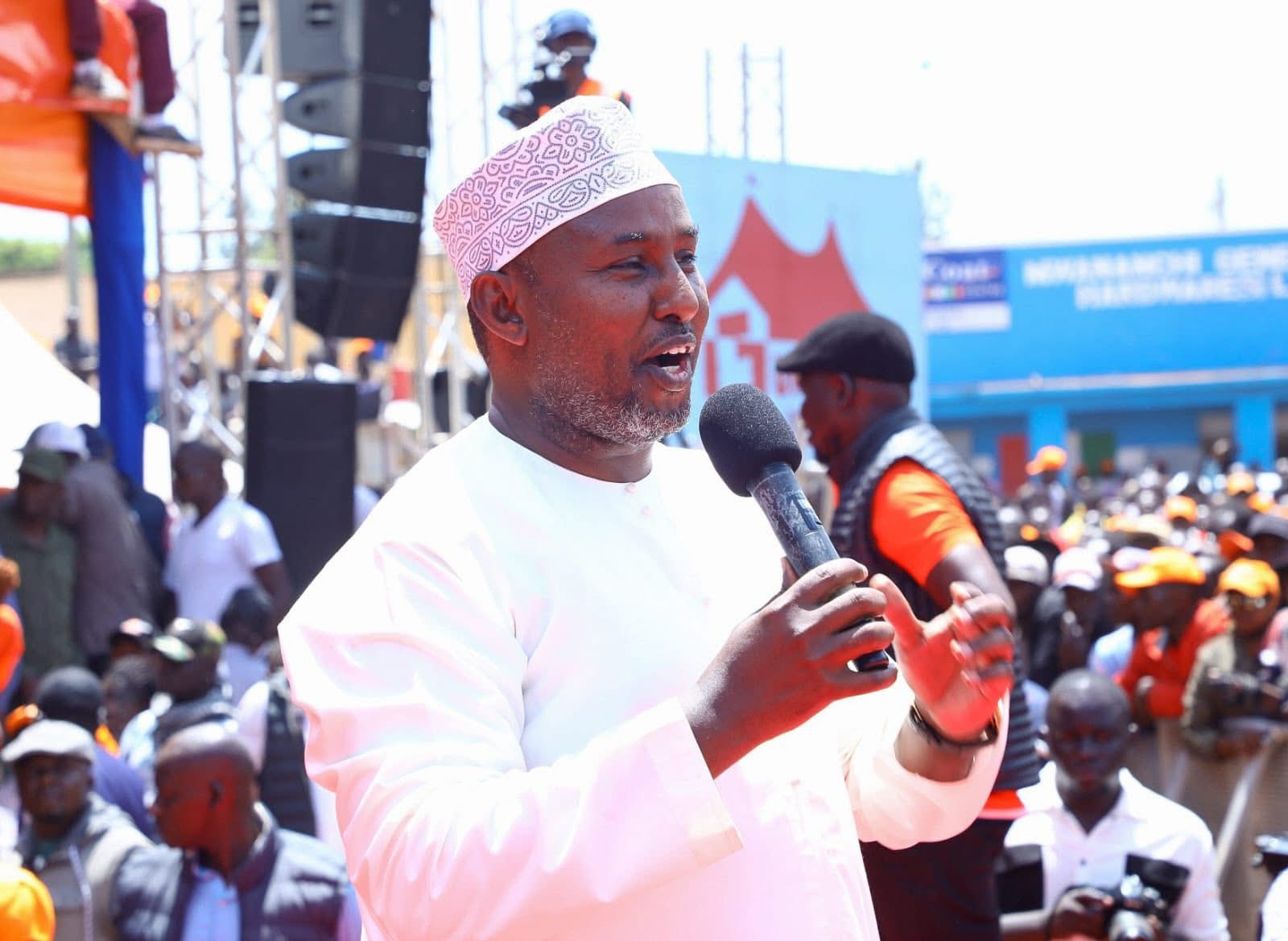
The expiry of Kenya’s Vision 2030 should trigger an urgent national conversation on the country’s development priorities for the next three decades, National Assembly Majority Whip Junet Mohamed has said.
Junet said preparations for a successor blueprint should begin now rather than wait until 2030, arguing that the country needs a clear development roadmap beyond the current long-term plan.
“It is the right time to have the Vision 2060 conversation because Vision 2030 is coming to an end,” Junet said.
“We have to plan for the future. If we don’t have a plan and we reach 2030, what next?”
The Suna East MP said the proposed Vision 2060 framework should provide a long-term national direction that goes beyond individual administrations and political cycles.
His remarks also placed the proposed blueprint within the context of the broad-based arrangement between President William Ruto’s administration and the opposition, saying a shared development vision was among the issues that brought the two sides together.
“One of the things that brought us together under the broad-based arrangement is this vision,” he said.
Vision 2030 was launched in 2008 as Kenya’s long-term development blueprint, with the objective of transforming the country into a newly industrialising, middle-income economy providing a high quality of life to its citizens.
The blueprint is implemented through successive five-year medium-term plans covering economic, social and political pillars.
With less than four years remaining before the target year, attention is increasingly turning to what should replace Vision 2030 and how Kenya should define its priorities after 2030.
Junet’s proposal could open a wider debate on whether the country should adopt a new long-term blueprint extending to 2060 and what targets such a plan should contain.
The conversation would come as the Government implements its Bottom-Up Economic Transformation Agenda, which President Ruto has identified as the framework for revitalising the economy and expanding opportunities for ordinary Kenyans.
A Vision 2060 framework would need to take stock of the gains and shortcomings of Vision 2030 while setting new targets in areas such as industrialisation, infrastructure, healthcare, education, agriculture, energy, technology and employment.
It would also have to address emerging challenges, including climate change, rapid population growth, urbanisation, technological disruption and the changing nature of work.
Junet’s intervention gives the broad-based arrangement a policy dimension at a time when questions continue to be raised about its long-term objectives.
The arrangement brought together President Ruto’s Kenya Kwanza administration and sections of the opposition, particularly the Orange Democratic Movement, following months of political tension and protests in 2024.
Its proponents have argued that cooperation between the political sides would allow the country to concentrate on national development and address pressing economic and social challenges.
The proposed Vision 2060 debate could now test whether that political cooperation can produce a shared long-term development agenda.
Unlike the five-year political cycle, a 30-year development blueprint would require successive administrations to commit to common national priorities.
It would also require broad consultations involving the national and county governments, the private sector, professional bodies, academia, civil society and the public.
For the proposal to gain credibility, the process would have to address one of the persistent challenges facing Kenya’s long-term plans — implementation.
Vision 2030 has delivered major projects and reforms, but successive governments have also faced criticism over delays, inadequate financing and failure to fully implement some of its targets.
The next blueprint would therefore need clear timelines, measurable targets and mechanisms for monitoring implementation across different administrations.
The debate is also likely to acquire political significance as parties begin positioning themselves for the 2027 General Election.
A discussion on Kenya’s post-2030 future could shift some attention from the immediate contest for political power to the longer-term question of what kind of country politicians are seeking to build.
For Junet, the starting point is ensuring that Kenya does not approach 2030 without a clear successor plan.
“If we don’t have a plan and we reach 2030, what next?” he posed.


