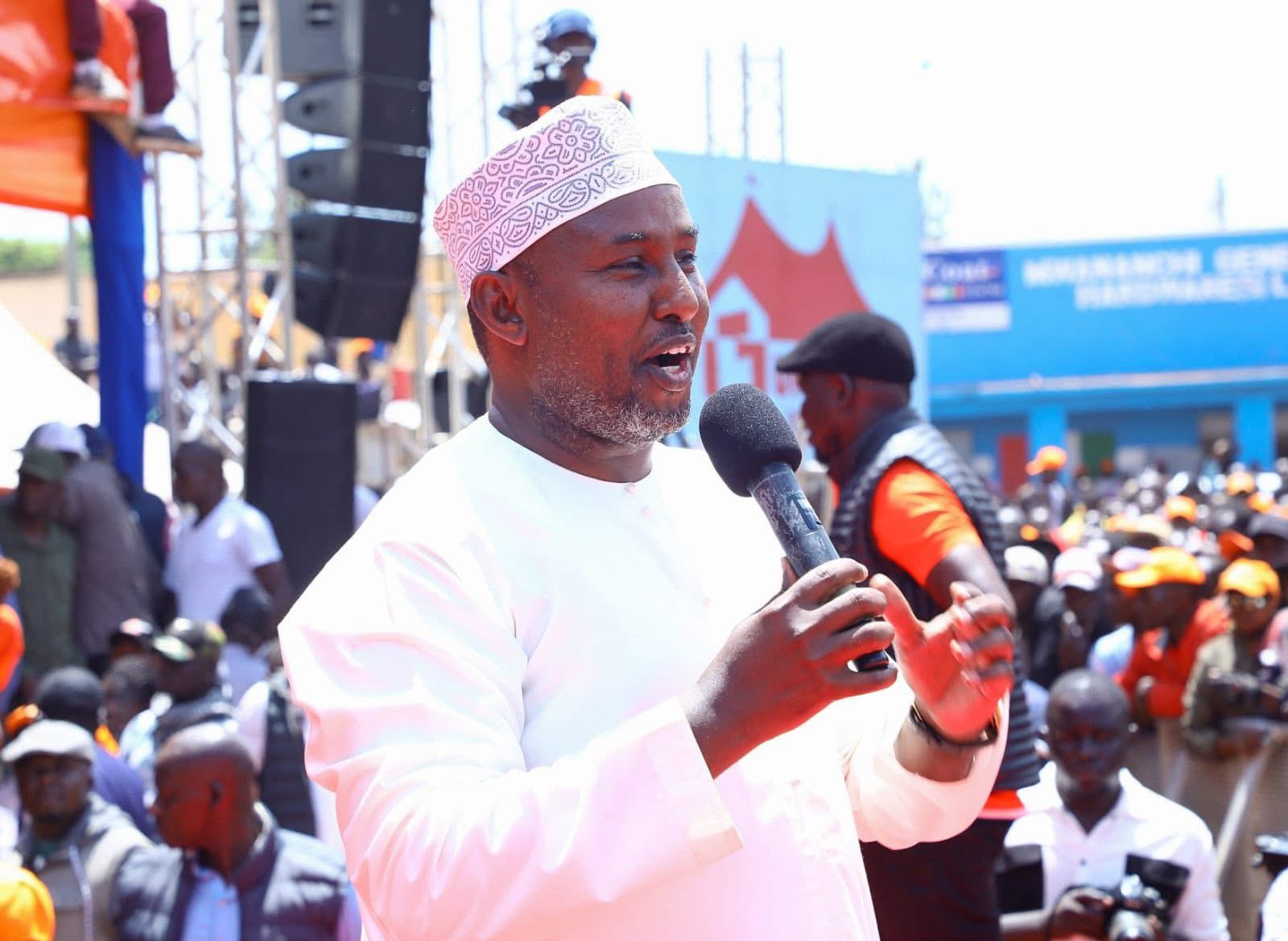
National Assembly Majority Whip Junet Mohamed has declared that the Orange Democratic Movement remains Kenya’s biggest political party, boasting a national reach and political strength unmatched by its rivals.
Junet said ODM brings both numbers and experienced politicians to the political table, insisting that no other party currently compares with the opposition outfit.
“ODM is the biggest political party in Kenya and a truly national party,” Junet said.
“We bring a lot of quality and numbers to the table. There is no party that can be compared to ODM today.”
The remarks are likely to fuel debate over the strength of political parties as preparations for the 2027 General Election gather pace, with established parties and emerging political formations seeking to consolidate their support across the country.
ODM has remained one of Kenya’s most influential political parties since its formation, commanding significant support in several regions and producing prominent national leaders.
The party has also played a central role in Kenya’s recent political realignments, including its decision to work with President William Ruto’s Kenya Kwanza administration under the broad-based arrangement.
The arrangement followed a period of heightened political tension after the 2024 anti-government protests and subsequent calls for dialogue between the Government and opposition.
Under the arrangement, several ODM politicians took up senior Government positions, while the party retained its organisational structures and continued to assert its political identity.
Junet’s latest remarks suggest that ODM views its participation in the broad-based administration not as a surrender of its political machinery but as an opportunity to leverage its national network and influence in shaping the country’s political and development agenda.
The Suna East MP’s emphasis on ODM’s numbers and quality also points to the importance of political organisation as parties prepare for the next election.
Kenya’s political landscape has in recent months witnessed renewed efforts to build broad coalitions ahead of 2027, with politicians from different parties exploring alliances and new political formations.
The strength of individual parties will be crucial in determining who controls the political bargaining table as the country approaches the next election.
ODM has historically relied on a strong grassroots network, particularly in western Kenya, Nyanza and parts of Nairobi and the Coast, while also seeking to expand its presence in other regions.
The party’s national character has been a recurring theme in its political messaging, with its leaders portraying ODM as a vehicle capable of attracting support beyond its traditional strongholds.
Junet’s declaration comes at a time when the party is also undergoing internal political discussions over its future direction and leadership.
The party’s cooperation with the Ruto administration has generated debate within opposition circles, with some members arguing that the arrangement has weakened ODM’s traditional opposition role.
ODM leaders have, however, defended the partnership, arguing that political cooperation does not necessarily mean abandoning the party’s principles or organisational independence.
Junet’s comments could therefore be read as an attempt to underline ODM’s continued political relevance despite its participation in the broad-based arrangement.
His reference to the party’s “quality and numbers” also highlights the two factors likely to shape the political negotiations ahead of 2027: a party’s ability to mobilise votes and the calibre of leaders it can bring into a coalition.
Experts say that with several political formations already positioning themselves for the next presidential contest, parties will be under pressure to demonstrate that they have both a national footprint and the organisational capacity to translate political popularity into votes.
James Amimo, a pundit, said that for ODM, the challenge will be to convert its longstanding national profile into political leverage while maintaining unity among its leaders and supporters.
Junet’s assertion that no other party can currently match ODM is likely to be contested by rival political formations, particularly those seeking to build alternative national coalitions.
But his message is clear: as Kenya heads towards another major political realignment, ODM intends to remain at the centre of the conversation.
“We bring a lot of quality and numbers to the table,” Junet said.


