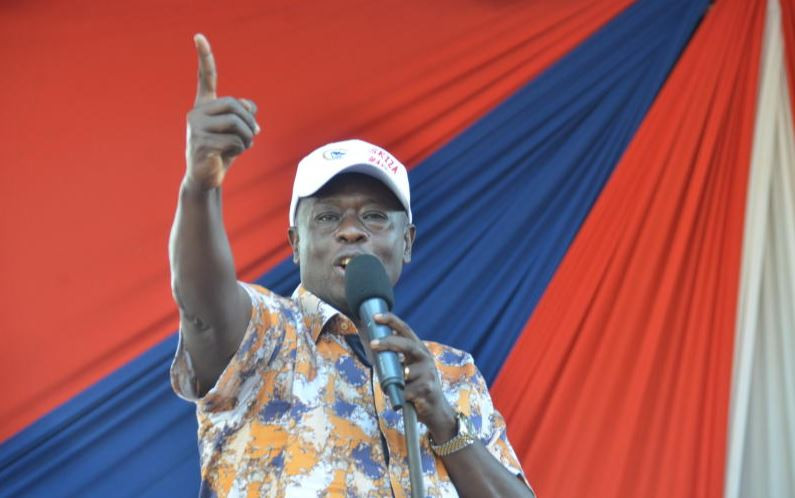
Democracy for Citizens Party (DCP) leader Rigathi Gachagua has claimed that a network of informants within government institutions provides him with information about the inner workings of President William Ruto’s administration.
The former Deputy President made the remarks during a podcast interview with Herman Manyora on July 31, 2026, where he said information from individuals working in government and parastatals had enabled him to anticipate some government operations.
Gachagua said he had encouraged his sources to provide credible and verifiable information, arguing that maintaining his credibility was important to his political role.
“I have asked the National Intelligence Service (NIS) and people working in parastatals to preserve my credibility because it is good for this country,” Gachagua said.
He thanked individuals who had been providing him with information and said he carefully evaluates what he receives before making public statements.
“I want to thank the informants. They gave me good information. I have asked people not to be defiant. I have asked them to give me credible information that is verifiable so that I preserve my relevance,” he added.
Gachagua further said he does not immediately disclose all the information he receives, noting that he conducts checks to establish its credibility.
“I also have a lot of information, and I sometimes don't rush into it. I do a lot of cross-checking because the day I mislead Kenyans, I'll lose my credibility,” he stated.
His remarks come amid an increasingly confrontational relationship between his DCP and the Ruto administration, with Gachagua frequently making claims about government operations and decisions at political rallies and public forums.
One of the most prominent disputes emerged following the fatal shooting of psychiatrist Dr Victoria Nthunya Mutiso in Nairobi. Gachagua publicly raised questions about the circumstances surrounding the killing and alleged possible police involvement, prompting a response from the Directorate of Criminal Investigations (DCI).
DCI Director Mohamed Amin defended the progress of investigations into the case while making counterclaims that Gachagua had communicated by phone with some individuals allegedly connected to the incident.
Gachagua subsequently challenged Amin to visit his Wamunyoro residence if investigators wanted to record his statement, maintaining that he would not travel to police headquarters.
The exchange has added another layer to the political confrontation between Gachagua and the government, with the former Deputy President continuing to portray himself as an influential opposition figure with access to information from within state institutions.


