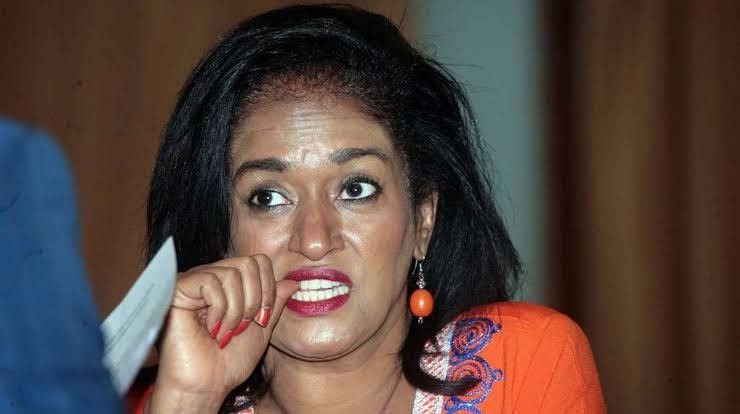
Nairobi Woman Representative Esther Passaris has called for family planning and responsible population policy to be placed at the centre of Kenya’s long-term development conversation, warning that the country cannot plan effectively for the future without accounting for the size and needs of its population.
Passaris said Kenya should draw lessons from other countries’ experiences without blindly adopting policies that may not fit its own demographic realities.
Her remarks came after National Assembly Majority Leader Kimani Ichung’wah acknowledged her contribution to discussions on family planning and placed the issue before the Kenya Beyond 2030 National Conversation.
Passaris pointed to Singapore as an important lesson in the complexities of population policy. She noted that the Asian country once pursued an aggressive “Stop at Two” policy before later reversing course and introducing incentives to encourage childbirth as it grappled with declining fertility and an ageing population.
For Kenya, she said, the lesson should be to develop policies suited to the country’s own circumstances rather than simply replicate strategies adopted elsewhere.
“Our youthful population can be our greatest national asset,” Passaris said, arguing that this would only happen if children are wanted, healthy, adequately nourished, educated, skilled and able to access meaningful opportunities.
Her intervention places population growth within the broader question of whether Kenya’s economic and social planning is keeping pace with demographic changes.
Passaris argued that family planning should not be interpreted as an attempt by the government to dictate how many children families should have.
Instead, she described it as a voluntary and rights-based approach that enables individuals and couples to make informed decisions about the timing and spacing of children.
She linked access to family planning to a range of development outcomes, including improved maternal and child health, keeping girls in school and enabling families to invest more adequately in the wellbeing and education of their children.
The lawmaker also made the case for treating population policy as an economic planning issue rather than solely a health matter.
Kenya will need to determine how many schools, hospitals, homes and jobs will be required in the coming decades, she said, while also planning for food, water, transport and other infrastructure.
“We cannot realistically plan Kenya’s schools, healthcare, housing, food security, water, infrastructure and employment without planning for the population that will depend upon them,” she said.
Her remarks come as the government seeks to shape a long-term national development conversation beyond the current political and economic cycle.
The debate over Kenya’s population trajectory is particularly significant because the country has a relatively young population, presenting both an opportunity and a challenge for policymakers.
A large working-age population can support economic growth if the country creates sufficient opportunities, but rapid population growth can also place pressure on public services, infrastructure and employment when investment fails to keep pace.
Passaris therefore urged the national conversation being led by President William Ruto to incorporate population policy into its broader vision for Kenya beyond 2030.
She said family planning should form part of a wider strategy aimed at creating a “healthy, productive and prosperous Kenya”.
The debate also highlights the delicate balance policymakers face: ensuring families have the freedom and information to make reproductive choices while enabling the state to anticipate and provide for the needs of a growing population.


