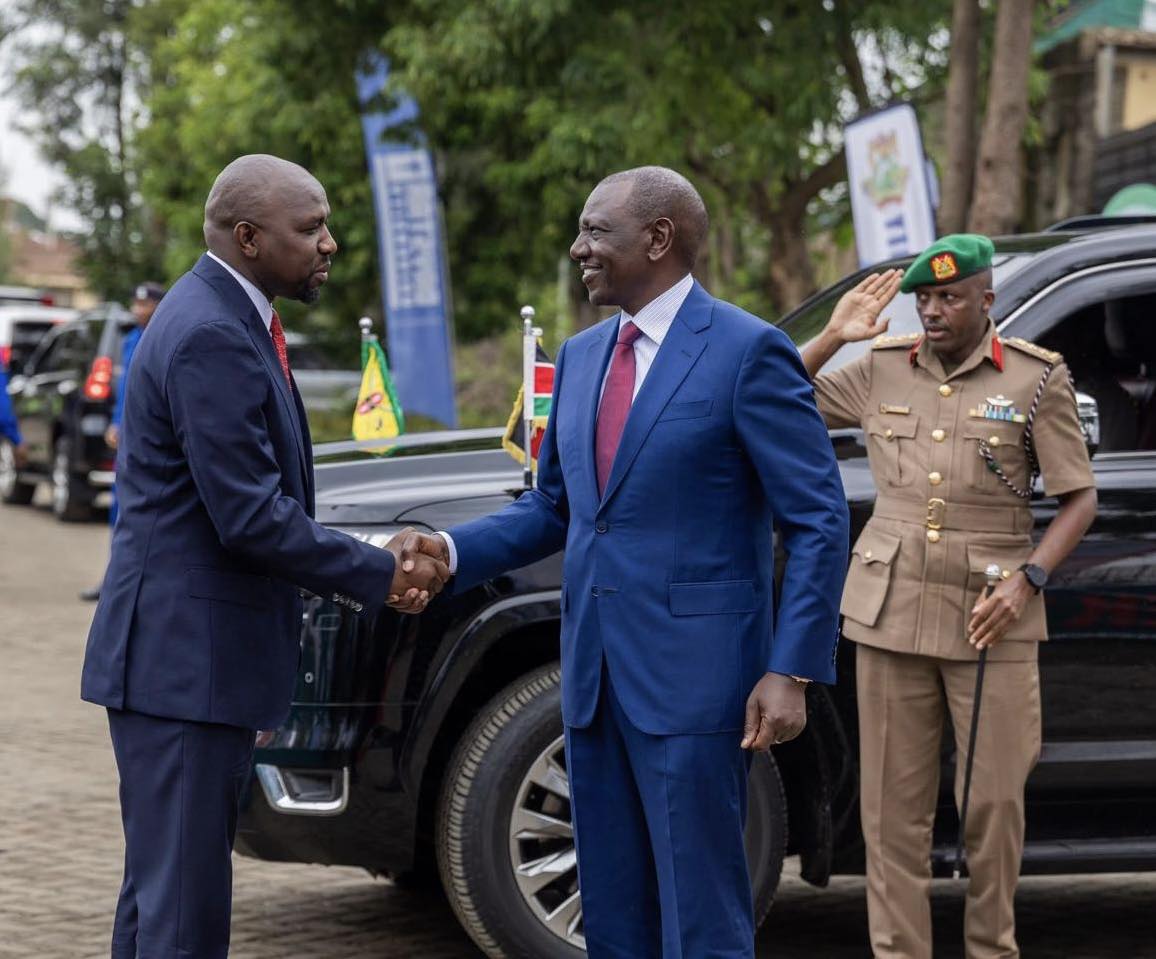
Cabinet Secretary Kipchumba Murkomen has defended the record of President William Ruto’s administration, saying the broad-based government is delivering on its development promises despite criticism over the economy and rising cost of living.
Mr Murkomen said the government had restored momentum to stalled projects and was implementing new programmes in roads, housing, health, education and agriculture.
He spoke after joining President Ruto, Deputy President Kithure Kindiki, ODM leader Oburu Oginga and other leaders for a broad-based government retreat in Naivasha, Nakuru County.
“The Broad-Based Government is firmly on course to deliver on the Bottom-Up Economic Transformation Agenda and position Kenya among the world’s leading economies,” Mr Murkomen said.
He said the government had stabilised the economy and put it on a path of growth, citing the revival of projects that had stalled as well as the rollout of roads, markets and affordable housing.
But the claims are likely to face a political test as the administration seeks to convince Kenyans that its economic policies are improving their lives.
Critics have questioned the government's assertion of an improving economy, pointing to the pressure on household budgets, high taxes and the cost of essential goods.
For many Kenyans, the question is not only whether new roads, markets and houses are being built, but also whether they can afford food, fuel, rent and other basic necessities.
The government has defended its tax and revenue measures as necessary to fund development and reduce dependence on borrowing. Critics, however, argue that the burden has fallen too heavily on ordinary households and businesses.
The cost of fuel has been particularly contentious. Mr Murkomen has defended the road maintenance levy, saying it is necessary to raise money for the rehabilitation of the country's road network. Critics have countered that higher fuel costs feed directly into transport, food and production costs.
The administration has also faced criticism over the pace and cost of some of its flagship projects, with opponents questioning whether the benefits of large government programmes are reaching ordinary citizens quickly enough.
Mr Murkomen nevertheless maintained that the government's record should be judged against the projects and reforms it has undertaken.
He cited reforms in healthcare, education and agriculture, saying they were intended to improve the lives of Kenyans and support economic growth.
On security, the CS said the government had confronted terrorism, banditry and criminal gangs while undertaking reforms to make the National Police Service more professional and responsive to citizens.
The security record, too, remains contested, with critics and rights groups continuing to raise questions about police accountability and the use of force.
The Naivasha meeting also carried political significance.
The presence of Mr Oginga alongside President Ruto offered another public display of the political realignment that followed the creation of the broad-based government.
The two camps were bitter rivals after the 2022 election, with the opposition mounting protests against the government over the cost of living, taxation and the electoral process.
Mr Murkomen said the leaders at the retreat had demonstrated that they could put the interests of the country ahead of political and personal considerations.
“I commend the leaders for putting the interests of our nation above individual and political considerations, and for committing themselves to building a prosperous and united Kenya,” he said.
The broad-based arrangement has given President Ruto a wider political platform, but it has also complicated the political landscape ahead of the 2027 General Election.
Supporters see the coalition as an opportunity to bring political stability and allow the government to concentrate on development. Its critics see it as a political arrangement that has weakened the opposition while doing little to address the economic hardships facing Kenyans.


