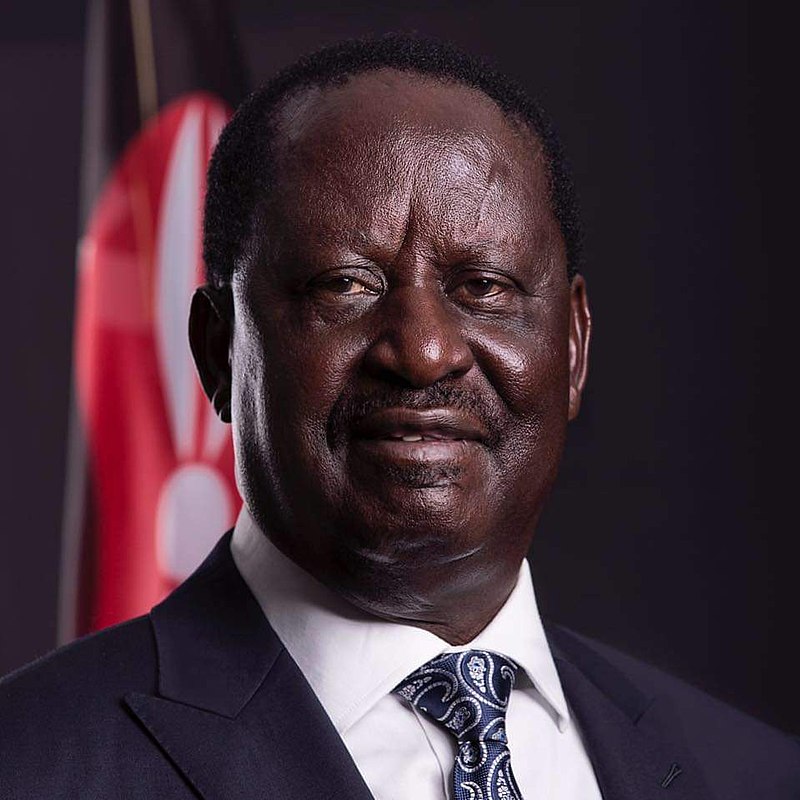
The battle to control the political ground left by Raila Odinga has moved from quiet succession manoeuvres to an increasingly open contest, with the Linda Mwananchi movement emerging as one of the groups seeking to inherit his reformist politics and mobilise his supporters ahead of the 2027 General Election.
The movement, led by Nairobi Senator Edwin Sifuna and backed by Siaya Governor James Orengo, has been making increasingly ambitious forays into Raila’s traditional political strongholds, seeking to establish itself as a new vehicle for opposition politics.
But its campaign has also exposed the difficulties of succeeding a politician whose influence stretched far beyond the structures of the Orange Democratic Movement.
The latest test came in Homa Bay on Sunday, where a Linda Mwananchi tour led by Sifuna and Orengo was disrupted by violence that left two people dead and scores injured. Police arrested 37 suspects and launched investigations into the incidents.
The confrontation has turned the Homa Bay campaign into more than another opposition rally. It has become an early test of who can command the political space Raila occupied for more than three decades.
How Raila died
Raila died on October 15, 2025, aged 80, while undergoing medical treatment in Kerala, India.
According to reports at the time, Raila collapsed during a morning walk and suffered a cardiac arrest. He was rushed to hospital but efforts to resuscitate him were unsuccessful. His death was subsequently confirmed by his family and office.
His death brought to an end one of the longest and most consequential political careers in Kenya.
Raila had served as Prime Minister between 2008 and 2013, run for president five times and spent decades at the centre of the struggle for multiparty democracy, constitutional reform and political change.
His death also created an immediate political vacuum.
Unlike many politicians who leave behind a strong party structure capable of producing a clear successor, Raila’s influence had been built around a combination of ODM, personal loyalty, political alliances and an unusually powerful relationship with his supporters.
The question of who would inherit that political capital therefore began almost immediately.
The birth of Linda Mwananchi
Linda Mwananchi emerged against the backdrop of growing disagreements within ODM following Raila’s death and the party’s changing political direction.
Sifuna, who had served as ODM secretary-general and had been one of Raila’s most prominent lieutenants, became one of the leaders associated with the faction opposed to ODM’s continued cooperation with President William Ruto’s administration.
The movement has since grown beyond a small group of ODM politicians.
Sifuna, Orengo, Embakasi East MP Babu Owino, Saboti MP Caleb Amisi, Vihiga Senator Godfrey Osotsi and other leaders have been associated with its activities. The group has also sought to build a grassroots network through rallies and digital platforms.
In August, Sifuna’s political team went a step further by reserving Linda Mwananchi among proposed names for a political party, signalling that the movement could eventually evolve into an electoral vehicle.
Sifuna has rejected claims that he is merely being positioned by another politician for 2027.
“I am no one's project,” Sifuna said in July, dismissing claims that he was being promoted as part of another politician’s presidential strategy.
The senator has instead presented Linda Mwananchi as a citizen-driven movement centred on accountability, constitutionalism and the defence of public rights.
In Homa Bay, he sought to directly link that agenda to the political lessons associated with Raila.
“I know we all remember what Baba used to teach us. It is unfortunate some people are telling us to abandon the fight for a bigger democratic space,” Sifuna said.
He also rejected the suggestion that his politics should be judged principally by physical development projects.
“Do you think I cannot build stadiums or roads?” Sifuna asked.
“What I promise you is I will uphold the rule of law, protect your rights and will never kill your children,” he said.
The message is significant because Sifuna is attempting to retain one of the central elements of Raila’s political appeal — the idea that opposition politics is about more than roads, hospitals and other development projects.
Orengo stakes his claim
Orengo’s role in the movement gives it an additional link to Raila’s political history.
The Siaya governor was among Raila’s longest-serving political allies and was involved in Kenya’s opposition politics during some of its most difficult years.
As Linda Mwananchi has expanded, Orengo has increasingly presented the movement as the vehicle through which the struggle for political change can continue.
In April, Orengo declared that the next government would be formed through Linda Mwananchi.
“I am asking you, from Nakuru, let us make this country ungovernable from June 2026. Nina hakika kwamba the next government in this country will be formed by the Linda Mwananchi,” Orengo said.
His language became even more direct in Homa Bay.
“I’m the remaining Raila,” Orengo declared.
The statement is perhaps the clearest indication yet of the political stakes surrounding the movement.
Orengo is not merely defending Linda Mwananchi. He is positioning himself as a custodian of the political tradition left behind by Raila.
Before the Homa Bay rally, Orengo had also insisted that threats would not stop the movement from entering the county.
“I want to assure those leaders from Homa Bay that we will be in Homa Bay,” Orengo said, adding that he was prepared to face injuries and even death in the struggle for political change.
The Homa Bay test
Homa Bay was always going to be a difficult political test.
The county remains one of ODM’s strongest bases and is part of the wider Nyanza region where Raila enjoyed enormous political influence.
Linda Mwananchi therefore needed to demonstrate that it could mobilise supporters without relying entirely on the old ODM machinery.
Instead, the Sunday tour descended into violence.
Police said two people died, including a police officer, while several officers and civilians were injured. Five police vehicles were damaged and 37 suspects arrested.
Police spokesman Muchiri Nyaga said investigators would pursue not only those involved directly in the violence but also other actors who may have organised or facilitated it.
“The police are also pursuing other actors who may have participated in the mayhem,” Nyaga said.
Linda Mwananchi leaders have disputed the suggestion that the violence was simply spontaneous disorder.
“This was not crowd chaos. It was an ambush,” the movement said.
The allegation has not been independently verified.
The violence nevertheless exposed the depth of political competition in a region where different factions are now attempting to establish their authority.
Wanga pushes back
The political contest has also brought Linda Mwananchi into confrontation with Homa Bay Governor Gladys Wanga, a senior figure in the ODM establishment.
The dispute initially centred on roads.
After Sifuna's convoy encountered poor roads in parts of Homa Bay, images of the senator and members of his team covered in dust became part of the political debate.
Wanga responded by defending the county’s development record while acknowledging the infrastructure challenges facing the region.
“The dust on the Mbita–Sindo–Kiabuya–Sori corridor tells a story,” Wanga said.
“But it is not the story of a people who have failed. It is the story of a region that has waited far too long for the infrastructure required to unlock its potential,” she said.
The exchange captured a wider political argument.
Linda Mwananchi is presenting itself as an opposition movement willing to challenge both the national government and established political structures.
ODM leaders aligned with the government, meanwhile, are seeking to defend their political choices and demonstrate that they remain relevant in Raila’s former strongholds.
Gachagua factor
The succession contest is not confined to Nyanza.
Across the country, opposition politicians are attempting to build alliances ahead of 2027, and former Deputy President Rigathi Gachagua has emerged as one of the most significant players in those calculations.
Gachagua has declared his intention to seek the presidency and has been building a political movement aimed at challenging President Ruto.
His relationship with Linda Mwananchi has therefore become an important part of the opposition equation.
In July, Gachagua said he had called Sifuna to congratulate him following one of the senator’s political rallies and indicated that he could support Sifuna if the opposition settled on him as its presidential candidate. Citizen Digital reported that Gachagua said he would support Sifuna “if he is the opposition's” agreed flagbearer.
The position is significant because it introduces the possibility of cooperation between two politicians who draw support from very different political constituencies.
But Gachagua has also raised questions about Raila’s death.
In August, the former deputy president called for a public inquest and said Kenyans deserved answers about the circumstances surrounding Raila’s final hours.
The remarks have triggered criticism from political leaders who accused Gachagua of politicising Raila’s death.
The allegations remain political claims and have not established that Raila died from anything other than the cardiac arrest reported at the time.
Who inherits Raila?
That is ultimately the question behind the current political manoeuvring.
Raila’s death did not simply remove an opposition leader. It removed a political centre around which different factions could organise.
Sifuna has the advantage of being young, articulate and closely associated with Raila’s final years in ODM.
Orengo has decades of experience and a direct connection to the historical struggle that shaped the opposition.
Babu Owino represents a younger, more combative generation of politicians.
John Mbadi, now Cabinet Secretary for National Treasury, commands influence in South Nyanza and has a national government platform.
Kalonzo Musyoka remains an experienced opposition leader, while Gachagua is seeking to consolidate a national anti-Ruto coalition from outside the traditional opposition establishment.


