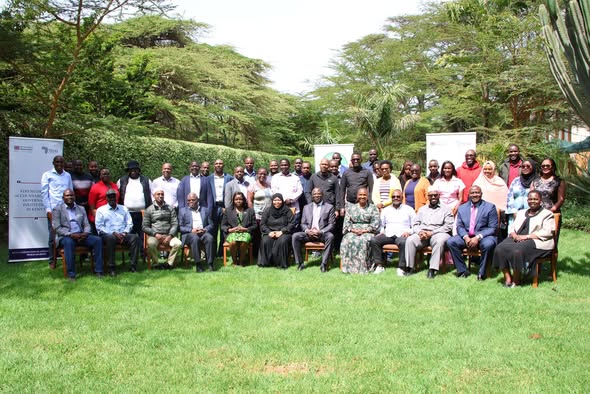
The Independent Electoral and Boundaries Commission (IEBC) has convened a high-level retreat with Elgia Afric to review Kenya’s electoral legal reforms and the long-delayed boundary delimitation process, following recent guidance from the Supreme Court.
Opening the meeting, IEBC Chairperson Erastus Ethekon said the credibility of the 2027 General Election will depend heavily on whether Parliament enacts the necessary laws in time. He warned that the lag in passing key amendments has left the country exposed to legal ambiguities that could complicate the next polls.
“The integrity of elections depends on a strong and predictable legal framework,” Ethekon said. “We urge Parliament to fast-track the enactment of critical electoral laws well ahead of the next General Election.”
The retreat brings together commissioners, legal experts and electoral governance specialists to scrutinise proposed reforms aimed at improving efficiency, transparency and accountability in election management. Central to the discussions is the boundary review exercise, which has been pending since 2022 and became a point of national debate after the Supreme Court clarified that IEBC retains the mandate to undertake delimitation despite earlier institutional uncertainties.
The boundary review—constitutionally required every eight to twelve years—has stalled due to prolonged leadership disputes in the Commission, political resistance from MPs fearing loss of constituencies and the legal vacuum caused by the absence of a fully constituted IEBC. The Supreme Court’s recent advisory restored clarity, paving the way for the process to resume.
Also under review are laws touching on results transmission, campaign financing, technology deployment and internal governance. Past elections, particularly in 2013, 2017 and 2022, have been marred by disputes over electronic systems, the tallying process and the transparency of IEBC operations, often resulting in lengthy court battles and public mistrust.
Kenya heads to the polls in less than two years, and stakeholders at the retreat warn that the window for comprehensive reforms is closing rapidly. The Commission is expected to compile recommendations from the meeting and submit them to Parliament and the relevant state agencies for urgent action.


