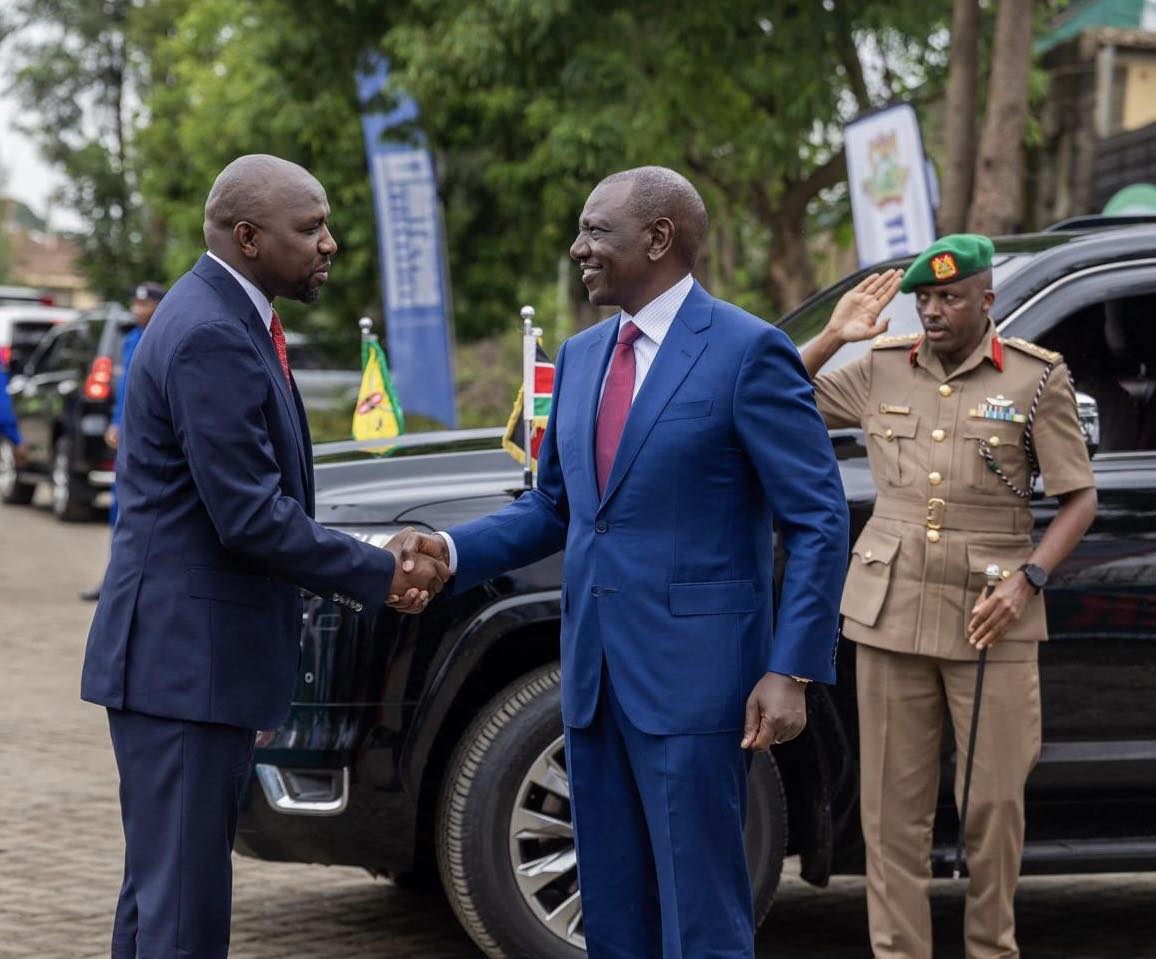
Interior Cabinet Secretary Kipchumba Murkomen defended President William Ruto’s record on education, highlighting teacher recruitment, classrooms and the growth of technical training as the government faced a growing opposition campaign ahead of the 2027 elections.
Murkomen said the Kenya Kwanza administration has invested heavily in education and skills development during its first three years, arguing that the programmes were laying the foundation for the country’s economic transformation.
“The Kenya Kwanza administration has heavily invested in the skills and human capital that will drive Kenya’s transformation,” Murkomen said.
He cited the recruitment of more than 100,000 teachers, delivery of 23,000 classrooms and construction of 1,600 laboratories to support Competency-Based Education.
He also said enrolment in Technical and Vocational Education and Training institutions had more than doubled to 718,000.
Murkomen spoke in Machakos, where he represented Deputy President Kithure Kindiki at the 61st graduation ceremony of Scott Christian University.
He challenged the graduates to turn their education into practical solutions and innovation, while defending the government’s wider investment in skills.
The remarks came as the Ruto administration faced mounting political criticism over its record in office.
Former Deputy President Rigathi Gachagua had declared that “Wantam” — the campaign for Ruto to serve only one term — was now a reality and that Kenyans were ready for a “new dispensation”.
Nairobi Senator Edwin Sifuna had also been campaigning for opposition unity, saying the objective was to defeat Ruto in 2027.
“We need an overwhelming repudiation of William Ruto and everything that he stands for. It has to be overwhelming. We must beat William Ruto,” Sifuna said.
The opposition accused the government of failing to live up to its 2022 promises, particularly on the economy, taxation, jobs and the cost of living.
The 2024 Finance Bill protests, which were largely driven by young Kenyans, became a major political setback for the administration after Ruto withdrew the legislation following widespread opposition.
Critics also questioned whether government spending and reforms were translating into better living conditions for ordinary Kenyans.
In education, the new higher education funding model had been particularly contentious, with critics raising concerns over how students were assessed for government support and whether vulnerable families were adequately protected.
The Kenya Human Rights Commission challenged the new funding model in court, raising concerns about the manner in which the government provided financial assistance to university and TVET students.
The opposition also criticised the government over the wider cost of education, arguing that increased fees and household contributions could put higher education beyond the reach of some families.
Ruto’s administration rejected the criticism and maintained that its reforms were intended to make education financing more equitable.
Murkomen used his address in Machakos to reiterate that position.
“We are also reforming higher education financing to ensure no Kenyan child should be denied opportunity because of the circumstances into which they were born,” he said.
He said the government had also made teacher recruitment and the expansion of TVET institutions central to its education agenda.
But critics argued that the numbers alone did not settle the question of whether the education sector was performing well.
They pointed to continued pressure on schools, questions over funding and challenges surrounding implementation of the Competency-Based Curriculum.
The debate formed part of the wider political contest taking shape ahead of the 2027 elections.
Ruto and his allies pointed to government projects and reforms as evidence that the administration had delivered on its promises.
The opposition, meanwhile, urged voters to judge the government by the experience of households, including the cost of living, taxes, access to jobs and the affordability of basic services.
Gachagua called for Ruto to be denied a second term, while Sifuna pushed for a broader opposition coalition.
Sifuna also argued that the political contest should be about constitutionalism, human rights, devolution and accountability.
The government hit back.
Murkomen was among the most outspoken critics of Gachagua, accusing the former deputy president of engaging in politics that threatened national unity.
“Gachagua is the biggest threat to national unity and the economy of our country,” Murkomen said previously.
Gachagua rejected the accusation and continued with his mobilisation against the administration.


