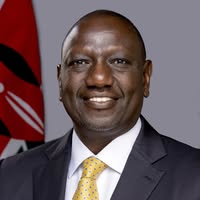
President William Ruto’s economic agenda is facing fresh political scrutiny after Parliament heard that the government’s growing reliance on domestic borrowing is squeezing businesses out of the credit market.
The warning by private-sector players gives the opposition new ammunition against an administration that came to power promising to put small businesses, hustlers and ordinary Kenyans at the centre of economic growth.
At a parliamentary forum on public debt management, bankers told MPs that commercial banks were increasingly putting their money into government securities instead of lending to businesses.
The Kenya Bankers Association said bank investments in government securities increased by 58 per cent between June 2024 and May 2026, while lending to the private sector grew by only 11 per cent.
Nearly 30 per cent of banking-sector assets are now tied to the government, the forum heard.
The figures have raised a difficult question for the Ruto administration: Can the government deliver its promised economic transformation while competing with businesses for the same pool of domestic credit?
The issue goes to the heart of President Ruto’s Bottom-Up Economic Transformation Agenda (BETA), which places agriculture, small and medium-sized enterprises, housing, healthcare and the digital and creative economy at the centre of his economic programme.
The administration has repeatedly argued that its policies are designed to move economic opportunity from the top of the economy to millions of Kenyans at the bottom.
But businesses and MPs are now warning that heavy government borrowing could have the opposite effect if it leaves entrepreneurs struggling to secure affordable financing.
A representative of the Kenya Bankers Association told the forum that banks were responding to the government's demand for money as rational businesses.
“As government appetite for local borrowing goes up, then banks being businesses… you put your money there,” he said.
The representative said the trend had created a “crowding out” effect, with banks favouring government papers over lending to ordinary customers.
For the opposition, the debate offers a potent line of attack ahead of the 2027 General Election.
Ruto campaigned in 2022 on a promise to create a “hustler economy”, arguing that government policy had for decades favoured established businesses and politically connected elites at the expense of small enterprises.
His administration subsequently rolled out programmes such as the Hustler Fund, expanded agricultural financing and affordable housing, while pursuing major infrastructure investments under BETA.
The government has defended its borrowing as necessary to finance development while managing a difficult fiscal position.
Ruto has also sought to shift infrastructure financing away from traditional public borrowing, including through the National Infrastructure Fund, which the President has promoted as a way of mobilising private capital for major projects.
But the latest parliamentary discussions suggest that the government's financing choices are increasingly becoming part of the political debate.
The Kenya Association of Manufacturers told MPs that manufacturing's contribution to GDP had fallen from 11.8 per cent in 2011 to 7.1 per cent.
Manufacturers cited high production costs, energy prices and limited access to credit among the challenges facing the sector.
The Kenya Private Sector Alliance, meanwhile, called for greater use of public-private partnerships and a more predictable tax regime to encourage investment.
This comes after years of rising public debt and growing pressure on the Treasury to raise more revenue while financing government programmes.
The government's domestic borrowing strategy has already attracted concern in Parliament. In February, the National Assembly Public Debt and Privatisation Committee warned that increased domestic borrowing could deprive households and businesses of credit.
The latest figures presented by the banking sector suggest the concern is no longer theoretical.
Government securities are becoming an increasingly important destination for bank funds while private-sector credit is expanding at a much slower pace.
This presents Ruto with a political dilemma as he prepares to defend his economic record.
The President has maintained that his reforms are beginning to stabilise the economy and create the conditions for long-term growth. His administration has pointed to lower inflation, a stronger shilling and investments in sectors such as agriculture, housing and infrastructure as evidence of progress.
Ruto has also promised that the transformation agenda will reduce poverty and unemployment without imposing unsustainable debt on future generations.
In January, he said 2026 would be a year of transformation and pledged to reduce poverty and unemployment while avoiding an excessive burden on taxpayers and future generations.
The political vulnerability lies in the gap between those promises and the experience of businesses struggling to obtain financing.
If entrepreneurs cannot access credit to expand their businesses, hire workers or invest in production, the government could find itself defending a difficult contradiction: an economic programme designed to empower the private sector being implemented alongside borrowing that private-sector players say is limiting their access to money.
The issue could become particularly potent during the 2027 campaign, when the cost of living, taxation, employment and debt are expected to dominate political messaging.
For the opposition, the argument will be straightforward — that the government is borrowing heavily while the businesses expected to create jobs are being crowded out.
For Ruto and his allies, the counterargument is that borrowing is being used to finance infrastructure and reforms that will eventually expand the economy and attract private investment.
The debate is therefore moving beyond the size of Kenya’s debt to a more fundamental question about the government's economic model: whether public borrowing is creating the foundation for private-sector growth or consuming the credit that businesses need to grow.
The Public Debt and Privatisation Committee now wants closer cooperation between Parliament, government agencies and the private sector to address the problem.
Stakeholders have also called for greater transparency, including an automated system through which Kenyans and investors can track public debt in real time.


