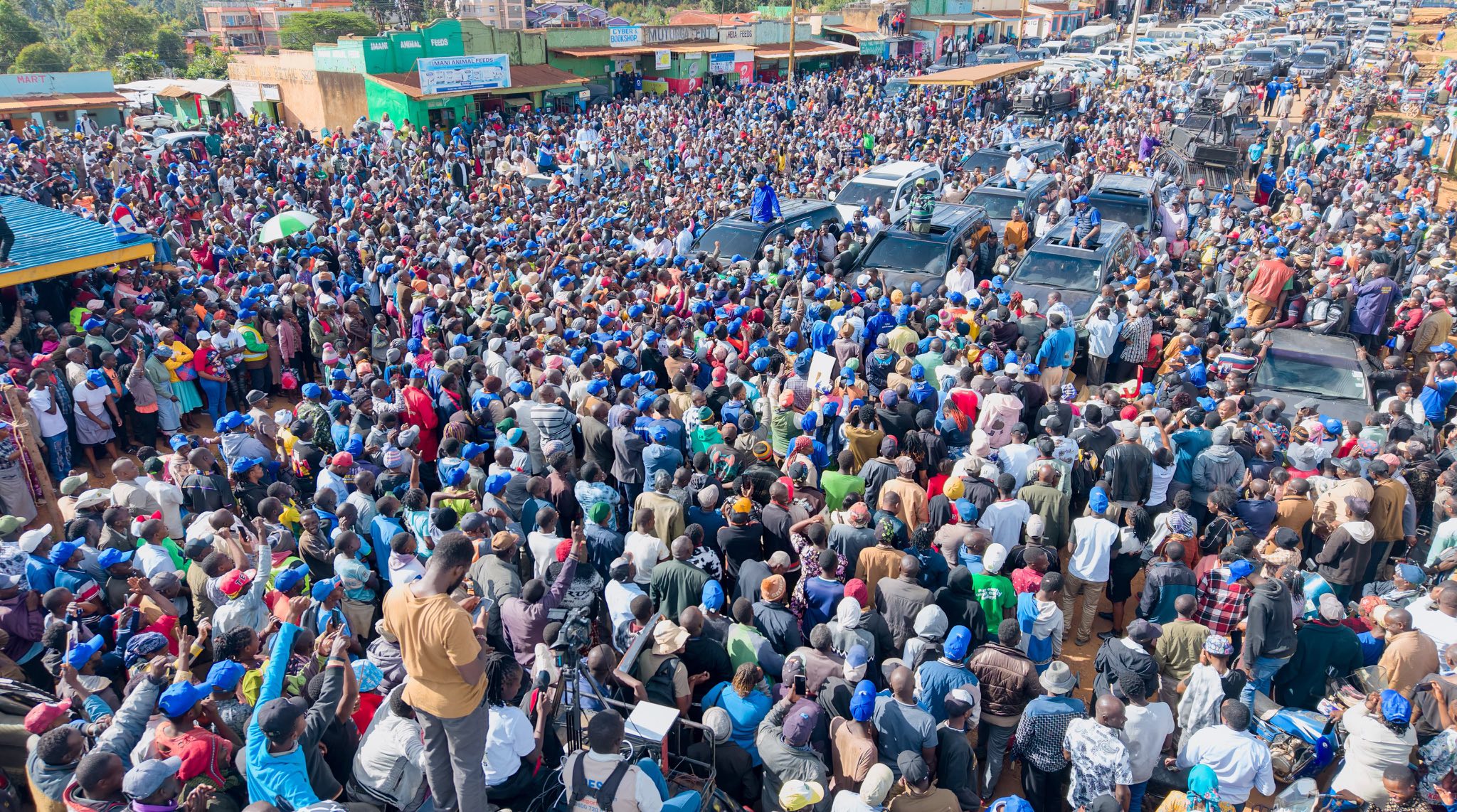
Former Deputy President Rigathi Gachagua has emerged from a 55-day political retreat at his Wamunyoro home with a message that leaves little doubt about his ambitions: he wants to be President.
Yet, as he begins to position himself for the 2027 race, Gachagua is also trying to solve a political contradiction that could define his next move — how to pursue the opposition ticket without being blamed for splitting the very coalition he says is needed to defeat President William Ruto.
The Democracy for Citizens Party (DCP) leader says Kenyans who visited him during the consultations urged him to run for the presidency.
“People have told me they have analysed and decided that Rigathi Gachagua needs to be the preferred presidential candidate for the 2027 General Election,” he said.
But he quickly added a caveat.
“Kenyans have made it clear that we cannot gamble or take a risk that will bring Ruto back. Do whatever it takes, including sacrificing our personal interests,” he said.
It is a message that captures Gachagua's political dilemma.
The former deputy president is openly building the case for his own candidature while simultaneously telling his supporters that he could support another opposition candidate if that is what it takes to send President Ruto home.
“There comes a time when a patriot must make sacrifices for his nation,” he said.
For a politician who only two years ago was President Ruto's running mate and one of the most powerful figures in the Kenya Kwanza administration, the shift has been dramatic.
Gachagua's impeachment in October 2024 ended a bitter political fallout that had played out publicly for months. Since then, he has steadily recast himself from a government insider into one of Ruto's fiercest critics.
His latest message suggests he is now preparing for the next phase: turning that criticism into a national campaign.
Gachagua has dismissed suggestions that his role in the opposition should be limited to mobilising votes for another candidate.
“Rigathi is not a kingmaker. Gachagua is king,” he declared, signalling that he does not see himself as a supporting actor in the battle for the opposition's presidential ticket.
He is also fighting to keep alive his legal options following his impeachment.
“Let nobody tell you that because I was removed from office, I cannot run,” he said.
Gachagua said his appeal against the impeachment remains before the courts and insisted that he would pursue the matter to its conclusion.
“We are in court in the Court of Appeal. We believe the Court of Appeal will give justice to Gachagua's supporters,” he said.
But even as he waits for the courts, Gachagua is not putting his politics on hold.
“In the meantime, we are preparing for elections,” he said.
His political comeback has increasingly been built around one central argument — that his fight against President Ruto is about the country's future, not revenge over his removal from office.
“I am not mobilising Kenyans to remove William Ruto as President because of bitterness. No. It's my desire to have a good country,” he said.
“I have nothing personal against William Ruto. I have everything against what he stands for and what he does. I want good leadership in this country, and I'm offering myself for that position of President.”
The distinction is important for Gachagua.
His opponents have often portrayed his criticism of the government as the bitterness of a politician who lost power. He is now attempting to broaden the argument, placing the cost of living, taxation, public services and governance at the centre of his campaign.
The 55-day consultations at Wamunyoro gave him a ready-made platform.
Gachagua says Kenyans raised concerns about the high cost of living, the tax burden, education, healthcare and agriculture. These are the issues he is expected to carry into his nationwide political engagements as he seeks to expand DCP beyond its strongest support bases.
But the road to State House will depend on more than the grievances he has collected.
The opposition remains crowded with leaders who have presidential ambitions, each with their own regional support and political machinery. The challenge will be finding a formula that produces one candidate without creating new divisions.
Gachagua insists he understands that danger.
“The best way to win this election, the most sure way, is if the opposition settles on one candidate,” he said.
It is why he says he is prepared to back whoever eventually emerges from negotiations.
“If I will not be the opposition's flag bearer, I will be the director of the presidential candidate's campaign,” he said.
“We will work on this thing and we will succeed in the next election and I want you people to relax.”
Still, his confidence in his own political standing is clear.
“There are others who are saying I have many people and that I will break this united opposition,” he said.
“The most committed man in the identification of one presidential candidate is Rigathi Gachagua, because I want the best for the country.”
The coming months will test that commitment.
As the 2027 race gathers pace, Gachagua will have to negotiate with other opposition heavyweights while keeping his own supporters convinced that he remains a serious contender for the presidency.
For now, he is attempting to hold both positions at once: presidential hopeful and champion of opposition unity.
It is a delicate path. If he pushes too hard for the ticket, he risks being accused of placing personal ambition above unity. If he steps back too early, he could weaken the political movement he has spent the last two years building after his dramatic exit from government.


