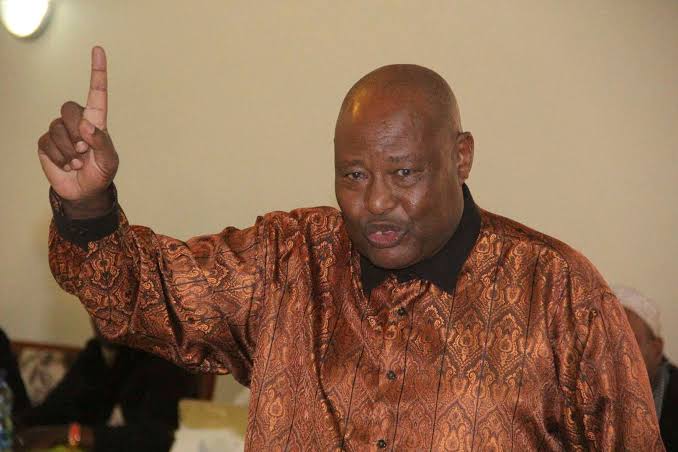
Former National Assembly Speaker Francis Ole Kaparo has told Kenyans unhappy with the taxes they pay to hold the government and their elected representatives accountable, saying Kenya Revenue Authority (KRA) officials only enforce laws made by politicians.
Speaking in Nanyuki on Thursday, Kaparo said tax proposals originate from the Executive and are subjected to scrutiny and approval by Parliament before KRA is called upon to collect the money.
“If you are unhappy with the tax you are being charged, blame the government and blame your MP. Don’t blame the workers of government departments who are implementing their mandate,” Kaparo said.
His remarks come at a time when taxation remains one of the biggest sources of public anger, two years after nationwide protests against the Finance Bill 2024 exposed deep frustration over the rising cost of living and the growing burden of taxes.
Many Kenyans have complained that the government has continued to introduce new levies and deductions even as households struggle with high food, fuel, transport and housing costs.
The complaint has not been limited to income tax. Consumers have also protested against taxes that increase the prices of goods and services, arguing that indirect taxation eventually finds its way into the cost of almost everything they buy.
“Those who are going to implement the responsibility of collecting that tax have no other way. They have to implement it as it is,” Kaparo said.
The former Speaker said KRA had become an easy target for public anger despite having no role in deciding the taxes Kenyans should pay.
“Put the blame where it should be,” he said.
Kaparo's comments revive the question that became central during the 2024 anti-Finance Bill protests: What is the role of Parliament when the government proposes unpopular taxes?
At the height of the protests, Kenyans trained their anger not only on the Executive but also on MPs, demanding that they reject the proposed tax measures.
The pressure exposed growing distrust between voters and Parliament, with protesters accusing lawmakers of failing to listen to the people who elected them.
Kaparo said the problem had persisted, arguing that Parliament was increasingly failing to assert its independence from the Executive.
“I don’t think anymore Parliament represents the people anymore. I think they represent the Executive. That seems to be the case now,” he said.
His remarks are likely to resonate with taxpayers who have repeatedly questioned why MPs approve measures that later attract widespread public opposition.
Kenyans have also raised concerns about what they get in return for the taxes they pay.
The public debate has increasingly shifted from whether citizens should pay taxes to whether the government is collecting the money efficiently and spending it in a manner that delivers value.
Critics have pointed to persistent unemployment, pressure on household incomes, public debt and shortcomings in public services, asking why the tax burden continues to rise without a corresponding improvement in the lives of ordinary Kenyans.
Kaparo said MPs must remember that they are elected to represent their constituents and should therefore scrutinise government proposals before passing them into law.
“Parliament must be the voice of the people, because that is why they elected them. That’s why Parliament exists in the first place,” he said.
The former Speaker urged Kenyans to take greater interest in the decisions made by leaders they elect, particularly as the country heads towards the 2027 General Election.
He said voters should not only judge politicians by their campaign promises but also examine how they vote when they take up their seats in Parliament.
“Kenyans must think, must think hard and deep. It is them who elect people,” Kaparo said.
He also criticised the culture of politicians giving voters small cash handouts during campaigns, arguing that Kenyans should not exchange their political power for short-term benefits.
“If you choose that Sh200, Sh300 or less given to you is sufficient to cover you for five years, fine. Don’t cry later,” he said.
The tax question is expected to remain central to the 2027 political debate.
Opposition leaders have continued to cite taxation and the cost of living as evidence of what they describe as the Kenya Kwanza administration's failure to ease the economic burden on households.
The government, on its part, faces the challenge of raising enough revenue to finance public services and development while responding to growing resistance against higher taxes.
For Kaparo, however, taxpayers should be clear about where responsibility lies.
“If you are unhappy with the tax you are being charged, blame the government and blame your MP,” he said.


