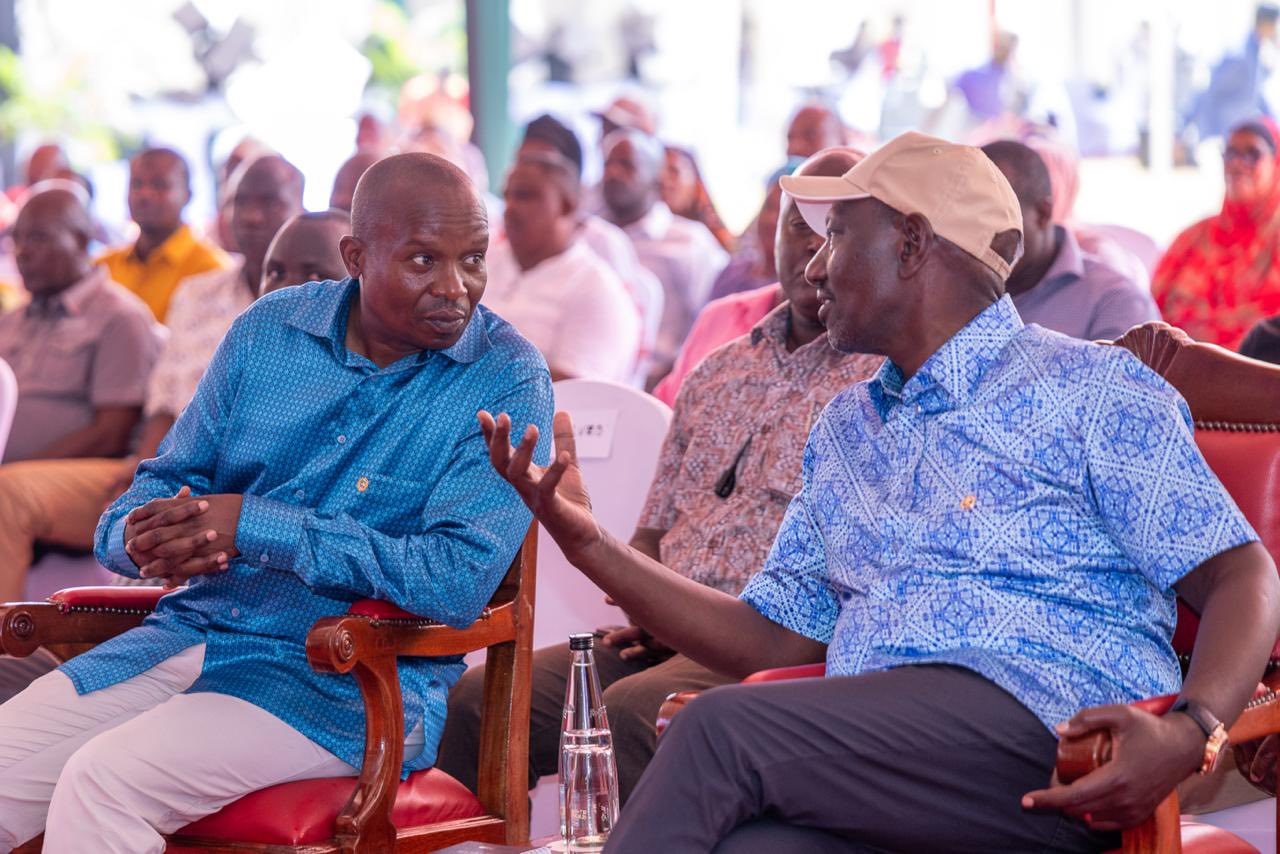
Deputy President Kithure Kindiki has called for renewed efforts to deliver the economic and social rights guaranteed by the 2010 Constitution, as critics of the Kenya Kwanza administration question the government's record on accountability, human rights and constitutional safeguards.
In a message marking 16 years since the promulgation of the Constitution on Thursday, Kindiki said Kenya had made progress in expanding democratic rights but still had a long way to go in delivering better living standards for its citizens.
“16 years later we have made progress in expanding our democratic rights, but our obligations to ensure economic rights to health, food, water, housing and freedom from poverty remain a daunting but a must do national project,” Kindiki said.
The Deputy President's remarks come against a backdrop of criticism over the cost of living, taxation, governance and the protection of constitutional rights. Critics argue that the success of the 2010 Constitution should not only be measured by the institutions it created, but also by whether Kenyans are able to enjoy the rights and freedoms it guarantees.
Kindiki said the Constitution remains the foundation for building a united and prosperous country and called on State institutions, public officials and citizens to play their part in implementing its provisions.
“The role of the people, the organs of State, public officials and of all organs of society remains at the center of actualising a more democratic and wealthy Kenya beyond 2030,” he said.
But the message has also brought renewed attention to the government's record on constitutionalism, with critics arguing that the ideals contained in the Constitution must be reflected in the conduct of public institutions.
Law Society of Kenya President Charles Kanjama said accountability should remain at the centre of any assessment of the Constitution 16 years after its promulgation.
“Accountability is the anchor and keystone of Constitutionalism,” Kanjama said, calling for greater scrutiny of how the different arms and levels of government exercise their powers.
Former Chief Justice David Maraga also used the anniversary to remind political leaders that the Constitution was the result of a long struggle by Kenyans and should not be treated as a tool to be invoked only when politically convenient.
“Sixteen years ago, we the people of Kenya gave ourselves a new Constitution, not as a gift from the powerful, but a hard-fought assertion of our sovereign will,” Maraga said.
Maraga called on leaders on both sides of the political divide to defend the Constitution and respect its provisions regardless of whether they are in government or in opposition.
“A Constitution is only as strong as our willingness to defend it, obey it, and live by it, in government and in Opposition alike,” he said.
Kindiki said the anniversary should provide an opportunity for Kenyans to examine the extent to which the country has implemented the Constitution rather than simply celebrate its promulgation.
He singled out Articles 10 and 232, which set out national values and principles of governance and public service, respectively.
“Article 10, read together with Article 232 of the Constitution, provides the software of our nation. And the question is, to what extent have we been patriotic? To what extent have we advanced the rule of law, human rights, democracy, environmental sustainability, accountability and the values of public service?” Kindiki said.
The remarks come as political parties begin positioning themselves for the 2027 General Election, with constitutionalism, the economy and the performance of State institutions expected to feature prominently in the campaign.
Opposition politicians have increasingly accused President William Ruto's administration of falling short of the expectations created by the Constitution, particularly on the economy and the cost of living. The government has defended its record, pointing to its programmes in areas such as healthcare, housing, agriculture and social protection.
The debate has also been shaped by concerns over taxation and the government's response to public protests. Critics say constitutional rights must apply equally to citizens regardless of their political affiliation and that public institutions must be held accountable when those rights are threatened.
Human rights organisations have similarly used this year's anniversary to shift attention from celebrations towards the implementation of constitutional guarantees. The National Coalition of Human Rights Defenders-Kenya held a Katiba Day event under the theme “The People's Power, Constitutionalism and Democracy Ahead of 2027.”
The timing has given the anniversary an added political dimension.
The opposition is mobilising around the Wantam campaign, which seeks to deny Ruto a second term, while his supporters are pushing for his re-election and arguing that he needs another term to complete his programmes.
Kindiki said the country must protect the gains made since the Constitution came into force while confronting the challenges that threaten Kenya's progress.
“On this auspicious Katiba Day, we dedicate ourselves to a better country, and to fight every threat to the progress of our nation,” he said.


