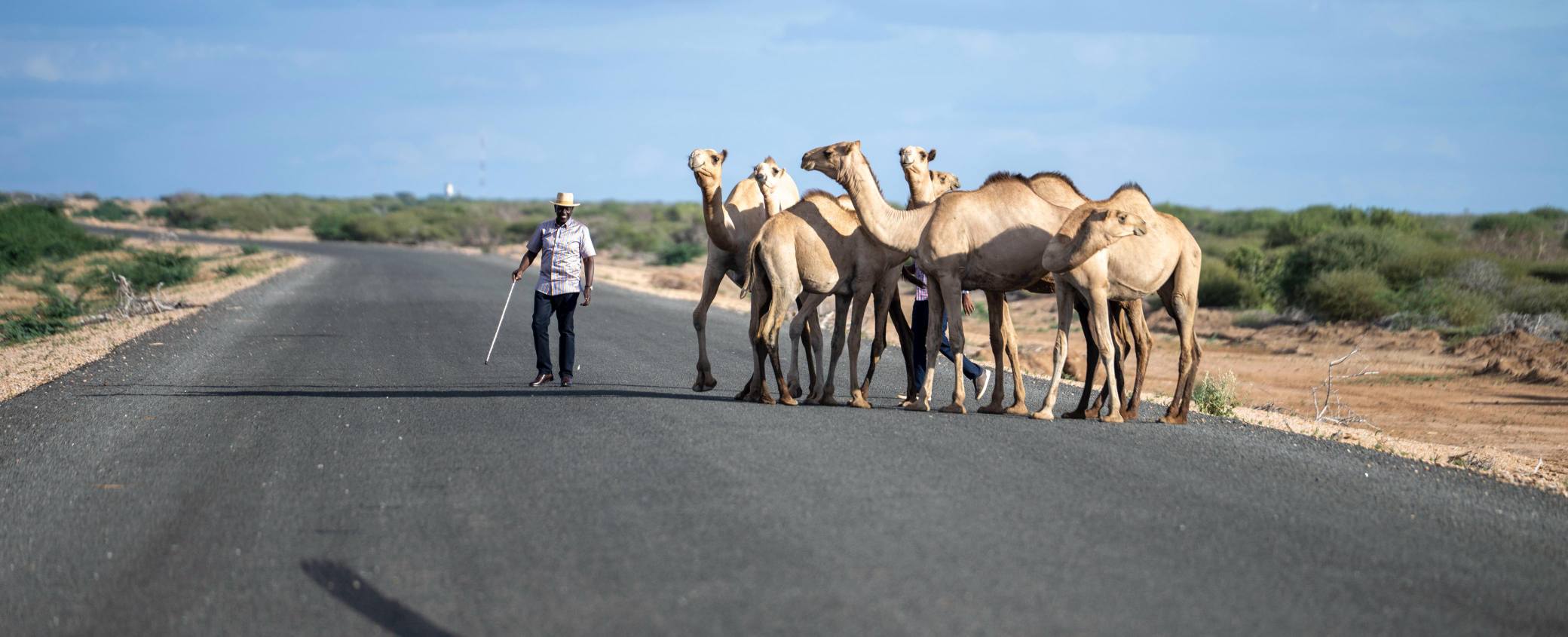
President William Ruto has stepped up his push for greater Kenyan control of the country’s natural resources, using his decision to remove Tata Chemicals from Lake Magadi to make a broader political case for jobs, local investment and value addition.
The President on Thursday ordered Tata Chemicals Magadi to stop its operations, accusing the Indian company of benefiting from Kenya’s soda ash resources without doing enough to invest in Kajiado.
“That Tata company ... had that contract for 100 years. They have not built anything in Kajiado, they have not built any factory in Kajiado,” Dr Ruto said while addressing residents in Kajiado.
He added: “We have said we will bring a new company and... they should put a big glass company here in Kajiado. And another company to make chemicals here in Kajiado. Are we slaves to other people?”
The remarks marked a sharp escalation in the dispute between the government and Tata Chemicals, which operates the Magadi Soda plant and is one of Kenya’s major exporters.
Tata Chemicals has disputed the government's position, saying it has complied with regulatory requirements and remains ready to engage with the Kenyan authorities.
“We respect the authority of the Government of Kenya and remain committed to constructive engagement through the appropriate legal and regulatory channels to resolve the outstanding matters,” the company said in a statement.
The company said its Kenyan subsidiary had submitted the information and documentation requested by the Ministry of Mining, Blue Economy and Maritime Affairs and was awaiting further direction.
The confrontation has now become part of a wider debate over how Kenya deals with foreign investors and whether companies exploiting local resources should be required to establish industries and create more jobs in the communities where they operate.
Ruto returned to the issue on Sunday, saying Kenya would no longer allow its minerals to leave the country in raw form.
“We want to give five, six or even 10 companies an opportunity to use the resources there to create jobs, value, create wealth and reduce poverty,” he said in Samburu.
The President's comments come days after he ordered action against foreigners operating businesses that are reserved for Kenyan citizens, putting the question of economic opportunities for locals at the centre of his recent public messaging.
The moves have also given the administration a new political line as the country heads towards the 2027 General Election.
Mr Ruto has increasingly presented his economic programme in terms of creating opportunities for Kenyans and ensuring that foreign investment produces tangible benefits locally.
His supporters can point to the Tata dispute as evidence that the government is willing to challenge established foreign interests.
The opposition, however, has questioned whether the President's approach could damage investor confidence and whether presidential directives are being issued without sufficient regard for established regulatory and legal processes.
The Tata dispute has already attracted international attention because of the company's long presence at Lake Magadi and the importance of soda ash to Kenya's export earnings.
Reuters reported that Ruto said two new companies would be brought in to take over the operations, while Tata maintained that it was committed to resolving the dispute through legal and regulatory channels.
The company produces soda ash used in industries including glass manufacturing, chemicals and detergents. Kenya exported 254,779 tonnes of soda ash valued at $56.9 million in the year to July 2025, according to government data cited by the Associated Press.
For the President, the argument is that Kenya should not remain a source of raw materials while importing finished products.
“We have vast resources at Lake Magadi that can transform Kajiado County and our country, Kenya,” Dr Ruto said.
He has said the government wants investors who will establish factories around the resource rather than simply extract and export it.
The position could become an important part of the administration's political message ahead of 2027, particularly as the President seeks to defend his record on jobs and economic opportunities.
It also gives Mr Ruto an opportunity to contrast his administration with previous governments over the management of Kenya's natural resources.
But the policy carries risks.
The Kenya Chamber of Mines has warned that the handling of the Tata dispute could influence how investors view Kenya's regulatory environment, putting pressure on the government to demonstrate that its new demands can be implemented within a predictable legal framework.
Tata Chemicals, meanwhile, insists that its priority remains its employees, the Magadi community and Kenya's economic development.


