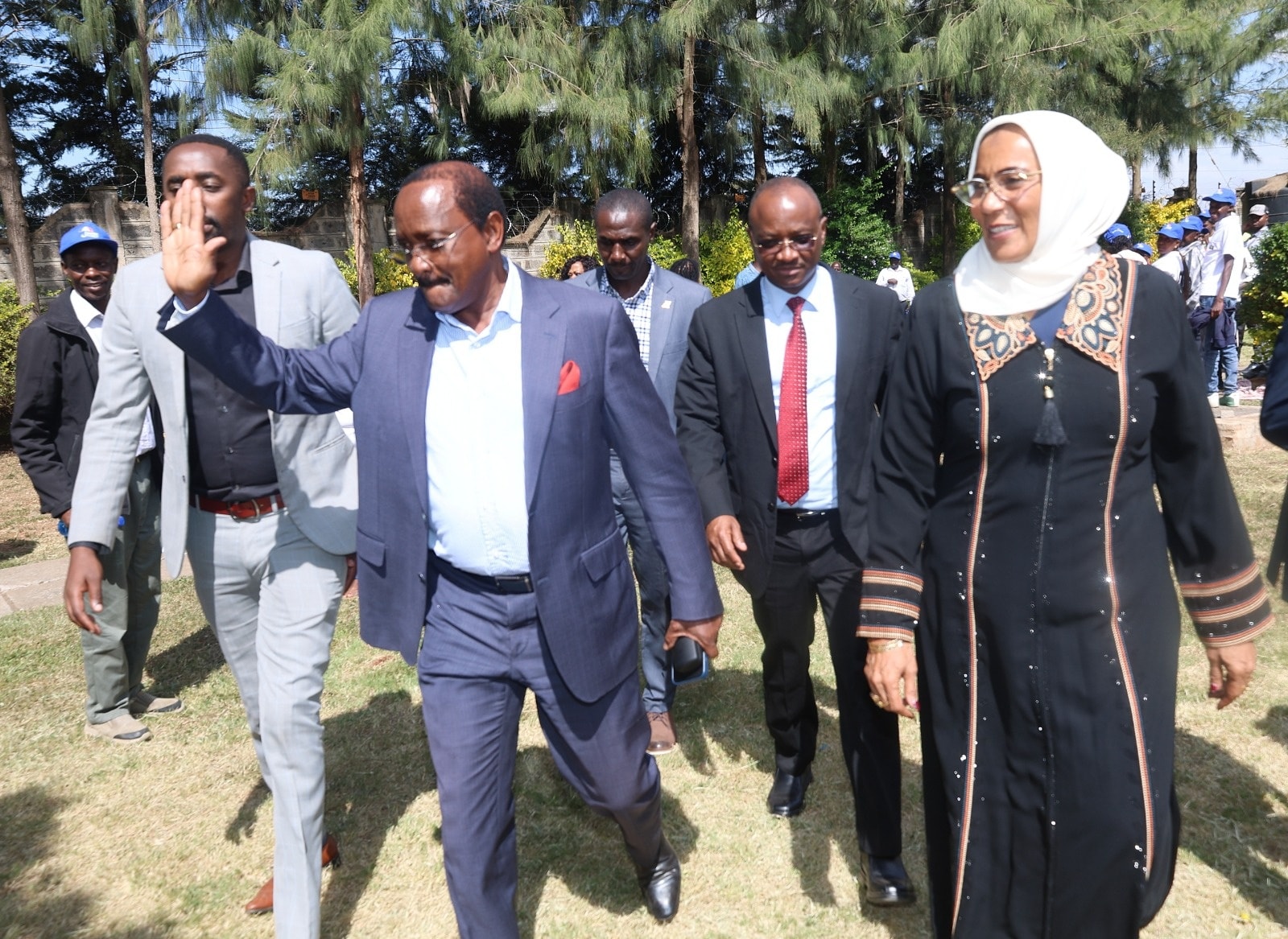
Kalonzo Musyoka has turned President William Ruto’s crackdown on foreign traders into a fresh attack on his administration, accusing the government of using a heavy-handed approach to mask its failure to address the problems facing Kenyan businesses.
The Wiper leader said the scenes outside the Burundian Embassy in Nairobi, where hundreds of small-scale traders scrambled for emergency travel documents ahead of a government deadline, were evidence of a poorly thought-out policy rather than effective governance.
“Crackdown without strategy is not governance,” Kalonzo said, arguing that the government could protect Kenyan traders without creating fear among foreign nationals or putting Kenya’s relations with its neighbours under strain.
His intervention adds a political dimension to an already sensitive dispute over foreigners operating small businesses in Kenya, with the controversy unfolding as politicians begin positioning themselves for the 2027 General Election.
Ruto has ordered a crackdown on foreigners engaging in small-scale trade without the necessary permits, arguing that Kenyan traders should not be forced to compete with foreigners operating illegally in sectors reserved for locals.
But Kalonzo said the government was looking in the wrong place.
He argued that corruption, unpredictable taxation, erratic tariffs and a difficult business environment posed a greater threat to Kenyan entrepreneurs than the mere presence of foreign traders.
“There are better, more deliberate ways to protect Kenyan small businesses,” he said, calling for a system in which both Kenyan and foreign entrepreneurs can operate within a clear legal framework.
The former Vice-President also warned that the government's approach could have consequences beyond the traders directly affected.
Kalonzo said diplomacy and dialogue should guide the exercise, particularly because many of those targeted come from neighbouring East African countries with which Kenya has strong commercial and social ties.
“Diplomacy, dialogue, and respect for the rule of law must take centre stage,” he said, warning that a lack of diplomacy could deepen divisions between communities and nations and disrupt economic activity.
His criticism comes at a politically awkward time for Ruto, whose government has made economic transformation one of the central pillars of its agenda but has faced persistent criticism over taxation, the cost of living and the operating environment for small businesses.
Kalonzo sought to turn those frustrations into a political indictment of the administration.
He accused the government of creating distractions instead of confronting what he described as the real causes of hardship facing Kenyans.
The Wiper leader was particularly scathing in his assessment of the crackdown, arguing that it was less about protecting Kenyan traders and more about allowing the government to project strength at a time when its economic record was under pressure.
“Let us also be honest: this crackdown is not about protecting Kenyan businesses,” he said.
Kalonzo instead pointed to corruption, what he called punitive taxation and a struggling economy as the issues that should be commanding the government's attention.
The remarks are significant because they place the foreign traders dispute within the wider political battle that is beginning to define the road to 2027.
Kalonzo has remained one of the prominent opposition figures seeking to challenge Ruto, and his latest intervention gives him an opportunity to connect an issue affecting traders in Nairobi and other urban centres to the broader question of how the country is being governed.
The crackdown has also raised concerns about Kenya's relations with neighbouring countries.
Burundian traders have been among those caught up in the government's enforcement measures, with images of people seeking travel documents at their embassy in Nairobi drawing attention across the region.
The scenes have provided opposition politicians with ammunition to argue that the government acted before putting in place a clear and orderly mechanism for dealing with affected foreign nationals.
Kalonzo has demanded greater transparency over the process, particularly on how foreign nationals are being documented and how their immigration status is being handled.
He warned that the process should not later be used for purposes unrelated to trade or border management.
The government, however, maintains that the exercise is about enforcing existing laws rather than targeting particular nationalities.
Officials have also stressed that foreigners who possess the necessary work permits and business licences have nothing to fear.
That distinction is likely to become increasingly important as the government attempts to balance its protectionist message with Kenya's obligations to regional integration and free movement within the East African Community.
For Kalonzo, however, the controversy has already become another opportunity to question Ruto's style of leadership.
He accused the administration of “manufacturing crises” to distract Kenyans from what he described as its own failures.
The political message is clear: rather than presenting the crackdown as evidence of a government protecting local enterprise, Kalonzo wants voters to see it as another example of an administration responding to economic frustration with dramatic directives.
That argument could resonate with small businesses that have struggled with rising operating costs and frequent changes in taxation and regulation.


