Three years ago, President William Ruto could count on Mt Kenya as one of the strongest pillars of his political coalition.
In the 2022 election, Ruto won about 87 per cent of the region’s presidential vote, giving him a huge boost in his race against Azimio candidate Raila Odinga. Today, that relationship has changed, with former Deputy President Rigathi Gachagua leading a political challenge to his former boss.
It is against that backdrop that Deputy President Kithure Kindiki has stepped up his activities in Mt Kenya, pitching himself as a voice for unity while defending the Ruto administration’s record.
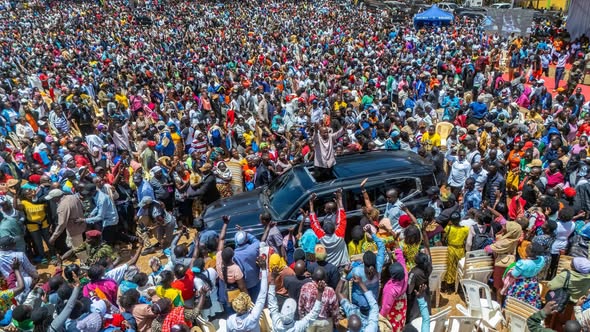
Kindiki’s latest political moment came on Saturday at Kirigiti Stadium in Kiambu, where elders drawn from the Gikuyu, Embu and Meru communities endorsed him as the region’s spokesperson and representative.
The gathering was also used to push back against efforts to divide Mt Kenya into East and West political blocs.
“As President William Ruto’s helper in uniting Kenya and moving our country forward, I will continue to defend and represent the interests of our region of Mount Kenya,” Kindiki said after the endorsement.
The event carried a symbolic message. Public Service Cabinet Secretary Geoffrey Ruku, who had been associated with calls for Mt Kenya East to chart its own political path, returned an axe that had come to represent the East-West divide.
In its place, the elders handed Ruku a flywhisk as they called for reconciliation and a united Mt Kenya.
The push comes after a dramatic shift in Ruto’s relationship with the region.
In 2022, Mt Kenya was central to the Kenya Kwanza victory. In Kiambu, one of the region’s key counties, Ruto received 606,429 votes, representing 73.49 per cent, while Raila got 25.52 per cent.
Across Mt Kenya and the North Rift, Ruto collected about 4.5 million votes, according to media reports.
But the political landscape has changed since then.
The fallout between Ruto and Gachagua became a major turning point. Gachagua was removed as deputy president in October 2024 and later emerged as a leading critic of the administration.
Through the Democracy for Citizens Party, Gachagua has sought to build a political base in Mt Kenya while accusing the Ruto administration of failing the region.
Recent polling has also pointed to a decline in UDA’s standing in the mountain. A July Infotrak survey UDA support in Mt Kenya at nine per cent, compared with 33 per cent for Gachagua’s DCP. Another 36 per cent of respondents were undecided.
It is this political ground that Kindiki is now trying to navigate.
Rather than engage Gachagua directly, the Deputy President has been moving across the region, talking about government projects while repeatedly calling for unity.
During his recent tours of Mt Kenya East and West, Kindiki has highlighted roads, agriculture, water and other development programmes.
In Kirinyaga, however, he made the political purpose of the tours clear.
“When President Ruto and I come next year to ask for a second term, give us an opportunity to explain what we have done and account for our time in office,” Kindiki told residents.
He has also taken aim at the growing debate over whether Mt Kenya East and West should pursue separate political paths.
“A community is formed by its elders, not politicians. When you leave the community to politicians, they will start dividing people because they are competing for political seats,” Kindiki said.
But the Kirigiti endorsement has exposed another question: who has the authority to speak for Mt Kenya?
Some elders and politicians have rejected the gathering’s claim to represent the entire region, with Daily Nation reporting that the event exposed divisions over the region’s political leadership.
Gachagua has also rejected the endorsement and dismissed efforts to create a new political leadership structure in the mountain.
“Having failed to divide Mt Kenya into the imaginary West and East, the mountaineers are aware of new efforts to divide the former Central Province. This too will fail,” Gachagua said.


