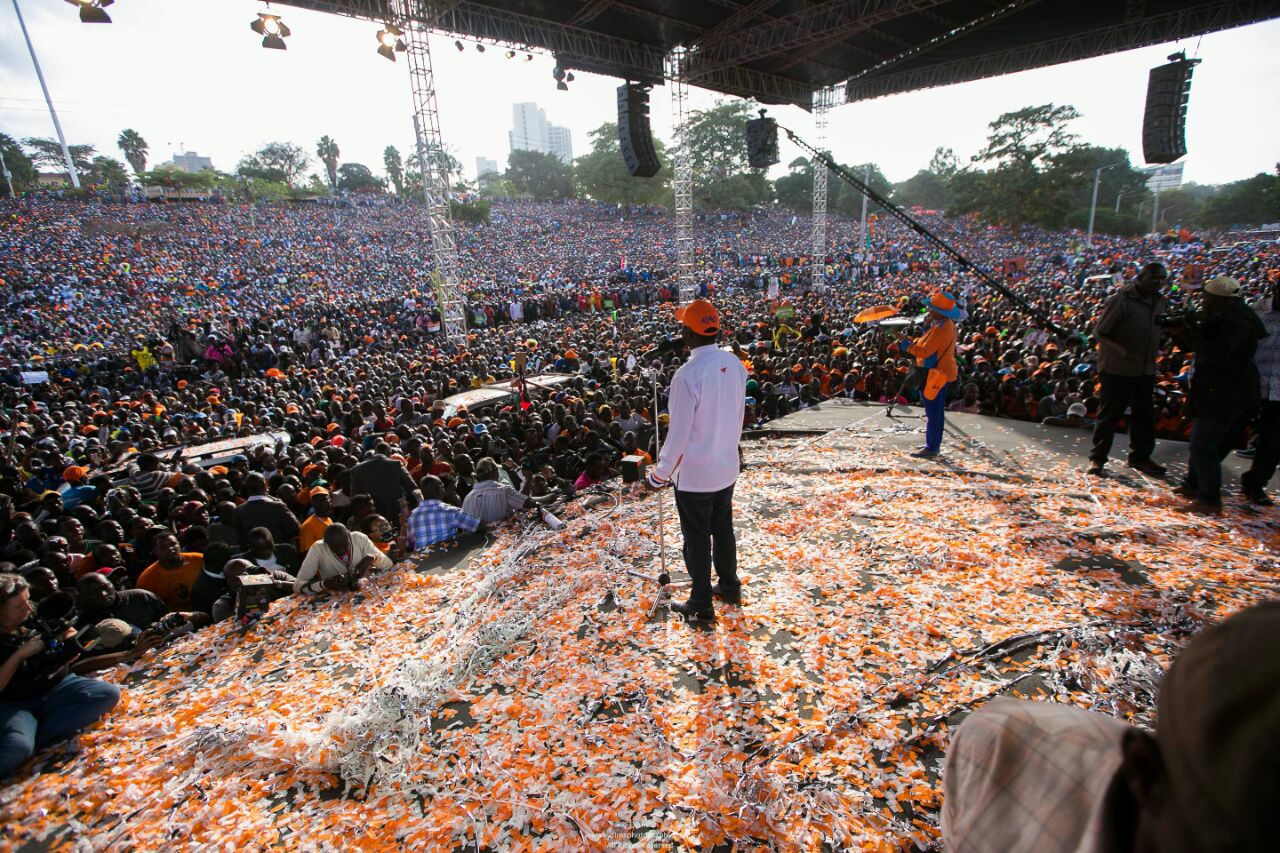
The Orange Democratic Movement (ODM) is facing an increasingly complicated internal crisis, with senior leaders pursuing competing political interests over President William Ruto's re-election, power-sharing negotiations and the party's future ahead of the 2027 General Election.
What initially appeared to be a disagreement between party leader Oburu Oginga and Nairobi Senator Edwin Sifuna has expanded into a wider contest involving Cabinet Secretaries, elected leaders and emerging political movements seeking to establish independent platforms.
At the centre of the dispute is whether ODM should work with Ruto's United Democratic Alliance (UDA), and under what terms, following the death of longtime party leader Raila Odinga.
Oburu and a section of the party's leadership have backed continued cooperation with Ruto, arguing that the arrangement provides an opportunity for ODM to participate in government and advance its political interests.
Among those openly supporting Ruto's second-term bid are Treasury Cabinet Secretary John Mbadi, Energy Cabinet Secretary Opiyo Wandayi, Mining Cabinet Secretary Hassan Joho and Co-operatives Cabinet Secretary Wycliffe Oparanya.
Wandayi recently said the leaders had agreed to continue supporting Ruto's re-election, describing the arrangement as a commitment to unity, development and shared prosperity.
Mbadi has also challenged leaders who have remained undecided, insisting that ODM must take a clear political position rather than leave its supporters guessing.
"There is this trend where Luo leaders have become indecisive, confusing our people. This is not our way of doing things," Mbadi said during a meeting with professionals in Kisumu.
However, the proposed political arrangement has exposed another disagreement within the party, with some leaders insisting that ODM must first secure a written coalition agreement before committing its support to Ruto.
Homa Bay Senator Moses Kajwang has warned against relying on political goodwill, citing previous political arrangements in which parties supported presidential candidates but failed to secure corresponding benefits after elections.
"We must be careful out of historical experience. We can see those who are our friends, but allow us to apply a little bit of risk management in this arrangement," Kajwang said.
Homa Bay Town MP Peter Kaluma has also supported formal negotiations, saying the discussions between ODM and UDA should produce a written agreement.
"The talks between ODM and UDA are going on well. When it is done, there will be a written agreement, so let us avoid talking much until the report from the committee is out," Kaluma said.
Kisumu Woman Representative Ruth Odinga has similarly insisted that any coalition arrangement must be legally binding, warning against reducing ODM to a regional political outfit.
She argued that the party's national character and identity must be protected during negotiations, noting that its support extends beyond Nyanza to Western Kenya, the Coast and other parts of the country.
"ODM is a national political party with representation across the counties. Its strongholds include Western, Coast and Turkana, among others; Nyanza is only one of them," she said.
Ruth further warned that the party could not enter into an agreement that failed to protect its interests and political identity.
The disagreement over the Ruto alliance has coincided with the emergence of a separate political movement led by Sifuna, who has increasingly positioned himself against the direction being pursued by the party's current leadership.
On Friday, Sifuna unveiled the Linda Mwananchi Movement's national headquarters in Lavington, Nairobi, bringing together opposition figures including former Deputy President Rigathi Gachagua, Wiper leader Kalonzo Musyoka and DAP-K leader Eugene Wamalwa.
The movement is positioning itself as an alternative political platform ahead of the 2027 elections, with Sifuna emerging as its preferred presidential candidate.
The development has complicated ODM's position, particularly because several politicians who previously operated within the party's political circles are now pursuing separate political vehicles.
Embakasi East MP Babu Owino has established the Mwananchi Party, while Siaya Governor James Orengo has taken control of the Liberal Democratic Party (LDP), a political outfit historically associated with Raila.
Trans Nzoia Governor George Natembeya has also been associated with the Ukombozi People's Party, adding to the growing number of political platforms linked to the emerging opposition movement.
The proliferation of political parties has raised questions about whether the different leaders will eventually operate under one coalition arrangement or pursue separate political interests.
The developments have also exposed differences within Linda Mwananchi itself, particularly over the political vehicle to be used in the 2027 presidential contest and the distribution of leadership positions.
Sifuna's emergence as the movement's preferred presidential candidate has not eliminated competing ambitions among its principals, with Orengo and other leaders maintaining their own political interests.
Meanwhile, Oburu's faction has continued to defend its engagement with Ruto, insisting that ODM must negotiate from a position of strength rather than abandon opportunities to participate in government.
The competing political developments mark a significant departure from the period when Raila exercised considerable influence over the party's political direction and coalition negotiations.
Under his leadership, ODM operated as a national political movement whose decisions on alliances and presidential contests were largely shaped by his personal political calculations and negotiations with other parties.
His death has left the party navigating competing interests without the figure who had held together its diverse political constituencies for decades.


