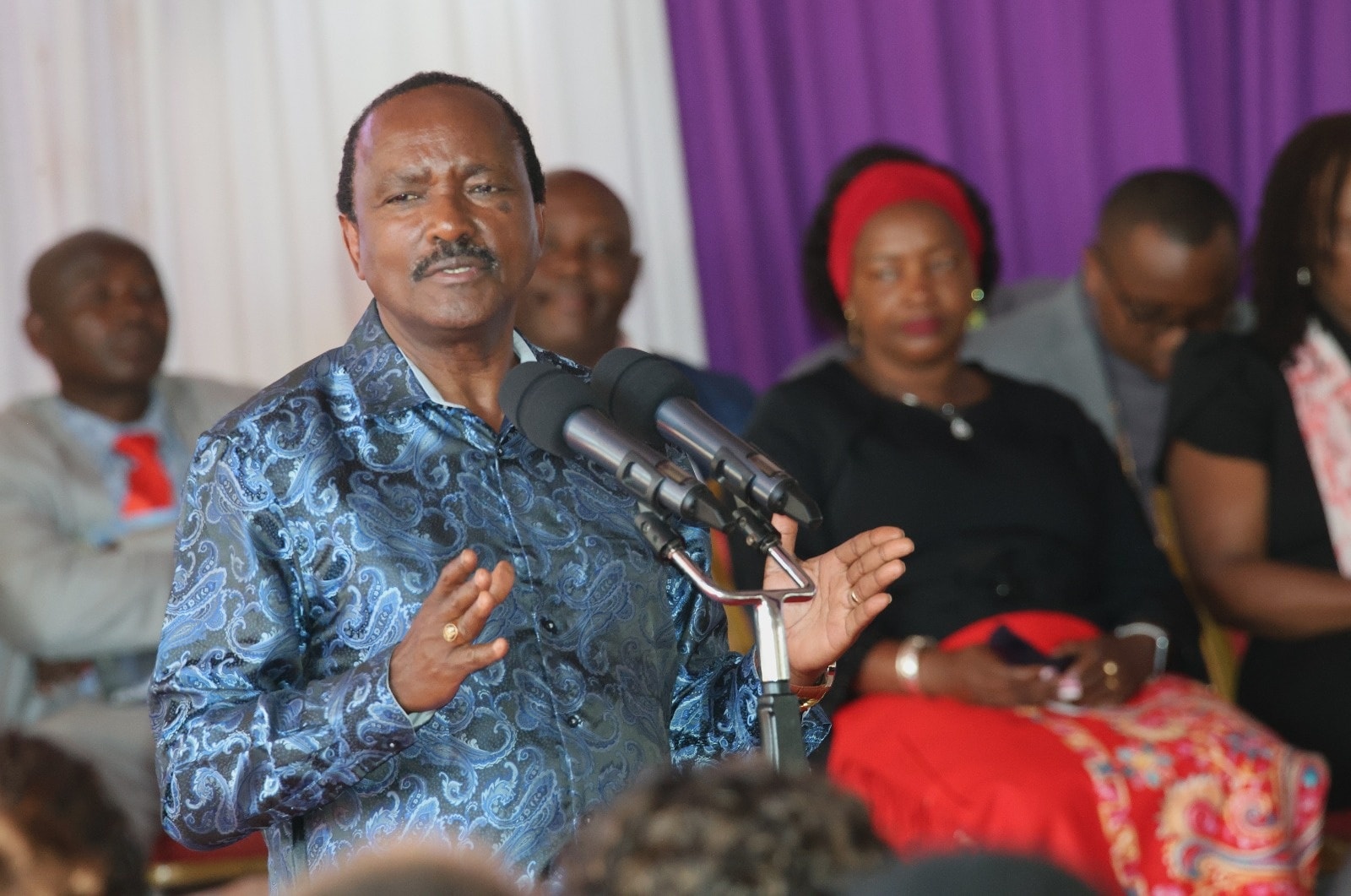
Former Deputy President Rigathi Gachagua has proposed a political alliance bringing together leaders from Mount Kenya, Western Kenya and Ukambani to challenge President William Ruto in the 2027 General Election.
Gachagua says the combined voting strength of the three regions could give the opposition the numbers needed to remove Ruto from power, arguing that no single community can win the presidency on its own.
He has identified himself, Wiper leader Kalonzo Musyoka, Nairobi Senator Edwin Sifuna and DAP-K leader Eugene Wamalwa as key figures in the proposed arrangement.
“Between I, Sifuna and Eugene Wamalwa and Kalonzo Musyoka; the election is done,” Gachagua said.
The former Deputy President argued that the opposition only needed to bring together its existing support bases and agree on a strategy ahead of the next election.
“Because of the 50+1 requirement, our votes are so many. However, we can’t win the election alone. We are 35 percent. We need other 15 plus 1,” he said.
The proposal draws on the political partnership between former President Mwai Kibaki and the late Michael Kijana Wamalwa, which helped the opposition defeat Kanu in the 2002 General Election.
Gachagua said his assessment of Sifuna's popularity in Western Kenya had convinced him that the Nairobi Senator could help deliver support from the region.
“I did my own research and found that this young man called Sifuna has been well received in his backyard. When Kijana Wamalwa united with Mwai Kibaki in 2002, we won,” he said.
He claimed he could deliver about 10 million votes, while Sifuna and Kalonzo would contribute four million and three million votes respectively.
“We shall not drop anyone, we shall continue engaging,” he added, maintaining that the proposed arrangement was open to other opposition leaders.
However, the proposal has exposed divisions within the opposition, with some leaders accusing Gachagua of attempting to determine the coalition's political direction through regional voting calculations.
Jubilee Party leader Fred Matiang'i has particularly criticised the approach, warning that reducing the presidential contest to ethnic numbers could undermine efforts to build a united opposition.
“Those of us who have spent years in the trenches of Kenyan politics understand that building a winning national coalition requires compromise, maturity and strategic thinking. A tripartite arrangement is not a magic formula for State House,” Matiang'i said.
The former Interior Cabinet Secretary argued that opposition leaders should build their alliance around ideas, competence and leadership records rather than assuming that particular communities belong to individual politicians.
“That majoritarian arrogance and that particular pride is precisely what is going to split the opposition and make it very difficult for the opposition to come together,” he said.
Matiang'i also insisted that the coalition's presidential candidate should emerge through an inclusive process acceptable to all its members, pledging to support whoever wins the nomination.
Democratic Party leader Justin Muturi has also accused Gachagua of bullying and arrogance, raising further questions about the former Deputy President's approach to managing relationships within the opposition.
The disagreement comes as opposition leaders intensify consultations over how to settle on a joint presidential candidate ahead of the August 2027 elections.
Other figures in the opposition include People's Liberation Party leader Martha Karua, People's Party of Kenya's Ndindi Nyoro and Matiang'i, who has expressed interest in the presidential ticket.
Gachagua has previously urged opposition leaders not to rush the selection of a flag bearer, arguing that negotiations should continue until the coalition reaches an agreement.
The Constitution requires a presidential candidate to secure more than half of all votes cast and at least 25 per cent of votes in more than half of the 47 counties to win in the first round.
The emerging disagreement therefore presents the opposition with two competing approaches: Gachagua's emphasis on consolidating regional voting blocs and Matiang'i's call for a broader national coalition built through negotiations.