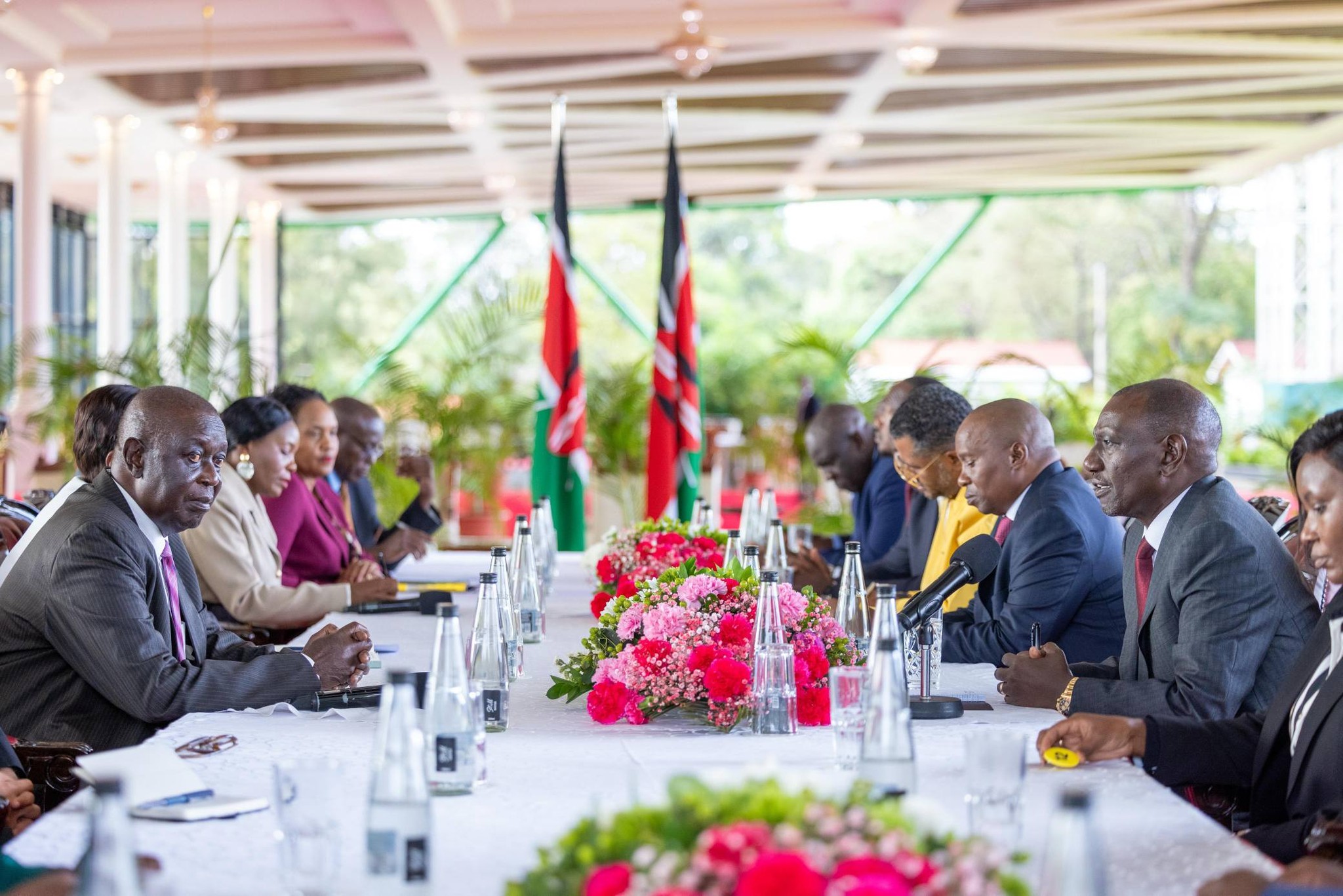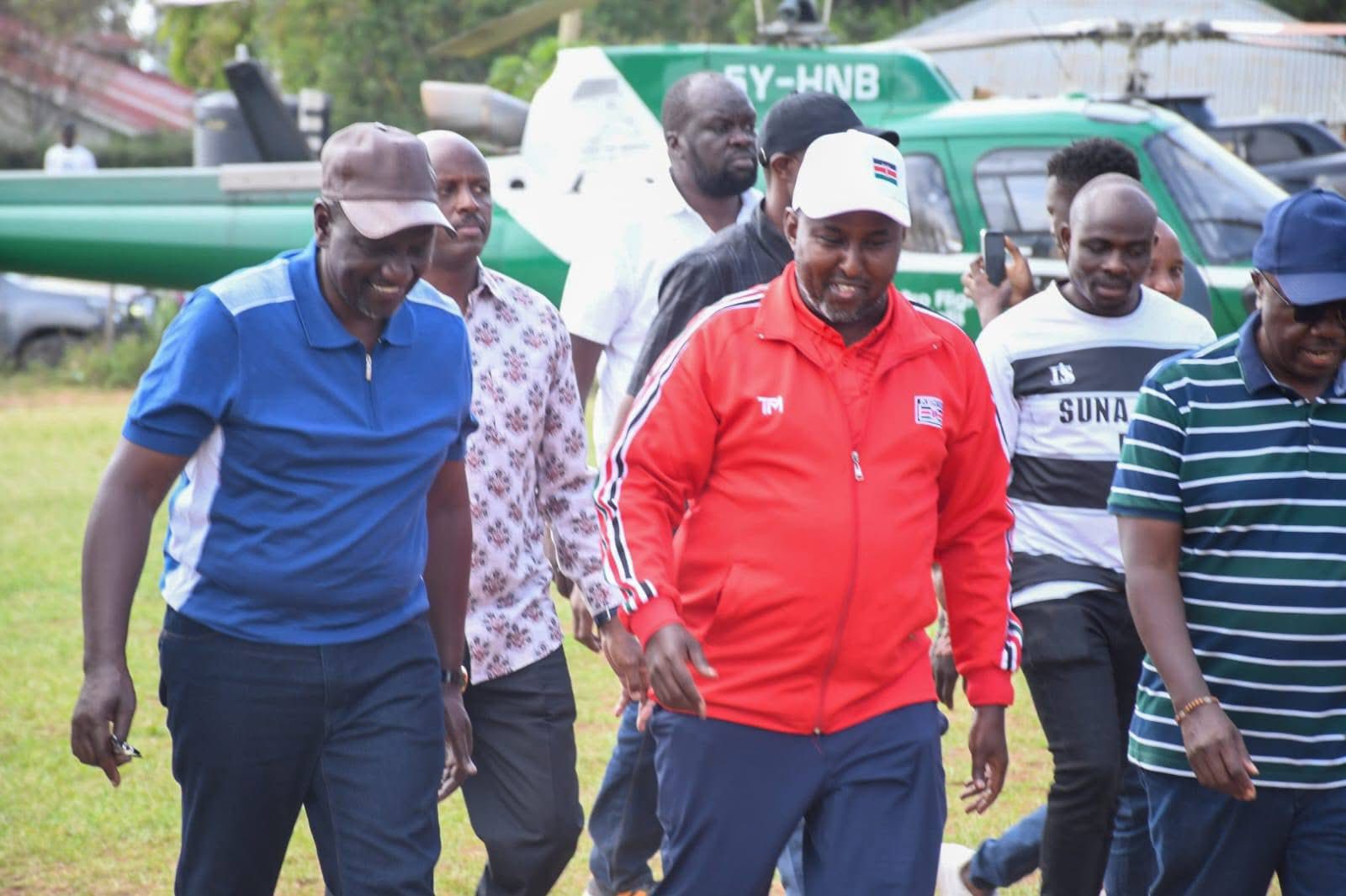
President William Ruto has taken his re-election campaign to the Gusii region, where his allies have been distributing cash, food and merchandise as the Head of State rolls out billions of shillings in development pledges in a bid to win over voters ahead of the 2027 General Election.
The four-day tour of Kisii and Nyamira counties has combined political mobilisation, cash handouts and promises of major infrastructure projects, including roads, electricity connections, hospitals, stadiums and education facilities.
Even before the President arrived, his supporters had organised a series of empowerment meetings across the region, where residents received cash and food items, in what has emerged as an early campaign-style mobilisation ahead of the next election.
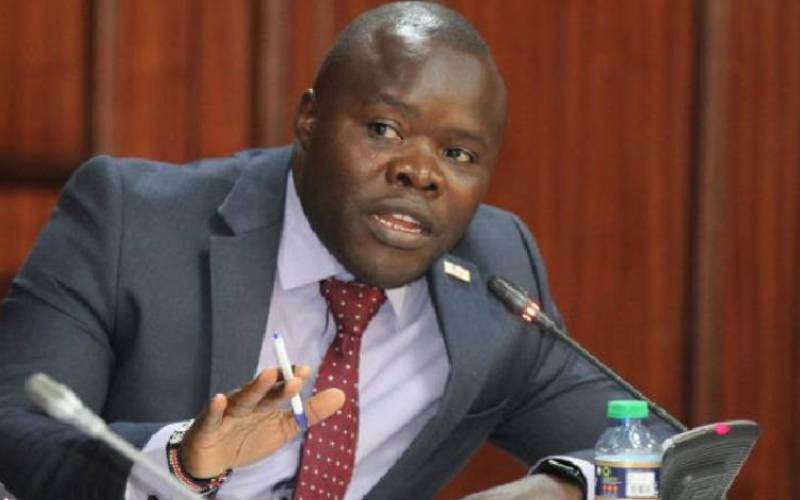
National Assembly Majority Chief Whip Silvanus Osoro, North Mugirango MP Joash Nyamoko, West Mugirango MP Stephen Mogaka, Kisii Woman Representative Doris Donya and Nyaribari Chache MP Zaheer Jhanda are among the leaders coordinating the mobilisation.
The legislators, alongside government appointees from the region, have been marketing the administration's development record while using public meetings to prepare residents for the President's visit.
The empowerment activities reported that residents received between Sh100 and Sh2,000, while some gatherings were characterised by the distribution of bags of rice and beans, umbrellas, caps and T-shirts.
An aide to a Kisii UDA lawmaker was quoted defending the distribution of food, saying the items were supplied by the government.
"The packages you see us dishing out, mainly consisting of rice and beans, are from the government," the aide said.
Another aide claimed that some of the money used to finance the programmes came from State House, raising questions about the financing of the empowerment activities. The claims have not been independently established as government expenditure.
The mobilisation comes as Ruto seeks to strengthen his political standing in a region where he suffered a significant defeat in the 2022 presidential election.
The President secured approximately 35 per cent of the Gusii vote against the late Raila Odinga's 65 per cent, making the region an important political battleground as the 2027 contest approaches.
His challenge has been complicated by former Interior Cabinet Secretary Fred Matiang'i, who hails from the region and is positioning himself for the presidency under the Jubilee Party.
Billions in development pledges
At his rallies, Ruto has defended his administration's spending commitments, arguing that development should not be determined by how communities voted in the previous election.
In Nyamira County, the President announced an investment of Sh11 billion in 180 kilometres of roads and another Sh500 million to connect 6,840 households to electricity.
At Makairo Market in West Mugirango, he launched the upgrading of the Bondeni-Magombo Road to bitumen standards and flagged off the Last Mile Electricity Connectivity Programme.
"We are spending Sh11 billion to build 180km of roads in Nyamira County," Ruto said in an update on his official social media accounts.
He also promised Sh1 billion for the construction of Magwagwa Stadium and committed Sh500 million towards the completion and equipping of Nyamira University.
The President's development pitch extended to neighbouring Kisii County, where he announced Sh22 billion for road construction, targeting 270 kilometres of roads.
On Wednesday, he launched road construction and electricity connectivity projects in South Mugirango and Bobasi, with Sh329 million allocated to connect 4,600 households.
South Mugirango will receive Sh234 million to connect 3,000 households, while Bobasi has been allocated Sh95 million to connect another 1,600 homes.
Ruto has maintained that the investments will improve the region's economic prospects by reducing transport costs, expanding access to electricity and creating opportunities for businesses.
The President has particularly used infrastructure and agriculture to defend his administration's development agenda, arguing that better roads and electricity are necessary to improve farmers' incomes and stimulate local economies.
Ruto challenges opposition
Beyond the development announcements, the President has used his tour to take aim at opposition leaders, challenging them to present alternative plans for the country instead of criticising his administration.
Addressing residents at Nyamaiya Stadium on Sunday, Ruto questioned the opposition's preparedness to govern, insisting that Kenyans were more interested in development than political rhetoric.
"They must tell us where we want to go as a nation. The other guys do not have a plan; they have no ideas about roads," he said.
He argued that the opposition had failed to explain how it intended to address the country's infrastructure and economic challenges.
"Kenyans want roads for the cost of living to go down, education to be streamlined, they want the prices of fertiliser to come down and brokers to be eliminated in agriculture," he said.
The President also urged residents to interrogate politicians seeking their support, warning them against backing leaders who could not explain how they intended to improve their livelihoods.
"Do not entertain conmen. They must tell you what they will do for you, how agriculture will be improved, jobs created and infrastructure upgraded," Ruto said.
His remarks appeared aimed at opposition figures seeking to challenge his administration in 2027, with the President seeking to frame the election as a contest between his development record and what he described as an opposition lacking concrete proposals.
However, Kisii Governor Simba Arati called for fairness in the distribution of national development resources, arguing that some parts of the county had been neglected despite contributing to the national tax base.
"There are some regions that have received a lot of development. Here in Kisii, there are some places where people have not seen tarmac. We must have equity in Kenya; we all pay taxes," Arati said.
His remarks highlighted the development concerns that the President's visit seeks to address, particularly in areas where residents have long demanded better roads and other public infrastructure.
South Mugirango MP Silvanus Osoro, one of Ruto's strongest allies in the region, defended the administration's political and development agenda, saying leaders should focus on competing through ideas rather than ethnic considerations.
"We want to compete on ideas, not tribes, and then the people will decide," Osoro said.
Matiang'i poses political challenge
The tour has also brought into focus the contest for political influence in a region that has traditionally backed opposition presidential candidates.
Matiang'i, who served as Interior Cabinet Secretary under former President Uhuru Kenyatta, is seeking to capitalise on his Gusii roots and political networks to build support for his presidential ambitions.
His entry into the presidential race presents a potential challenge to Ruto's efforts to expand his support base in the region, particularly given his previous position in government and his familiarity with local political networks.
Ruto's allies have responded by selling the administration's development projects and arguing that working with the government offers the region a better opportunity to secure resources.
North Mugirango MP Joash Nyamoko defended his decision to support the President, saying elected leaders could not afford to distance themselves from the national government.
"You cannot ignore the Government because everything the people want comes from it. That's why some of us have made a deliberate choice to stay with the Government and the President so as to benefit our respective electoral areas," Nyamoko said.
But not everyone in the region is convinced that the President's growing engagement with local leaders translates into grassroots support.
Former Bogichora MCA Beautah Omanga questioned the political strength of Ruto's support base in Gusii, arguing that some leaders backing the President were doing so out of personal political interests rather than genuine support for his administration.
"What the President should be made to understand is that the only people who are with him are the leaders from Gusii who are with him for personal convenience. Otherwise, he should count the Region among his depressed grounds," Omanga said.
The contrasting positions illustrate the political challenge facing Ruto as he seeks to reverse his 2022 electoral fortunes in Gusii.
While his allies are using government projects and political mobilisation to consolidate support, Matiang'i's presidential ambitions and concerns over equitable development could shape the region's political direction ahead of the 2027 General Election.