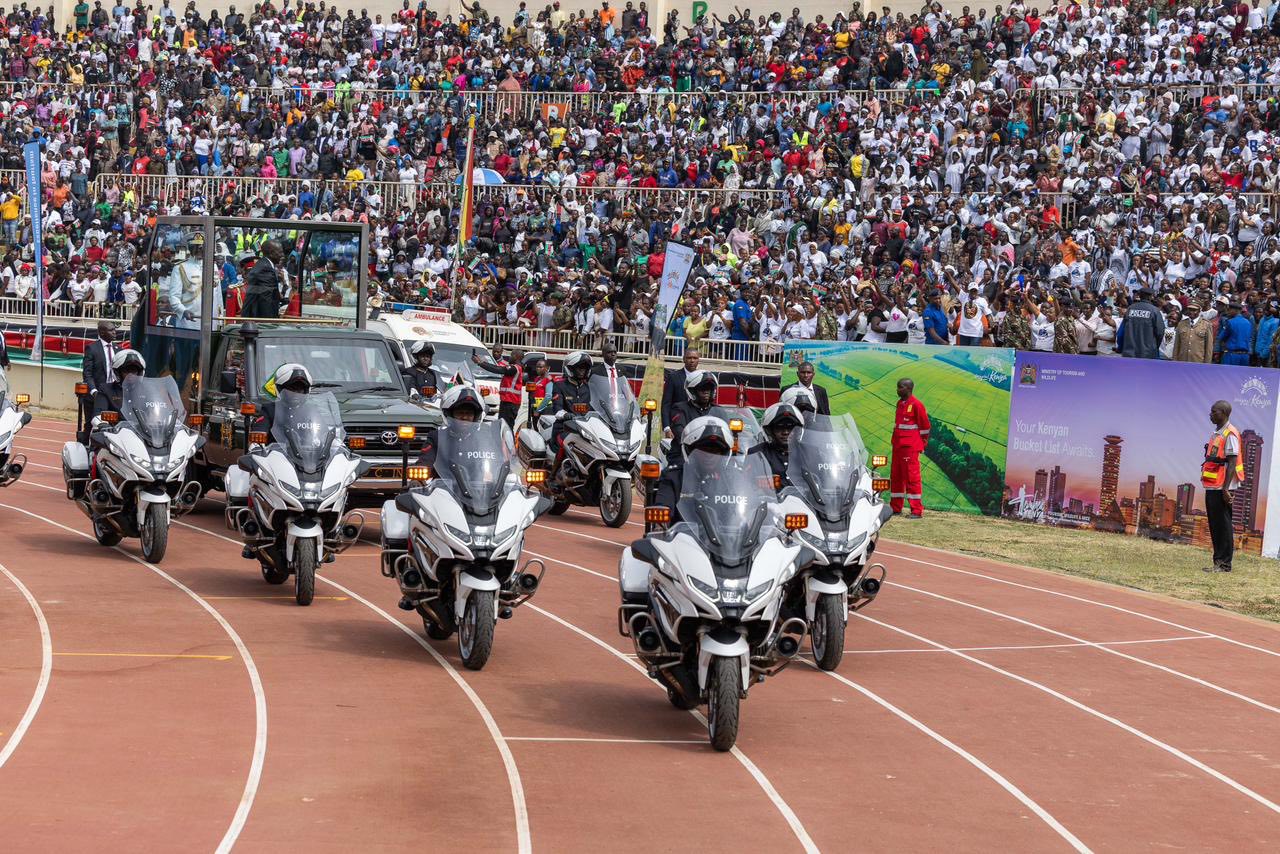
President William Ruto used this year’s Jamhuri Day celebrations to outline one of the most ambitious economic blueprints of his presidency — a KSh5 trillion plan he says will lift Kenya into first-world status.
But the sweeping promises, delivered before a packed Nyayo Stadium, came as the country edges closer to the 2027 election, raising questions about whether the commitments mark a development roadmap or an early campaign message.
Ruto said Kenya was “accelerating” its transformation 62 years after independence, promising a dramatic expansion of food production, national infrastructure and energy capacity. “We are now accelerating these gains to take Kenya to a first-world economy,” he told the crowd, flanked by Ghana’s President John Dramani Mahama, the event’s chief guest.
Central to the plan is a massive irrigation programme: 50 mega dams, 200 small dams, and 1,000 micro-dams intended to reverse Kenya’s dependence on rain-fed agriculture. He also promised to open up the country with 2,500km of dual carriageways and 28,000km of tarmacked roads, alongside new airport, railway and pipeline upgrades that he said would create fresh economic corridors across the region.
For a president who rode to office on a platform of hustler-focused economics, the promises signal a shift toward big-ticket, legacy-defining projects. With rising discontent over taxes, cost of living and youth unemployment, the pledges also arrive at a time when analysts say the administration is under pressure to show results before the next election cycle gathers pace.
“People are hurting now, so these grand plans sound like 2027 messaging,” said a political analyst who asked not to be named to speak freely. “The President has to convince voters that these promises will translate into real change in their lives.”
Ruto further announced the creation of a National Infrastructure Fund — to be considered by Cabinet next week — which he argues will allow the government to finance development without “excessive debt or higher taxation,” a sensitive point after months of public anger over revenue proposals.
The opposition has accused the administration of masking campaign politics in national events, a claim State House denies. Yet the scale and timing of the Jamhuri Day promises are expected to shape political debate as parties begin laying the groundwork for 2027.
Ruto’s remarks came as African dignitaries filled the stands, including Uganda’s Prime Minister Robinah Nabbanja and Burundi’s Vice-President Prosper Bazombanza. Deputy President Kithure Kindiki, standing in for Rigathi Gachagua who has kept a lower profile in recent months, joined Ruto in receiving the guests — an image that will likely fuel further political speculation ahead of the polls.


