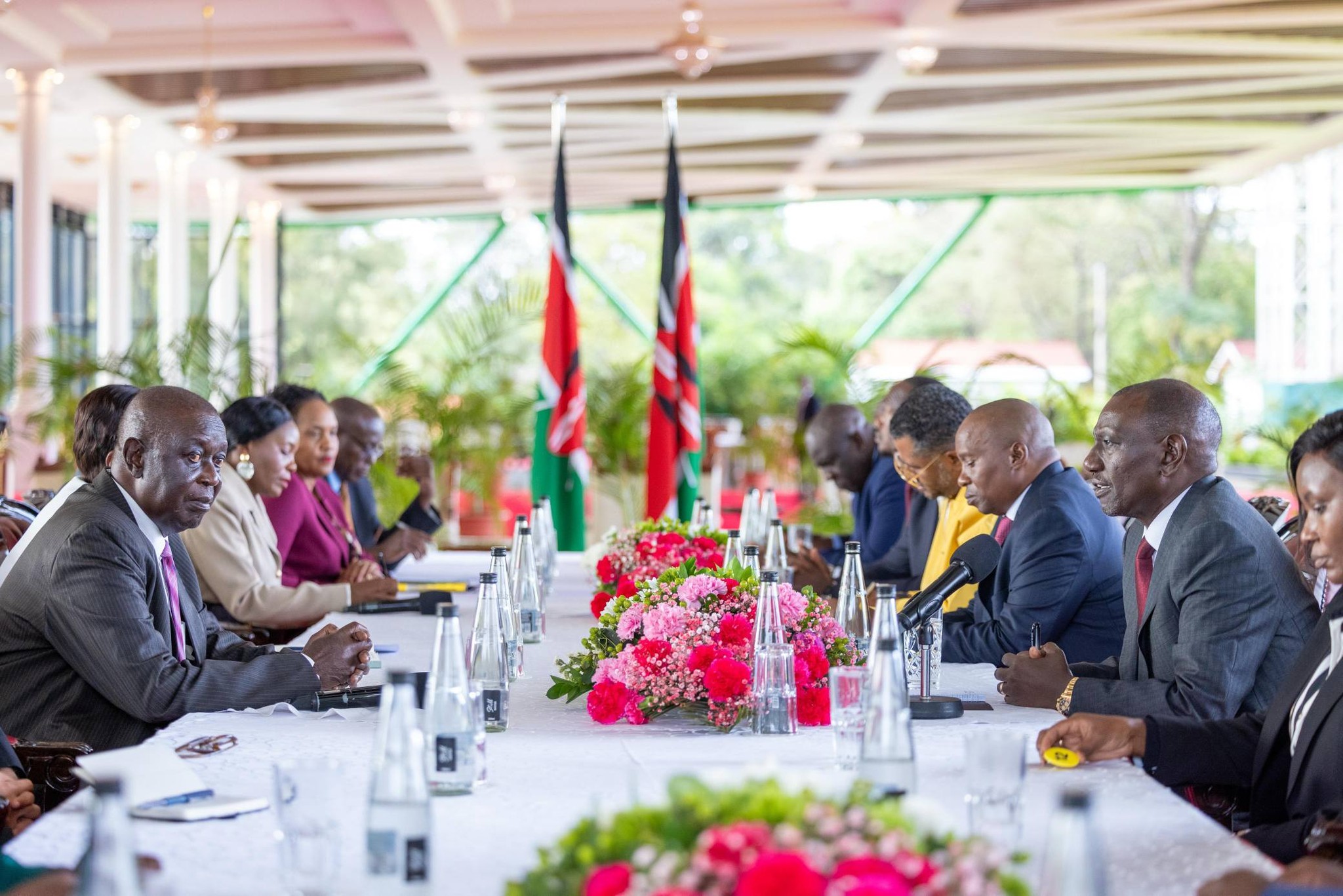
Former Deputy President Rigathi Gachagua has accused President William Ruto’s administration of losing focus on the challenges facing Kenyans, citing the ongoing university lecturers’ strike, the high cost of living and a proposal to introduce buffalo milk production.
Gachagua said Kenyans were struggling to afford basic necessities as the government appeared preoccupied with solutions that failed to address their immediate economic concerns.
“As Kenyans struggle to put food on the table and face dwindling economic prospects, lecturers are once again on strike,” Gachagua said in a statement posted on Facebook on Wednesday.
“Yet this regime remains focused on misplaced priorities—offering Kenyans the absurd suggestion that they turn to wild animals because cows aren’t producing enough milk. This is the sad state of affairs.”
The Democracy for the Citizens Party (DCP) leader was referring to Ruto’s proposal to explore importing improved breeds of buffaloes and camels to diversify milk production as the country faces shortages and declining deliveries to processors.
Ruto said during the Agriculture and Food Security Transformation Summit in Nairobi on October 8 that Kenya needed to explore alternative sources of milk to increase supply.
“I hear buffaloes also produce a lot of milk. If others are milking them, why can’t we do the same? What is wrong with that? We need to diversify our sources of milk,” the President said.
Gachagua questioned the rationale behind the proposal, arguing that the government should focus on the difficulties facing existing dairy farmers and households struggling to find affordable milk.
His criticism came as the government moved to clarify that it was considering domesticated water buffaloes from India, rather than wild African buffaloes.
Livestock Development Principal Secretary Jonathan Mueke said the government was looking at the Murrah breed, which is raised for milk production.
Gachagua, however, used the proposal to broaden his criticism of the administration, linking it to the economic pressures facing households and the renewed disruption in public universities caused by the lecturers’ strike.
He warned that the government’s response to criticism would further damage its political standing.
“Misplaced anger, insults, and name-calling will only further diminish this regime’s already deteriorating chances of survival,” he said.
The former Deputy President said his political camp shared the frustrations of Kenyans facing economic difficulties and pledged to offer an alternative.
“We share these frustrations with Kenyans and our assurance to Kenyans is that, we will not let you down or forsake you,” he said.
He called for a change in leadership priorities, urging Kenyans to support leaders who would listen to their concerns and put public interests ahead of personal gain.
“Let’s stand together and open a new chapter, one led by leaders who are compassionate, listen to the people, and put Kenyans first, not their own selfish interests,” Gachagua said.
His remarks came as the DCP intensified its political mobilisation, with a team led by Senator John Methu engaging residents in Kajiado town.
Gachagua thanked residents for what he described as their commitment to the party’s push to build a political movement for a “New Kenya”.
“Asanteni sana, Kajiado, for committing to move forward with us and build a formidable force for a New Kenya,” he said.
The exchange over milk production comes amid a wider debate over the government’s response to declining milk deliveries and supply pressures. Kenya Dairy Board figures cited in recent reports showed formal milk deliveries to processors falling from 84.4 million litres in June to 81.3 million litres in July.
The government has attributed the pressure on dairy production to factors including drought and inadequate animal feed, while the proposed introduction of alternative livestock has drawn political scrutiny over how best to address the shortage.