The National Assembly has given the University of Nairobi management until December 1, 2026, to present a clear recovery plan for its Sh20 billion debt after lawmakers questioned how the institution intends to escape a financial crisis that has left it technically insolvent.
The National Assembly Public Investments Committee on Governance and Education demanded verifiable figures, firm timelines and practical measures to demonstrate how the university plans to settle its outstanding obligations and restore financial stability.
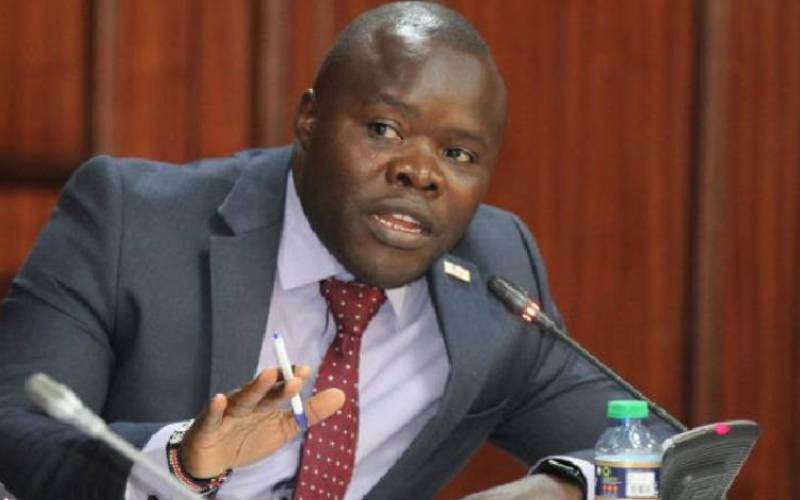
Committee chairman Dick Maungu said management had failed to convince lawmakers that its proposed interventions would translate into meaningful financial improvements.
“The people who are suffering, some of whom are your creditors, will not mind about the asset base you have,” the Luanda MP said.
He challenged Vice-Chancellor Prof Ayub Gitau and his team to demonstrate how the university would use its resources to clear debts, settle statutory obligations and restore confidence in its financial management.
“What members and I have not seen are pragmatic steps that you have put in place as management to secure the university from this condition. We need to see actionable, pragmatic steps to free the university from this yoke,” Maungu said.
The committee was reviewing Auditor-General reports covering the 2020/2021 to 2024/2025 financial years when it questioned the university's financial position, accumulated deficits and failure to meet some of its statutory obligations.
Auditor-General Nancy Gathungu told the MPs that the university's financial statements for the year ended June 30, 2022, attracted a qualified audit opinion, with material uncertainty over its ability to continue operating as a going concern.
The university reported a deficit of approximately Sh2.2 billion during the period, pushing its accumulated deficit to Sh8.8 billion. Its outstanding statutory obligations, including taxes and pension contributions, stood at about Sh10.6 billion.
The figures raised questions about how one of Kenya's oldest and most prominent universities had accumulated such substantial liabilities despite owning valuable properties and other assets.
Appearing before the committee, Gitau acknowledged the debt but argued that the university had a substantial asset base that could support its recovery.
“We have a debt of about Sh20 billion and an asset base of over Sh220 billion,” he told the lawmakers.
He said management was exploring ways to generate more income from university properties, including renting and leasing some of its assets.
The university had also established a committee chaired by the Deputy Vice-Chancellor in charge of finance to assess the value of its assets and identify opportunities to increase revenue.
However, the proposals failed to satisfy MPs, who demanded evidence that the measures would produce enough money to meet the institution's obligations.
Embakasi West MP Mark Mwenje questioned whether the university was financially capable of meeting its obligations.
“Is the university solvent?” he asked.
Deputy Vice-Chancellor Prof Josiah Aduda acknowledged that the institution had been declared technically insolvent for the financial year under review because its liabilities exceeded its assets.
Mwenje warned that the situation posed a serious challenge to the university's reputation and questioned whether its leadership had the capacity to reverse the crisis.
“When you start looking at these figures, and a whole university that was the first in this country is insolvent, then you have a crisis at the University of Nairobi,” he said.
Central Imenti MP Moses Kirima also demanded figures showing how austerity measures were reducing expenditure and helping the university meet its financial obligations.
“Where is the analysis? Where are the figures to show that you are cutting down on expenses and taking steps to revive this university?” he asked.
Kirima expressed concern about unpaid pension contributions, warning that delays could affect former university employees who depend on their retirement benefits.
The university's acting Director of Finance, Stephen Kimeli, attributed part of the financial difficulties to a reduction in government funding following the introduction of the Differentiated Unit Cost funding model in the 2017/2018 financial year.
He said the reduction in capitation had created a funding gap of about Sh1.6 billion, while rising payroll costs had further strained the institution's finances.
Kimeli said management was implementing measures under its 2023–2027 strategic plan to improve revenue through increased student enrolment, the revival of income-generating units and expanded research activities.
The university also expects research grants and changes under the revised university funding model to provide additional revenue.
But lawmakers questioned the effectiveness of the income-generating units, with Kasipul MP Boyd Were pointing out that some of the university's commercial activities were themselves making losses.
Aduda said management had engaged the heads of the units to identify ways of increasing revenue and introduced stricter expenditure controls.
“We have also developed serious austerity and cost-management measures at the university because when you are in a hole, you don't continue digging,” he said.
Sotik MP Francis Sigei, however, insisted that the university must provide measurable evidence of progress rather than rely on assurances.
“I would like to see this recovery in terms of figures. What are the figures?” he asked.
The committee also sought an update on the university's current financial position, noting that some of the accounts under review related to the 2021/2022 financial year.
Aduda said the university was developing a policy to commercialise its assets, which was awaiting approval by the university council. He said the policy would enable the institution to unlock value from its property portfolio and use the proceeds to address its financial obligations.
He also reported progress in reducing pension arrears and remitting statutory deductions but did not provide detailed figures during the session.
The university's management expects to complete work on the recovery proposals within a month.
Maungu directed the institution to submit a report outlining the proposed interventions by December 1, 2026. The committee will continue reviewing the remaining audit reports before making its recommendations.