President William Ruto has welcomed plans for consultations with the European Union on deploying election observers to Kenya ahead of the August 2027 General Election, amid growing opposition demands for reforms to guarantee a credible vote.
Ruto said Kenya was open to international scrutiny of its electoral process, insisting that the country remained committed to democratic principles, the rule of law and the protection of human rights.
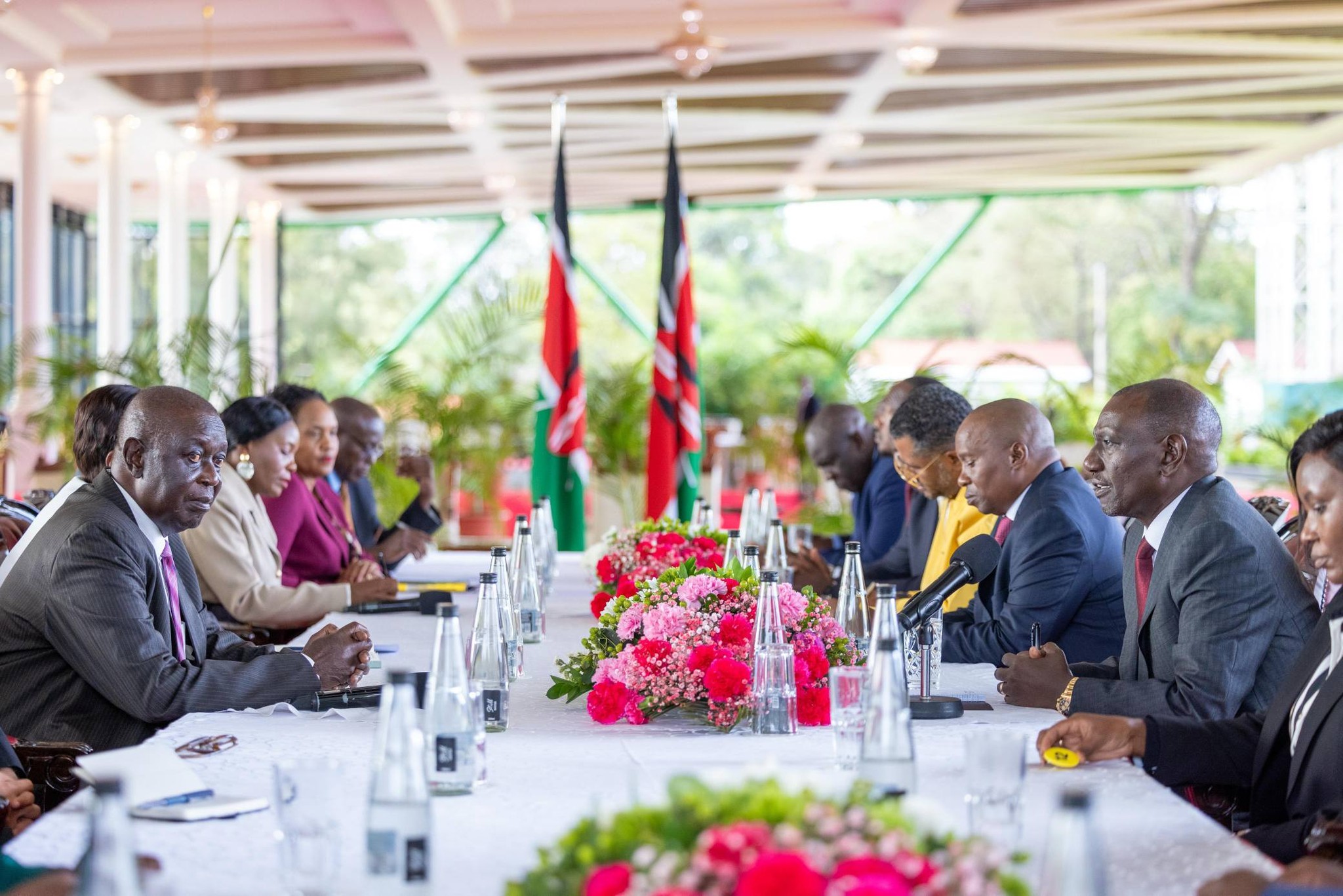
The President made the remarks on November 12 during a meeting with 44 European Union ambassadors serving across Africa at State House, Nairobi.
He said the government was prepared to engage the bloc on the proposed observation mission, provided the arrangements complied with Kenya's laws and procedures.
"Kenya remains committed to the rule of law, accountability, and human rights," Ruto said.
"As we prepare for the August 2027 General Election, we welcome consultations on an EU Election Observation Mission, consistent with our laws and procedures."
The President's remarks come as opposition leaders intensify pressure on the Independent Electoral and Boundaries Commission (IEBC) to address concerns over its preparedness, independence and the credibility of the electoral technology expected to be used in the next elections.
Former Deputy President Rigathi Gachagua, Wiper leader Kalonzo Musyoka and other opposition figures have repeatedly questioned the commission's handling of preparations, particularly the procurement of election technology.
In August, Kalonzo warned against attempts to bring back Smartmatic, the technology provider involved in the 2022 elections, arguing that the procurement process must be transparent and open to public scrutiny.
"We will oppose any attempt by the IEBC to bring Smartmatic, or any successor, proxy or vendor operating through opaque arrangements, back into Kenya," Kalonzo said.
"Kenya deserves transparent procurement, independently verifiable systems and full public accountability."
The opposition has also raised concerns about the commission's ability to deliver a credible election, pointing to disputes surrounding the procurement of the Integrated Elections Management System, which includes technology for biometric voter identification and transmission of results.
On November 4, former Attorney General Justin Muturi, speaking on behalf of the United Opposition, accused the IEBC of shifting responsibility to the courts over delays in election preparations.
"Blaming the courts cannot hide the fact that the Commission's own conduct is putting the delivery of a credible election at risk," Muturi said.
The opposition also questioned the absence of senior IEBC officials, including the chief executive and head of procurement, during a critical phase of the technology procurement process.
The demands go beyond procurement.
In September, a coalition of political leaders, civil society organisations and other stakeholders led by former Chief Justice David Maraga unveiled five major proposals aimed at changing the management of the 2027 elections.
The People's Coalition on Electoral Reforms wants an independent audit of the voters' register, abolition of the national presidential tallying centre, decentralisation of election technology, tougher penalties for electoral offences and transparent recruitment of election officials.
Maraga warned that Kenya could not afford another disputed election.
"Kenya cannot afford another election whose credibility is contested after ballots are cast. The 2007/2008 post-election violence is a national warning we refuse to relive," he said.
The coalition threatened to mobilise Kenyans for protests if the proposed reforms were not implemented before the August 2027 elections.
The concerns come against the backdrop of Kenya's disputed electoral history, including the 2007 post-election violence and divisions within the IEBC following the 2022 presidential election.
Four commissioners at the time publicly disowned the results announced by former chairman Wafula Chebukati, exposing deep divisions within the electoral management body.
The EU has previously deployed election observation missions to Kenya, including during the 2022 General Election, when it fielded 182 observers.
Its 2022 mission made 21 recommendations covering electoral transparency, campaign financing, gender representation, election technology and voter education.
A follow-up assessment released in June 2025 raised concerns about limited progress in implementing some of the recommendations and called for a fully functioning and independent electoral commission ahead of the next polls.
Ruto's latest remarks signal his administration's willingness to engage international partners on election observation as political competition gathers momentum.
The President has maintained that Kenya's democratic institutions must be strengthened and that the country remains committed to peaceful elections.