The Independent Electoral and Boundaries Commission (IEBC) has urged journalists to help counter hate speech, propaganda and misinformation ahead of the 2027 General Election, warning that unchecked false narratives could erode public confidence in the electoral process and discourage voter participation.
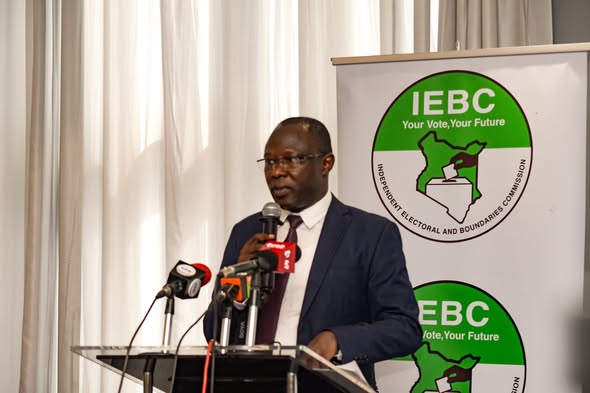
IEBC Chairperson Erastus Edung Ethekon said the media had a critical responsibility to interrogate election-related claims, particularly those touching on electoral technology and systems, rather than allowing unverified information to shape public perceptions.
“We need you to help us address the challenges around hate speech. We know what hate speech can do to a country, to a people. We need you to help us deal with propaganda,” Ethekon said during a consultative engagement with political reporters on Tuesday.
He warned that failure by journalists to investigate and challenge false claims could leave the public vulnerable to misleading narratives, particularly in the politically charged period ahead of the elections.
“Sometimes, without any factual basis, you hear this propaganda, this and that, and then as media, if we don't do our job very well, do our research, and get the correct information in order to refute some of this — of course the ordinary Kenyans will believe that this propaganda is actually true,” he said.
Ethekon said misinformation targeting electoral processes, including electronic systems, could create doubts about the integrity of elections if left unchallenged, calling on newsrooms to strengthen fact-checking and reporting on electoral matters.
“We need you to help us in fact-checking any information that touches on elections and electronic processes and systems,” he said.
The chairperson also challenged journalists to shift election coverage from personalities to issues, questioning the value of giving prominence to officials' photographs at the expense of substantive reporting on electoral matters.
“Sometimes I look at, even for myself, some news that doesn't deserve my picture on the front page of a newspaper. So I wonder, are you informing Kenyans about my face, or are you telling Kenyans facts about our electoral process?” he posed.
He said voters needed information that enabled them to understand the electoral process, scrutinise institutions and make decisions based on facts rather than political rhetoric or propaganda.
“IEBC and the media fraternity are inseparable,” Ethekon said, underscoring the commission's reliance on the media in promoting transparency, accountability and confidence in elections.
The meeting was part of a series of engagements between the commission and media representatives that Ethekon said began last year after the new commission took office. The engagements included earlier meetings at Radisson Blu and in Upper Hill, where discussions focused on strengthening cooperation ahead of the 2027 elections.
The commission and media fraternity have also signed a Memorandum of Understanding to guide their working relationship, including arrangements for communicating election results for presidential, gubernatorial, senatorial and other elective positions. The agreement includes provisions on streaming results from polling stations to the National Tallying Centre.
The renewed engagement comes as Kenya begins preparations for the 2027 General Election, with the IEBC facing the task of rebuilding public confidence in electoral administration, expanding voter education and ensuring citizens have access to credible information on voting procedures and election technology.
The media's role in election coverage has also come under increased scrutiny amid concerns over hate speech, disinformation, manipulated online content and politically driven narratives that could heighten tensions during campaigns.
The IEBC has in recent engagements broadened its outreach beyond traditional media, including consultations with social media influencers and digital content creators, whom it wants to enlist in voter education, public awareness and efforts to promote peaceful participation.
The commission says a responsible, independent and well-informed media remains essential to ensuring voters understand electoral processes and that institutions are held accountable as the country heads towards the polls.