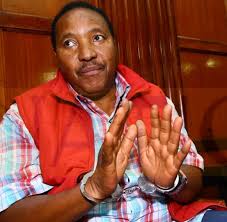
As of December 18, 2025, all eyes are on the High Court as it prepares to issue a landmark judgment in the civil asset forfeiture case involving former Kiambu Governor Ferdinand Waititu. The case, filed by the Ethics and Anti-Corruption Commission (EACC), seeks to confiscate assets valued at approximately Ksh 1.94 billion, which the commission alleges were illegally acquired during Waititu’s tenure in office.
The judgment is scheduled for delivery on Friday, December 19, 2025, at 10:00 AM, and has already been marked by tension, repeated delays, and firm warnings from the court. Justice Nixon Sifuna, who is presiding over the matter, has directed Waititu and his wife, Susan Wangari, to personally attend the delivery of the ruling. The judge has made it clear that the court will proceed with or without their presence, signaling growing judicial impatience with attempts to stall the process.
The EACC’s case targets an expansive and high-value portfolio of assets. Among the properties listed for forfeiture are prominent commercial buildings in Nairobi, including the Jamii Bora Building, Delta Hotel, and Biashara Shopping Mall. The commission is also seeking to seize luxury residential properties located in upscale areas such as Runda and Migaa, several high-end vehicles, and approximately Ksh 804.6 million held across multiple bank accounts. According to the EACC, these assets are disproportionate to Waititu’s known lawful income and are proceeds of corruption and abuse of office.
This case has faced repeated delays, largely due to the failure of the respondents to appear in court. Initially scheduled for judgment on November 26, 2025, the ruling was postponed, then rescheduled for December 17, 2025, only to be deferred again for the same reason. Justice Sifuna has since issued a stern warning that the court will no longer tolerate non-compliance, underscoring the seriousness of the proceedings and the broader public interest at stake.
Importantly, the asset forfeiture case is separate from Waititu’s criminal conviction earlier in the year. In February 2025, he was found guilty in a high-profile graft case involving a Ksh 588 million irregular road tender in Kiambu County. The court sentenced him to 12 years in prison or, alternatively, a fine of Ksh 53.5 million. In addition, he was barred from holding public office for a period of 10 years, effectively ending his political career.
Although Waititu was briefly released on bond in August 2025 pending appeal, recent reports indicate that he remains in custody at Kamiti Maximum Prison as he continues to challenge both his conviction and sentence. The outcome of the civil forfeiture case will therefore carry significant consequences, not just for him personally, but for the broader fight against corruption in Kenya.
If the High Court rules in favor of the EACC, it will reinforce the principle that public officials cannot shield illicit wealth behind lengthy court processes or political influence. Such a decision would strengthen Kenya’s civil asset recovery framework and send a clear message that corruption can result not only in jail terms, but also in the loss of illegally acquired wealth.
The December 19 ruling is expected to set a powerful precedent, defining how aggressively the state can pursue the recovery of assets linked to corruption and abuse of office. Regardless of the outcome, the case represents a critical moment in Kenya’s ongoing struggle to hold powerful individuals accountable under the law.


