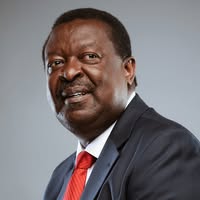
For years, Kenya’s Constitution has promised reforms that politics has failed to deliver — a gap Prime Cabinet Secretary Musalia Mudavadi now says explains why the country should have referendum.
The Prime Cabinet Secretary has emerged as the most senior figure in President William Ruto’s administration openly arguing that certain constitutional questions can no longer be postponed or resolved through Parliament alone. His case is framed less as urgency than inevitability: that unresolved governance issues, left to fester, will continue to resurface in moments of political crisis.
Mudavadi’s argument draws on Kenya’s long and unsettled reform history. The 2010 Constitution, forged in the aftermath of the 2007–08 post-election violence, sought to dismantle an overconcentrated presidency, entrench rights and devolve power. But fifteen years later, several of its core provisions remain unimplemented, while debates the document was meant to settle have re-emerged with each election cycle.
At the center of Mudavadi’s push is the recognition that political consensus has repeatedly collided with constitutional limits. The most recent example came after months of protests and political standoff in 2023, when the government and opposition formed the National Dialogue Committee (NADCO) to avert further instability. Its report acknowledged deep flaws in Kenya’s governance and electoral systems — and recommended reforms that, in many cases, would require constitutional amendments.
That, Mudavadi argues, is the country’s recurring dilemma: agreement without legal authority.
“There are issues we agree on politically but cannot implement legally,” he has said in recent interviews. “That contradiction cannot last forever.”
The most visible symbol of that failure is the two-thirds gender rule. Despite being enshrined in the Constitution, Parliament has repeatedly failed to pass legislation to enforce gender parity in elective bodies, missing court-imposed deadlines and leaving Kenya in violation of its own supreme law. Successive governments have acknowledged the problem but have been unable to compel lawmakers to legislate against their own political interests.
Mudavadi says a referendum would return the decision to voters, removing it from a Parliament trapped by self-preservation.
But the referendum debate extends beyond gender equity. The NADCO report reopened long-standing questions about Kenya’s governance structure — particularly whether the concentration of power in the presidency continues to fuel political instability. Proposals for a stronger prime ministerial role and a more layered executive, ideas that surfaced during the failed Building Bridges Initiative, have quietly re-entered national discourse.
Mudavadi has avoided endorsing specific models. Instead, he has positioned himself as an advocate of process rather than outcomes, arguing that Kenya must confront constitutional questions openly rather than rely on informal political settlements after every contested election.
There is also a practical calculation behind his proposal. With Kenya facing heavy debt obligations and limited fiscal space, Mudavadi argues that holding a standalone referendum would be costly and politically difficult to justify. Combining it with the 2027 general election, he says, would reduce costs and increase voter participation.
The proposal, however, carries political risk. Kenya’s last major attempt at constitutional reform collapsed under judicial scrutiny and elite rivalry, leaving deep public skepticism about reopening a document many regard as a hard-won safeguard against executive overreach. Critics warn that a referendum could be used to expand political offices rather than address citizens’ daily struggles.
Supporters counter that the current moment is different. Unlike past reform efforts driven by powerful political rivals, the referendum idea has emerged from a bipartisan dialogue process and is being articulated by a figure widely viewed as cautious and institutional. Mudavadi, a veteran of Kenya’s reform movement and a former deputy prime minister, has built a reputation as a consensus broker rather than a political firebrand.
Within President Ruto’s government, his role has increasingly been that of a stabilizer — bridging political compromise and constitutional order. Pushing for a referendum allows him to occupy familiar terrain: translating negotiated agreements into legal legitimacy.
The stakes are high. Any referendum would reshape the political landscape ahead of the 2027 election, influence alliances and potentially redefine how power is exercised after the vote. It would also test whether Kenya can revisit constitutional reform without reopening the wounds that derailed previous efforts.


