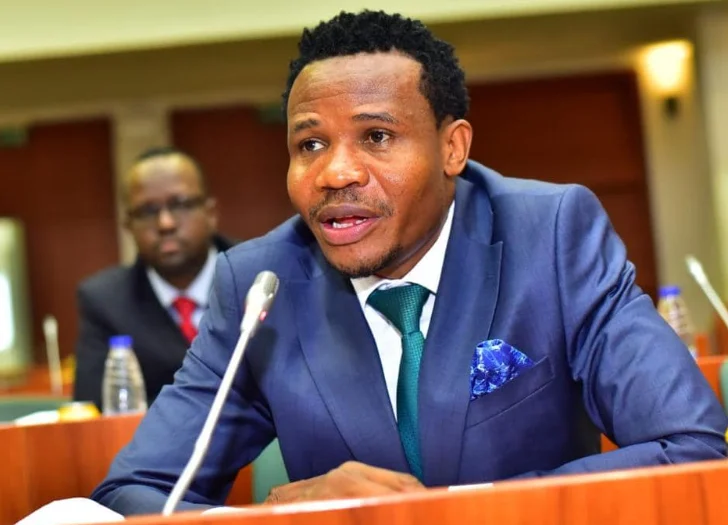
Mumias East Member of Parliament Peter Salasya has fired back at former Deputy President Rigathi Gachagua, daring him to demonstrate his own track record in developing schools while serving as an MP.
Salasya’s remarks come amid Gachagua’s sustained criticism of leaders from Northern Kenya, whom he has accused of misusing devolved funds without building lasting public institutions, particularly in the education sector.
In a pointed response, Salasya questioned the moral authority of Gachagua to lecture other regions, arguing that accountability should begin with one’s own record in public office.
“Before attacking leaders from Northern Kenya, he should first show Kenyans the schools he personally developed when he was an MP,” Salasya said, framing the debate as one that requires honesty and consistency.
The exchange follows remarks made by Gachagua during a press briefing in Nyeri on Friday, January 9, 2026, where he dismissed calls for affirmative action in elite school admissions. Gachagua argued that more than a decade of devolution had weakened claims that certain regions still deserve preferential treatment, insisting that county governments have had sufficient time and resources to invest in education infrastructure.
According to Gachagua, continued affirmative action policies unfairly disadvantage students from regions that have invested heavily in education, while rewarding what he described as poor leadership elsewhere.
Salasya, however, rejected that position, warning against the politicisation of education and the use of regional stereotypes. He maintained that disparities in school infrastructure and access to quality education are rooted in historical marginalisation and uneven development that cannot be wished away by devolution alone.
The clash highlights a growing national debate over equity, devolution, and access to elite public schools, with leaders sharply divided on whether affirmative action remains necessary more than ten years after counties began receiving devolved funds.
As political temperatures rise ahead of the next election cycle, education policy particularly who benefits and who bears responsibility for gaps is increasingly becoming a battleground for broader questions about leadership, fairness, and national cohesion.


